
"Common Health" Exclusive Interview with Director Lu Bing-Sheng | PRP, Amniotic Fluid Extract, and Chronic Pain Treatment: How to Choose?
With recurring pain, how should you choose between PRP, amniotic fluid extract, or other treatments?
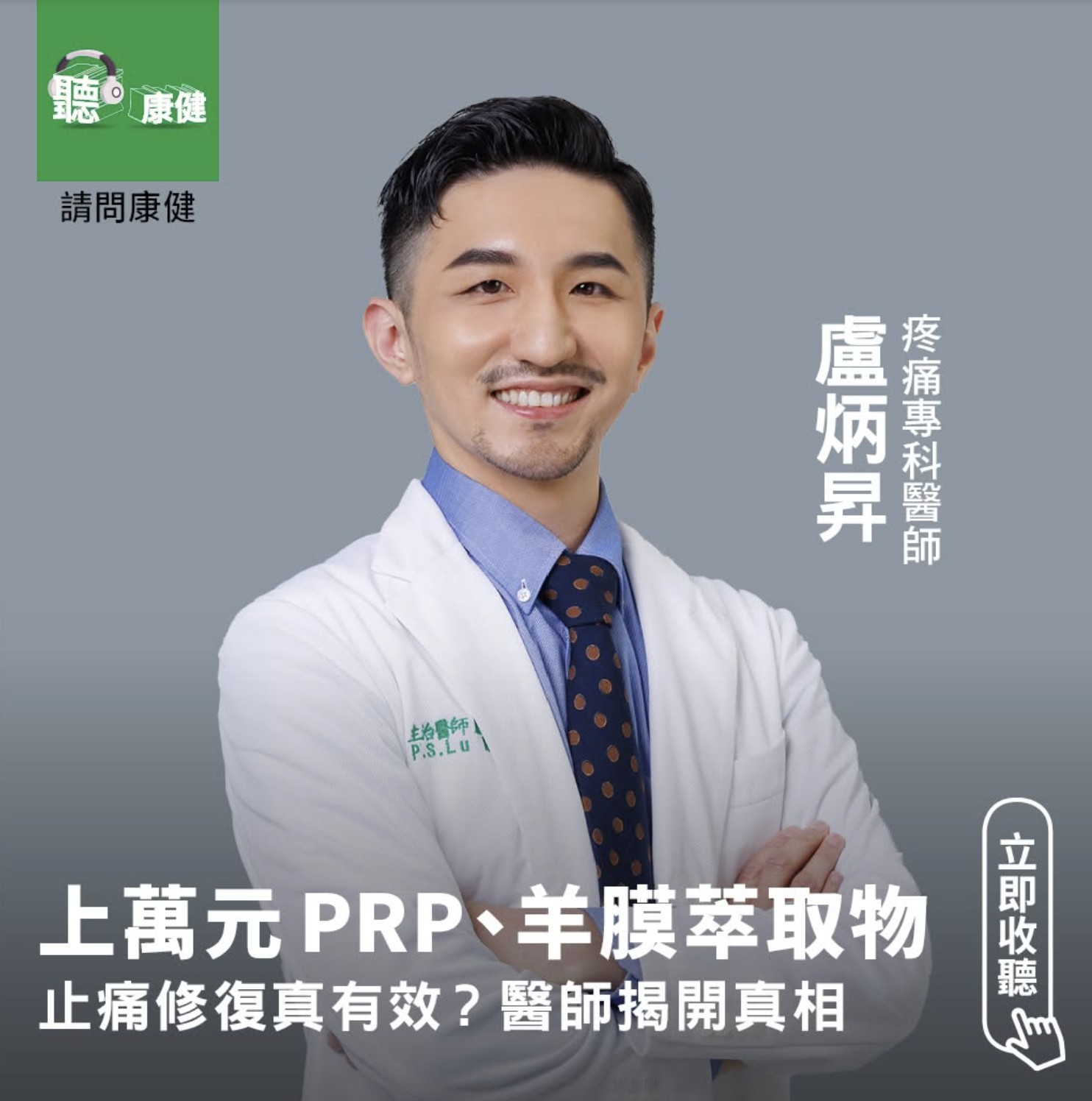
Dr. Ping-Sheng Lu, Director of Healer Clinic, was invited to participate in the Common Health Podcast "Ask Common Health" to analyze the principles and application of regenerative therapies like PRP and amniotic fluid extract from a clinical pain treatment perspective. He also discussed why, when facing chronic pain, the key is not simply seeking "a single injection," but first identifying the source of pain and then choosing the appropriate treatment.
Director Ping-Sheng Lu was also invited to contribute to the November 2025 Issue of Common Health / No. 317 "2025 Featured Hospitals" feature, sharing his experience in pain treatment and clinical practice.
Listen to "Ask Common Health Ep.144" - Interview with Dr. Ping-Sheng Lu
Program Title: [Click the link below to listen to the full episode]
"Ask Common Health Ep.144 | Is a pain-relief and repair injection costing tens of thousands worth it? The truth about PRP and amniotic fluid extract revealed! Ft. Pain specialist Dr. Ping-Sheng Lu"
This episode starts from common questions the public has about pain treatments, discussing therapies like PRP and amniotic fluid extract, and what factors need to be considered before receiving treatment for different pain issues.
What is PRP? For what types of pain might it be used?
PRP (Platelet-Rich Plasma) is a regenerative therapy where platelets are isolated and concentrated from the patient's own blood and then injected back into the treatment site.
Clinically, it may be applied to certain tendon, ligament, and joint-related issues, but the therapeutic efficacy varies depending on the specific disease, pain site, and extent of tissue damage.
Therefore, whether PRP is suitable should not be decided solely by "how long it has been hurting" or "where it hurts," but rather by first clarifying the actual source of pain and the condition of the tissues.
What is the difference between amniotic fluid extract and PRP?
PRP comes from the patient's own blood, whereas amniotic fluid-related preparations come from processed amniotic tissue. The two have different sources, preparation methods, and clinical considerations.
For patients, the more important question is not simply comparing "which one is higher grade," but rather whether the current pain originates from joints, tendons, ligaments, nerves, or other causes, and whether the treatment is suitable for their current condition.
Different regenerative treatments have their own applicable scenarios, and decisions should still be made after a doctor completes a diagnosis and evaluation.
If it still hurts after getting PRP, does that mean PRP is ineffective?
Not necessarily.
Pain can originate from different tissues and mechanisms; even if the pain location is similar, the actual cause can differ.
If pain persists or recurs after receiving PRP, physical therapy, medication, or other treatments, the next step is usually not to simply repeat the same treatment, but to re-evaluate the diagnosis and the source of the pain.
Healer Clinic will determine whether the issue stems from joints, tendons, ligaments, nerves, or other tissues based on medical history, physical exams, and necessary imaging tests, and then discuss subsequent treatment options.
Are PRP and regenerative therapy the only options for chronic pain?
No.
Treatment options for chronic pain can include medication, physical therapy, exercise therapy, injection therapy, regenerative therapy, and, in specific cases, image-guided interventional treatments.
For some patients whose pain has persisted for a long time and recurs even after conservative treatment, doctors may further evaluate the presence of abnormal microvessels associated with chronic inflammation to determine whether they are suitable for TAME (Transcatheter Arterial Microembolization).
Healer Clinic currently offers different interventional approaches, such as catheter-based C-TAME and ultrasound-guided s-TAME, depending on the location of the pain and the depth of the blood vessels.
Not all chronic pain is suitable for TAME; an individual assessment by a physician is still required.
Why shouldn't pain treatment be judged solely by "how much an injection costs"?
The same shoulder pain, knee pain, or other chronic pain can stem from entirely different tissues and diseases in different patients.
Therefore, the core of pain treatment is not to first decide whether to undergo PRP, amniotic fluid extract, or any other specific regimen, but rather:
First identify the source of the pain, then choose the treatment.
If the diagnosis itself is different, even using the same treatment can yield completely different results.
This is also why Director Ping-Sheng Lu places special emphasis on imaging interpretation and diagnosis in pain assessment.
Common Health, November 2025 Issue / No. 317

Healer Clinic and Director Ping-Sheng Lu also participated in the "2025 Featured Hospitals" feature in the November 2025 Issue / No. 317 of Common Health.
This issue of Common Health focuses on medical specialties and healthcare choices, introducing clinical developments and features across different medical fields through specialized articles.
[View "Common Health" November 2025 Issue / No. 317]
About Director Ping-Sheng Lu
Dr. Ping-Sheng Lu is the Director of Healer Clinic. He has a background in medical imaging, minimally invasive neurovascular intervention, and interventional pain management, with professional experience in acute ischemic stroke thrombectomy.
His clinical approach emphasizes first identifying the source of pain through diagnosis and imaging interpretation, and then choosing physical therapy, injections, regenerative therapy, or image-guided minimally invasive interventional treatments based on the patient's condition.
He is currently dedicated to C-TAME, s-TAME microvascular embolization (also known as "Okuno Therapy"), and other integrated treatments for chronic pain at Healer Clinic.
Further Reading
What is the difference between C-TAME and s-TAME?
Learn about the treatment methods, applicable areas, and differences between catheter-based C-TAME and ultrasound-guided s-TAME.
What is the next step if pain does not improve after PRP treatment?
Understand why it is necessary to re-confirm the source of pain and treatment direction when pain persists.
Medical Technology Cooperation between Healer Clinic and Japan's Okuno Clinic
Learn about the development background of TAME microvascular embolization therapy and Japan's Okuno Clinic.
Introduction to Director Dr. Ping-Sheng Lu
View Dr. Ping-Sheng Lu's professional background, clinical experience, academic publications, and media interviews.
Media Information
Podcast: "Ask Common Health Ep.144"
Interviewed Physician: Dr. Ping-Sheng Lu
Media: Common Health Magazine / Ask Common Health
Related Publication: "Common Health" November 2025 Issue / No. 317 "2025 Featured Hospitals"
※ This article is a compilation of media interview content and supplementary medical information. Actual diagnosis and treatment methods must still be evaluated by a physician based on individual conditions.
