
[TrendHealth Interview] Frozen Shoulder or Shoulder Tendon Tear? Director Bing-Sheng Lu Discusses 4 Key Differences and the Right Time for Examination
Health & Trend published an exclusive interview on August 31, 2026, featuring Dr. Ping-Sheng Lu, Director of Radiant Clinic, explaining a commonly confused issue: shoulder pain—is it frozen shoulder or a rotator cuff tear?
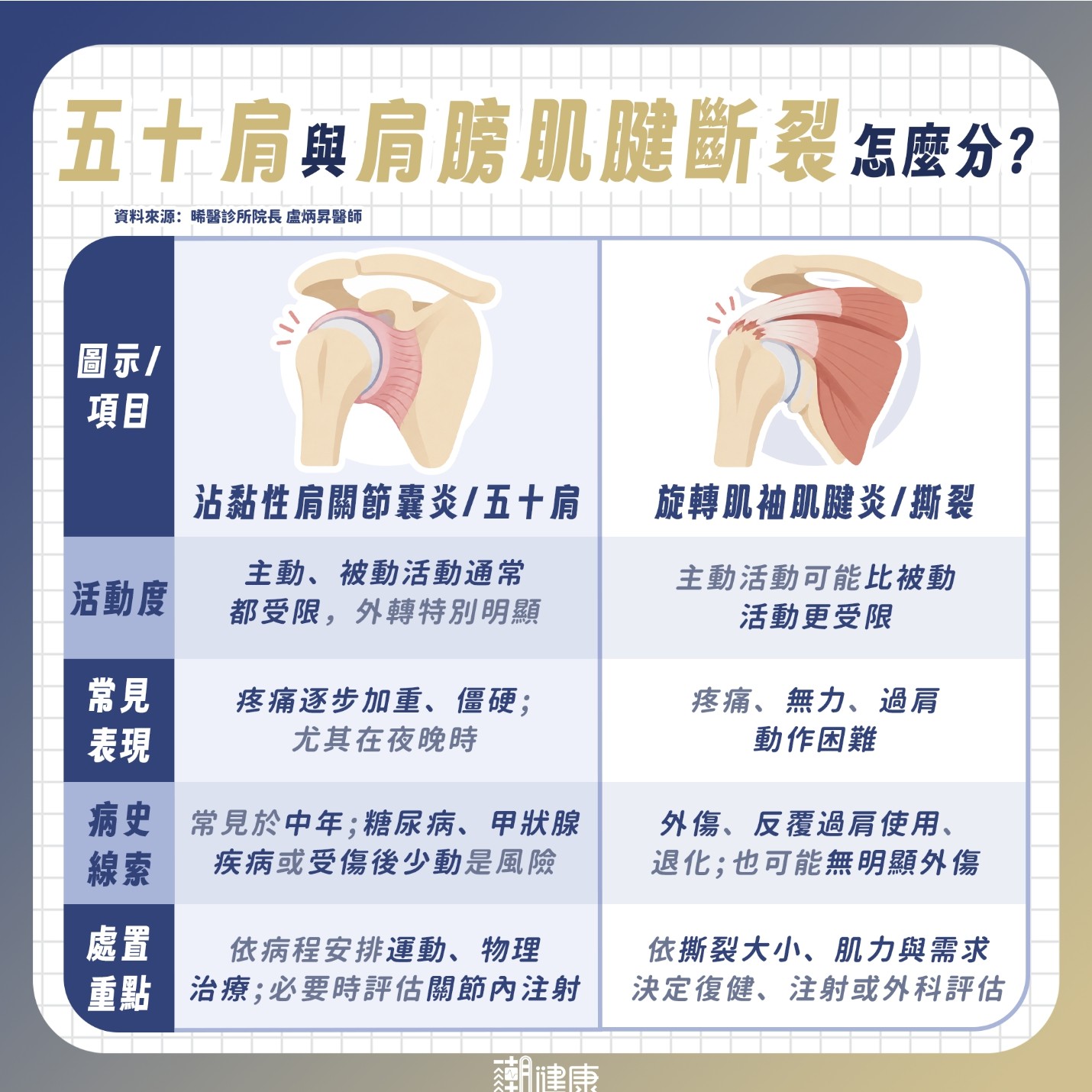
While the symptoms of the two overlap, their treatments differ. Dr. Lu suggested four directions for differentiation in the article.
Range of Motion: Frozen shoulder restricts both active and passive motion, whereas a tendon tear mostly limits active motion more than passive motion.
Common Symptoms: One presents with increasing stiffness and nighttime pain, while the other presents with weakness and difficulty with overhead activities.
Medical History Clues: Diabetes, thyroid disease, or inactivity after injury, versus trauma, degeneration, and repetitive overhead use.
Key Management: Frozen shoulder is managed with exercise and physical therapy tailored to the stage of the condition, while a tendon tear is managed with rehabilitation, injections, or surgical evaluation depending on the tear size, muscle strength, and functional demands.
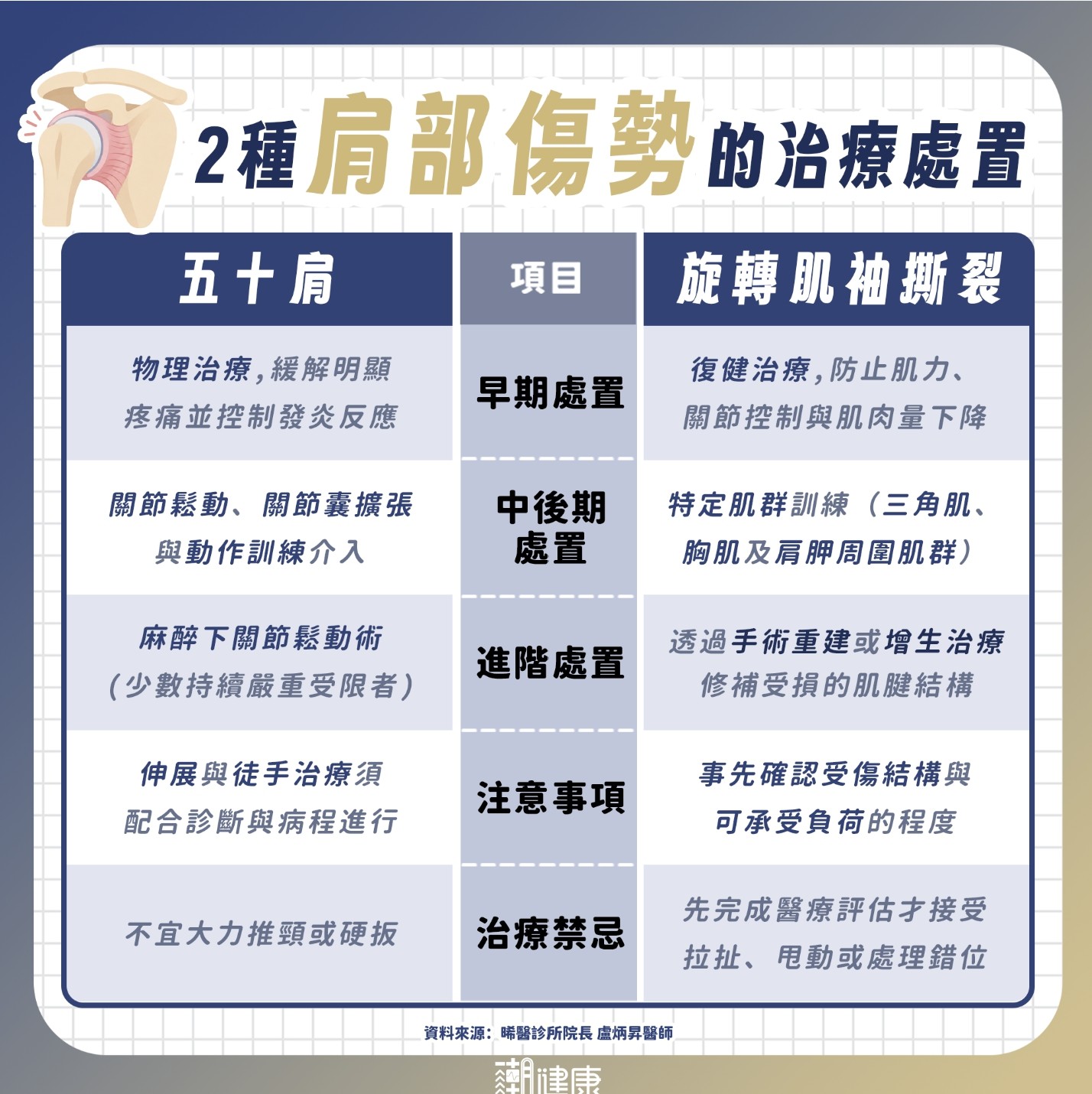
Each imaging modality plays a specific role. X-rays check for degeneration, dislocation, and calcification; musculoskeletal ultrasound evaluates the rotator cuff and bursa; and MRI is used to assess deep structures and the extent of tears. For frozen shoulder itself, diagnosis still relies primarily on medical history and physical examination, and cannot be diagnosed based on imaging alone.
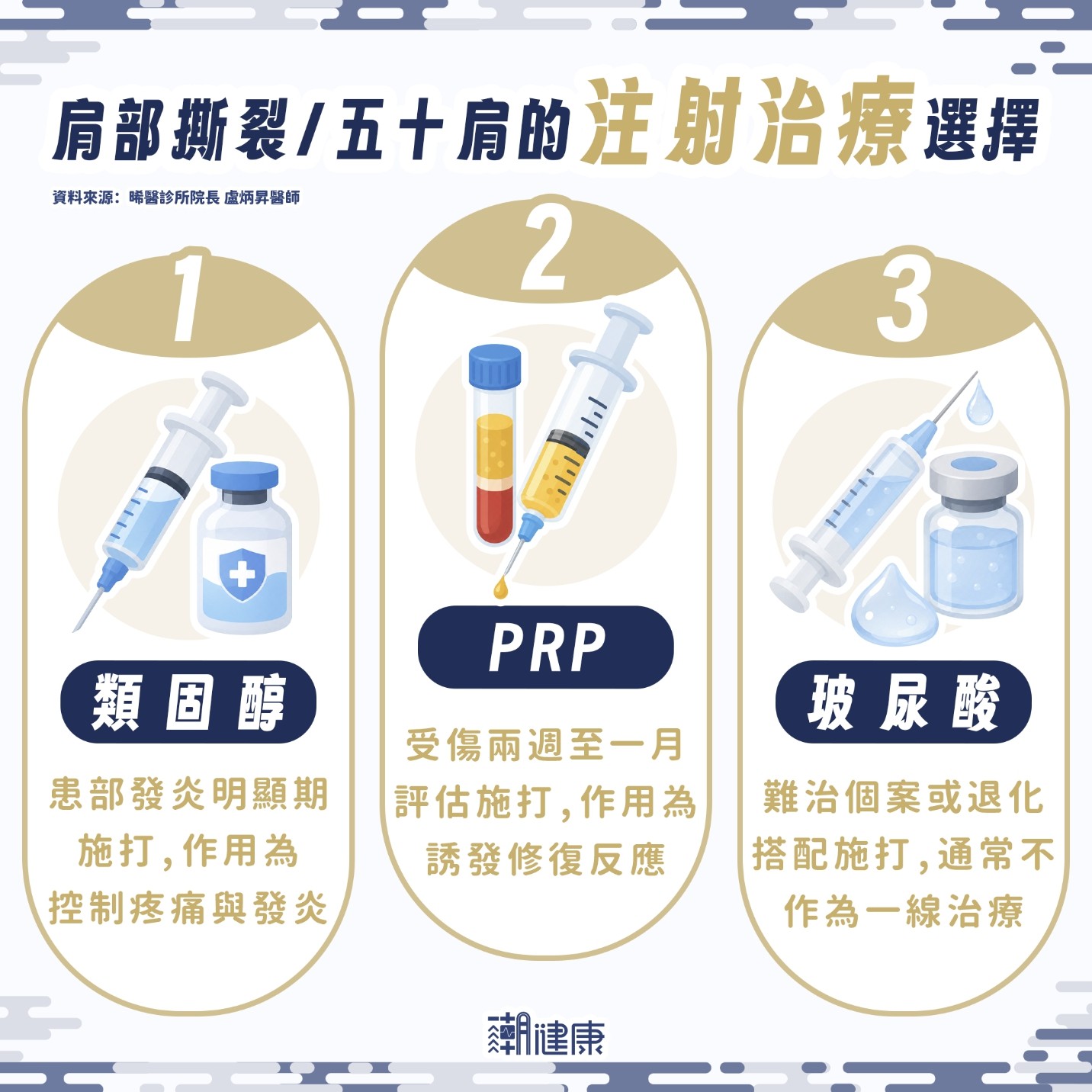
The article also discusses the timing of injection therapies. Corticosteroids, PRP, prolotherapy, and hyaluronic acid each have their indications and levels of evidence; PRP is not a routine treatment for frozen shoulder. After an injury, one should first confirm the diagnosis, the extent of the tear, and physical condition before deciding whether to receive an injection and what to inject. Lastly, which is also Radiant Clinic's consistent approach to evaluating shoulder pain: if there is no improvement after about one month of treatment, the correct step is to go back and re-confirm the diagnosis, rather than immediately switching to a stronger treatment.
For the complete content, please see the original article: "Is Frozen Shoulder Easily Misdiagnosed? How to Tell It Apart from a Shoulder Tendon Tear? Doctor Reveals Key Differences in Identification and Treatment Interventions" (Health & Trend, 2026/08/31)
Extended Reading: Frozen Shoulder Education Homepage . No Improvement After a Long Period of Frozen Shoulder Rehabilitation—What is the Next Step in Evaluation?
This page is a summary of the media report. The original text shall prevail for the complete content.
