"News98 Famous Doctor On Call" Interview with Director Lu Bing-sheng | Chronic joint pain repeatedly won't heal? Learn about the Japanese Okuno TAME microcatheter embolization therapy
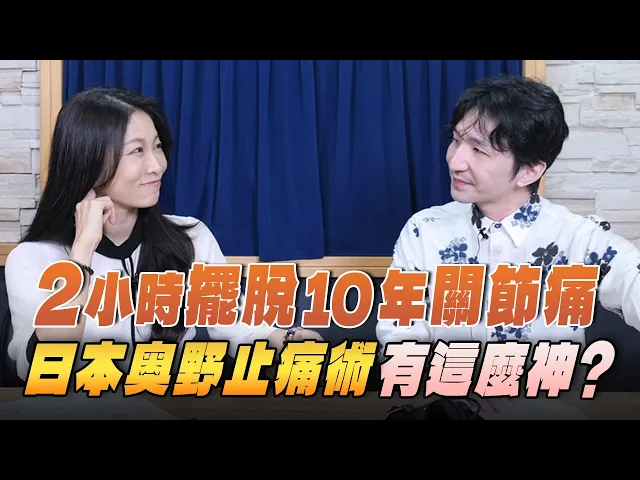
On December 31, 2025, Dr. Ping-Sheng Lu, Director of Clarity Clinic, was invited to an exclusive interview on News98 Radio's "Famous Doctors On Call." Together with host Pharmacist Shishi, they started the discussion from long-term joint pain and introduced TAME (Transcatheter Arterial Micro-Embolization), a technique originating from Okuno Clinic in Japan.
The program, titled "Get Rid of 10 Years of Joint Pain in 2 Hours? Is the Japanese Okuno Pain Relief Treatment Really That Miraculous?", guided listeners to understand that in addition to joint degeneration, tendon, or ligament injuries, interventional medicine in recent years has also begun to focus on the abnormal microvascular proliferation around pain-afflicted areas.
Pain That Has Not Improved for a Long Time: The Issue May Not Just Be "Degeneration"
For issues like knee pain, frozen shoulder, tennis elbow, de Quervain's tenosynovitis (mommy's wrist), and plantar fasciitis, some patients improve gradually after rest, physical therapy, medication, or injection treatments, but others suffer from recurring pain for months or even years.
Long-term pain does not mean the cause is always the same.
In addition to structural issues in joint cartilage, tendons, ligaments, and nerves, studies have found that abnormal new microvessels may appear around some chronically inflamed tissues, accompanied by the proliferation of nerve fibers, which may participate in the process of persistent pain.
Therefore, when facing pain with limited long-term treatment effects, the most important thing is not to immediately switch to another pain relief method, but to reconfirm:
Where is the actual source causing the pain?
What is Japan's Okuno TAME Microvascular Embolization?
TAME (Transcatheter Arterial Micro-Embolization) is a treatment concept developed by Japanese interventional radiologist **Dr. Yuji Okuno**.
Unlike injecting medication directly into painful tissues, TAME approaches some chronic pains from the perspective of "blood vessels."
Physicians verify blood vessel distribution around the painful area through imaging and then perform selective embolization targeting abnormal microvessels associated with chronic inflammation, hoping to reduce abnormal blood flow and associated inflammatory responses.
This type of treatment is not applicable to all pains, nor is embolization performed simply upon seeing pain. Whether there are suitable abnormal blood vessels to treat, and whether the pain originates from other structural or neurological issues, must first be fully evaluated by a physician.
Does "Get Rid of 10 Years of Joint Pain in 2 Hours" Mean Everyone Can Fast-Track Pain Relief?
Not necessarily.
The News98 program used "Get Rid of 10 Years of Joint Pain in 2 Hours?" as a question-based title, hoping to raise awareness among more people about this relatively unfamiliar minimally invasive treatment.
However, the causes, course, and tissue status of chronic pain vary from person to person. The program title should not be interpreted as meaning every patient who undergoes the treatment will have their pain completely relieved within two hours.
Improvement for some patients may happen gradually, while other patients may be evaluated as completely unsuitable for TAME.
Therefore, a question more important than "how long the treatment takes" is:
Find the source of the pain first, then decide on the treatment method.
Diagnostic Imaging: An Important Step Before Interventional Treatment
Dr. Ping-Sheng Lu has a background in diagnostic imaging, neuroradiology, and pain specialty.
An important difference between interventional radiology and general pain treatment is that, in addition to performing treatments, physicians also need to understand information provided by X-rays, ultrasounds, MRI, CT scans, and angiography to judge the lesion's location, surrounding anatomy, and blood vessel distribution.
For patients with recurring pain whose cause remains unidentified, re-examining whether imaging findings truly match symptoms is sometimes more important than immediately undergoing the next treatment.
Clarity Clinic currently has Director Ping-Sheng Lu perform catheter-based C-TAME (Catheter-based Transcatheter Arterial Micro-Embolization). Evaluation will be conducted prior to treatment based on patient symptoms, physical examination, and imaging, before determining whether the patient meets indications for further interventional treatment.
Chronic Pain Treatment: It's Not Just About "Endurance" or "Surgery"
If pain persists for several months and continues to recur despite physical therapy, medication, or injection treatments, the next step does not have to be continuing the exact same treatment, nor does it mean surgery is definitely required.
What is more important is to re-evaluate the diagnosis.
Clarity Clinic takes an imaging diagnosis and stepped treatment evaluation approach to chronic pain, discussing different treatment paths such as physical therapy, ultrasound-guided therapy, regenerative injections, or C-TAME microvascular embolization based on the actual cause.
Different treatments have their own indications; there is no single treatment suitable for all chronic pain patients.
Extended Reading
Media Source: News98 Radio "Famous Doctors On Call"
Broadcast Date: December 31, 2025
Interviewee: Dr. Ping-Sheng Lu, Director of Clarity Clinic
