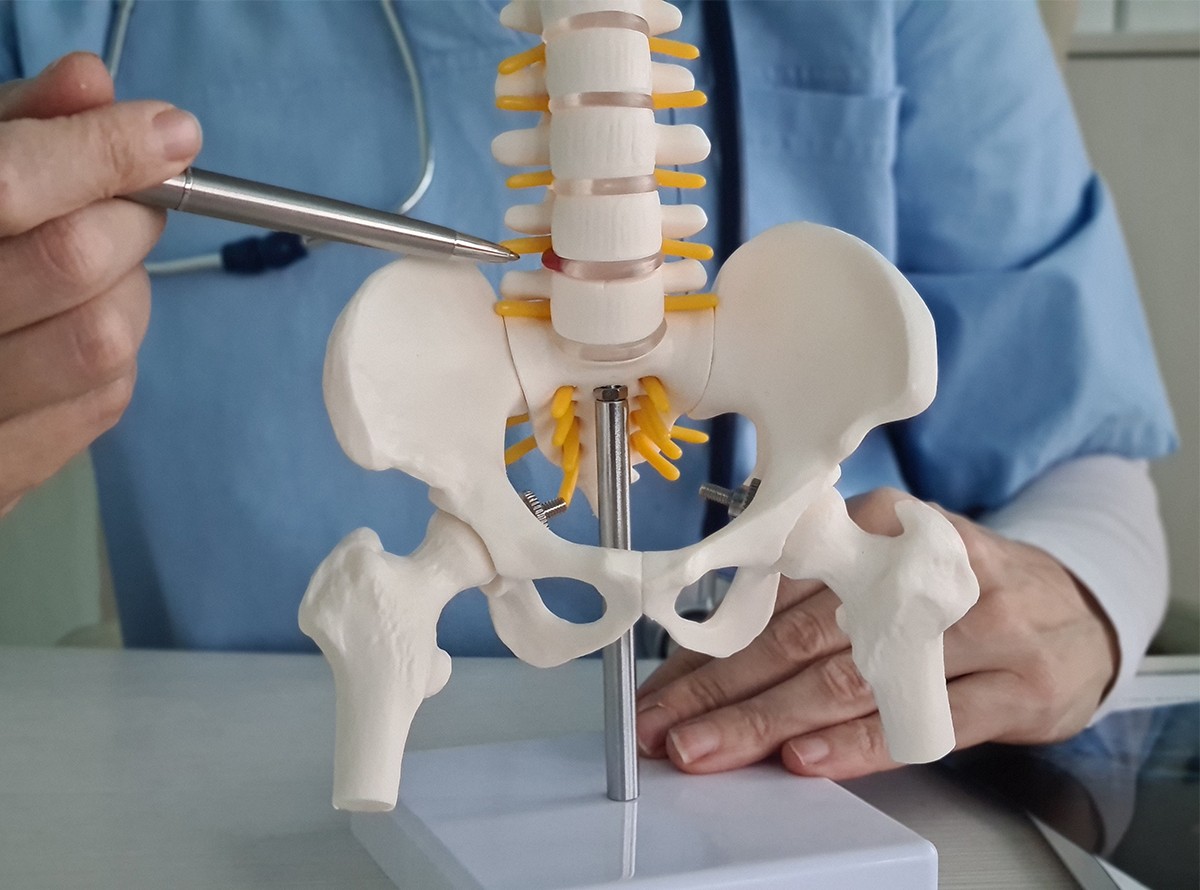
How to confirm sciatica? What examinations will a doctor perform, and which symptoms require immediate medical attention?
How to confirm sciatica? What examinations will a doctor perform, and which symptoms require immediate medical attention?
Article Summary
When pain extends from the waist to the leg, many people immediately think of sciatica, but to confirm if it is sciatica, one cannot rely on guessing, but on an examination. This article explains how the pain of sciatica travels, how to classify the severity of symptoms, what examinations doctors will perform, and which symptoms are warning signs that require immediate medical attention. To understand the complete causes and treatment options of sciatica, you can refer to the sciatica topic article on this site; this article focuses on "how to confirm."
How does the pain of sciatica travel?
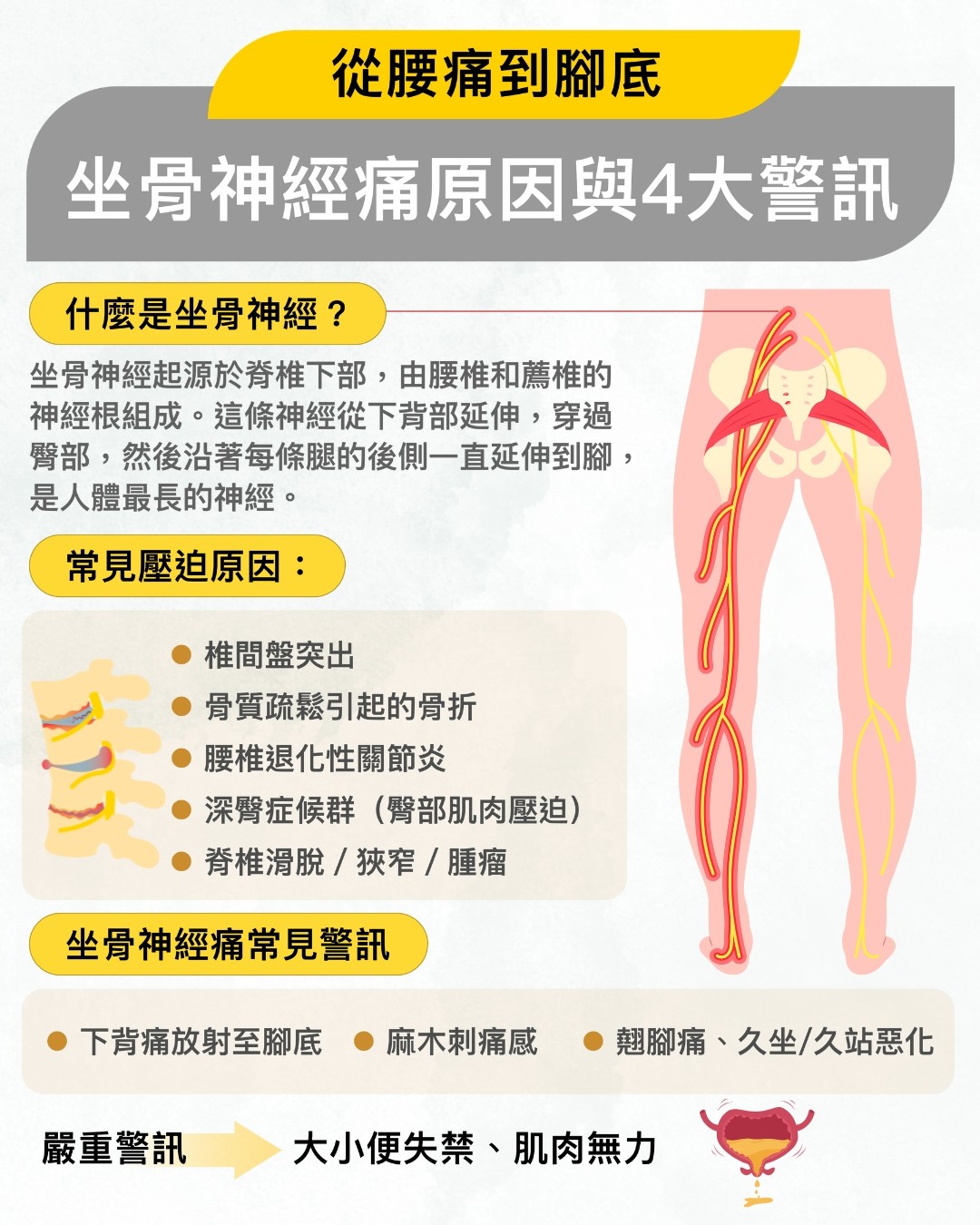
It follows the path of the nerve. The sciatic nerve is composed of the fourth and fifth lumbar nerves and the first to third sacral nerves, passing through the buttocks and extending down the lower limbs. When a nerve root is compressed (the most common cause is a herniated disc, others include spinal stenosis caused by lumbar degeneration, lumbar spondylolisthesis, deep gluteal syndrome, etc.), pain or numbness will extend from the lower back along the buttocks, the posterolateral thigh, to the calf and even the sole of the foot. This characteristic of "radiating along the line" is the biggest difference between it and simple lower back pain.
How to classify the severity of symptoms?
Mild: Intermittent tingling, numbness, or burning sensation in the lower back, buttocks, or lower limbs, which is more obvious after prolonged sitting or standing, can be relieved after rest, and daily activities are largely unaffected.
Moderate: Pain and numbness are persistent and obvious, extending to the thigh, calf, or sole of the foot like being lightly shocked; unable to stand or sit for a long time, worsening when bending over, lifting heavy objects, or crossing legs, and activities begin to be restricted. Actions that increase abdominal pressure, such as coughing and sneezing, will aggravate the pain, which is also a common manifestation of nerve root irritation.
Severe: Severe pain, leg weakness or muscle atrophy, difficulty walking, and even problems with bowel or bladder control. At this level, it is no longer in the range of "just observe and see."
Which symptoms are warning signs that require immediate medical attention?
Three warning signs; if any of them appear, please seek medical attention immediately, do not wait: urinary/fecal incontinence or difficulty urinating; numbness in the perineum (groin, saddle area); significant weakness in the lower limbs or rapid muscle atrophy.
These may represent that the degree of nerve compression has affected important functions, which belongs to an emergency that needs to be dealt with as quickly as possible.
If there are no such warning signs, but the radiating pain in the lower back and legs persists for more than a week without improvement, it is also recommended to seek medical evaluation early to confirm the location and cause of the compression, and not to rely on painkillers to endure it in the long term.
What examinations will the doctor arrange first?
Perform physical examinations first, and then arrange imaging as needed. The most commonly used is the Straight Leg Raising Test (SLRT): the doctor assists in raising the leg while the patient lies flat; if radiating leg pain is induced between 30 and 70 degrees, it indicates that the nerve root may be irritated. The doctor will also ask you to walk on your tiptoes and heels to test the muscle strength of your calves and feet, and check for sensory dullness and abnormal tendon reflexes.
The results of physical examinations are influenced by subjective descriptions and the method of execution, so they require the doctor's comprehensive judgment before arranging imaging examinations: X-rays are used to confirm spondylolisthesis, degenerative bone spurs, or joint space narrowing; MRI can clearly display the location and degree of nerve root compression; CT is supplemented when necessary.

Does leg pain necessarily mean sciatica?
Not necessarily. In addition to nerves, the source of lower limb pain can also be blood vessels: vascular claudication caused by lower limb arterial stenosis will also cause leg pain when walking, but the cause and treatment are completely different. The differentiation between the two needs to be confirmed by a doctor through medical history, physical examination, and appropriate imaging or vascular examinations, which is also why "waist and leg pain" is not recommended for self-diagnosis of the source.
After confirmation, how is the treatment arranged?
Depending on the cause and degree of compression, there are corresponding options ranging from medication, rehabilitation to interventional therapy. For a complete explanation of the causes and treatment methods, please see the sciatica topic article on this site. If your waist and leg pain has persisted for some time and you want to confirm the cause, you can first perform a pre-assessment via LINE. When seeing the doctor, bring past imaging data (X-ray, MRI) and treatment records for the doctor to examine and explain the appropriate next step. After confirming the direction, please see the "Sciatica" topic article for a complete summary of causes and treatments.
Written by: Dr. Ping-Sheng Lu
Disclaimer: This article is for health education purposes and cannot replace professional medical diagnosis and treatment advice. If any of the emergency warning signs described in the article appear, please seek medical attention immediately.
