
Dizzy when turning your head? Understanding Bowman's Syndrome (Rotational Vertebral Artery Occlusion Syndrome)
Dizzy when turning your head? Understanding Bowman's Syndrome (Rotational Vertebral Artery Occlusion Syndrome)
Article Summary
A man in his thirties came to my outpatient clinic. Five years ago, he suffered a contusion to his shoulder and lower neck. Since then, he had repeatedly experienced a very peculiar symptom: whenever he turned his head to the left, everything in front of him would suddenly go black, and he would even come close to losing consciousness. Once he turned his head back, the symptoms would quickly resolve.
Over the past few years, he had undergone a lot of rehabilitation and had received multiple PRP injections for shoulder and neck discomfort, but the problem was never resolved.
In fact, it wasn't that he hadn't received enough treatment, but rather that the target of the treatment might not have been the tendons and joints from the very beginning.
The truly critical clue was not "the shoulder was once injured." What the physician discovered from the imaging studies was that the symptoms occurred almost simultaneously with the head-turning movement.
Why should you be especially careful if your vision goes black when you turn your head?
Because this pattern of symptoms points to blood flow, not the musculoskeletal system.
For tendon or joint problems, pain is usually related to usage: it aches more with movement and eases with rest. However, vision going black that "appears with a specific posture and resolves once leaving that posture" is more like a certain structure compressing the artery that supplies blood to the brain at a specific angle, causing vision to go black within seconds.
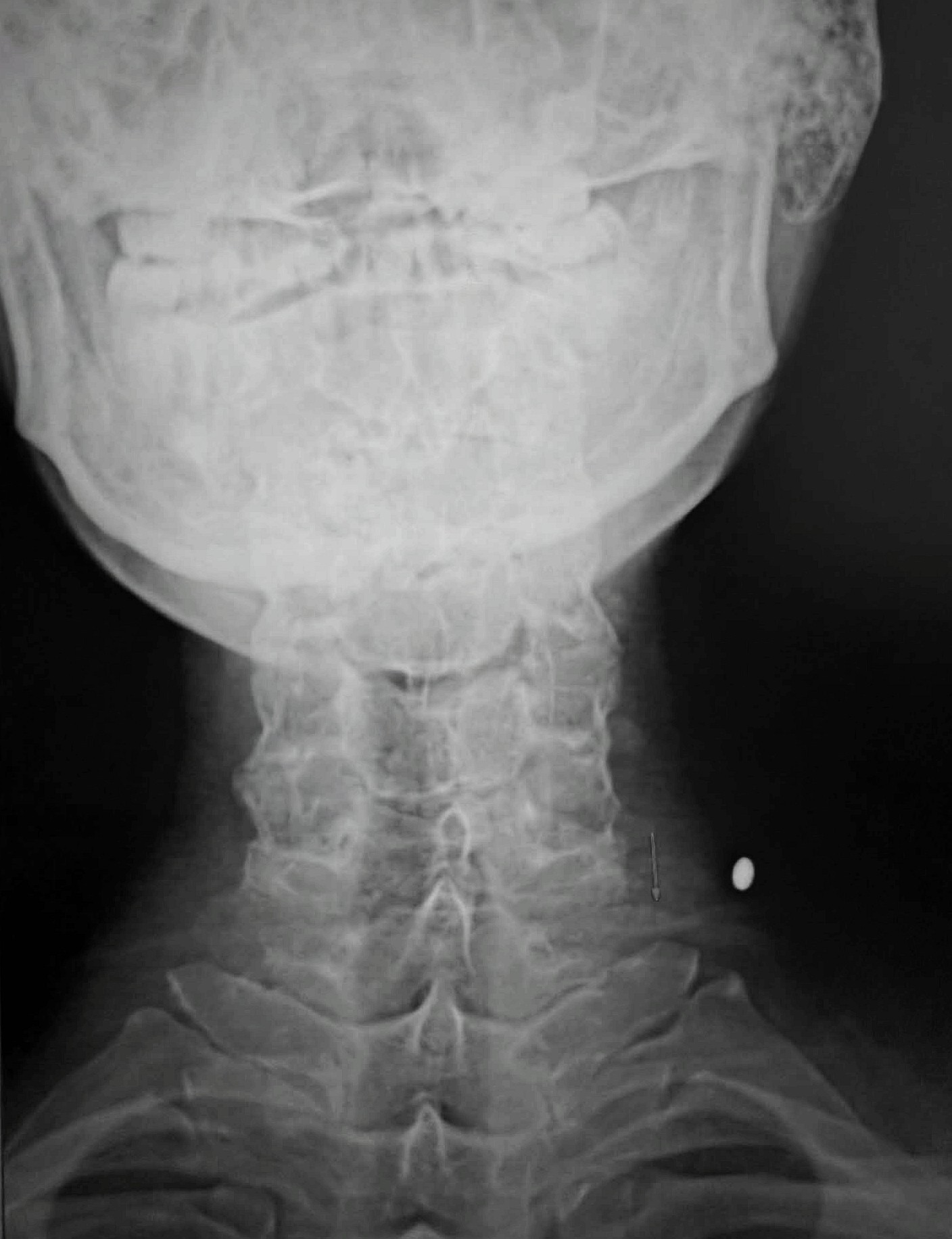
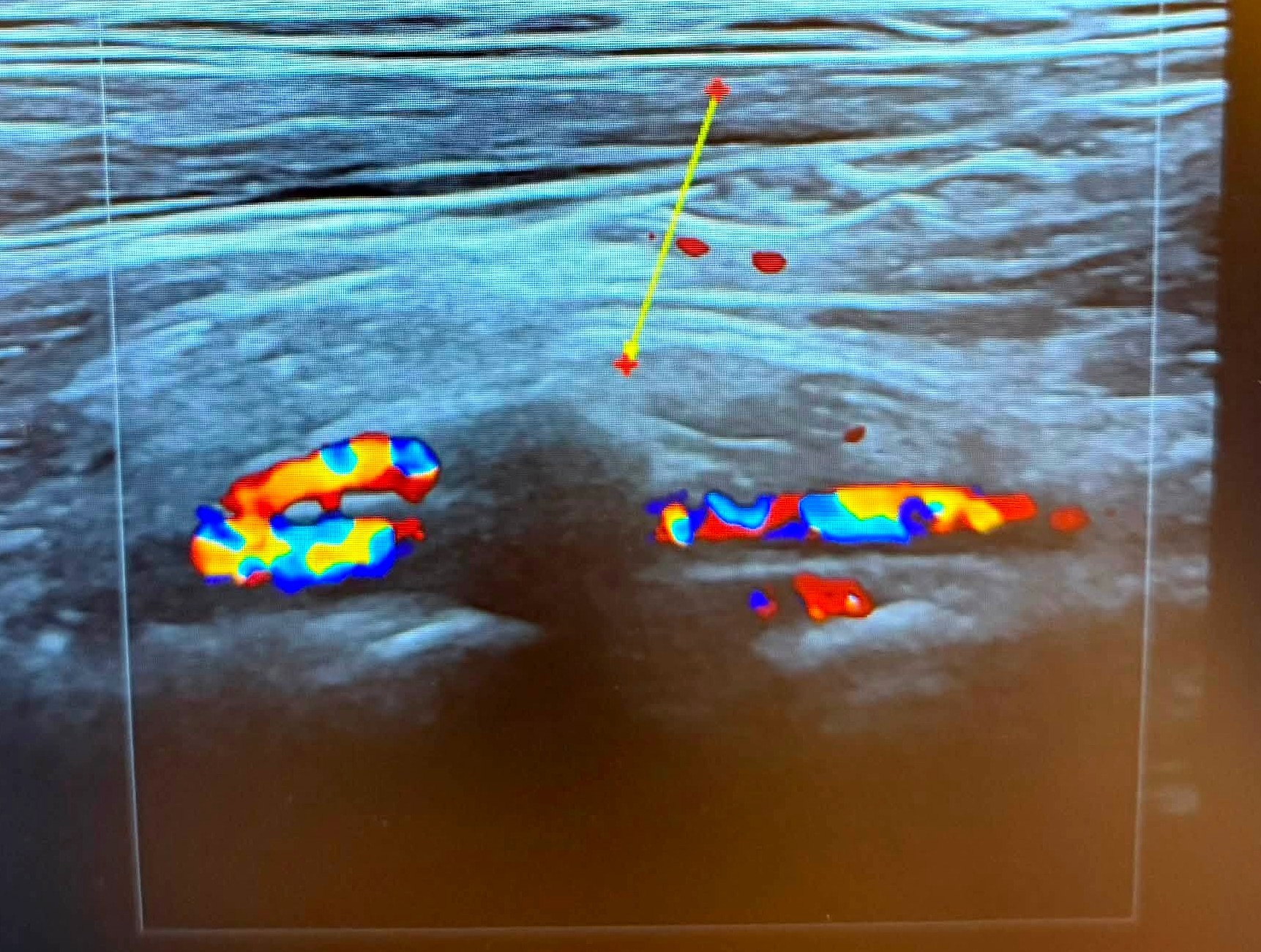
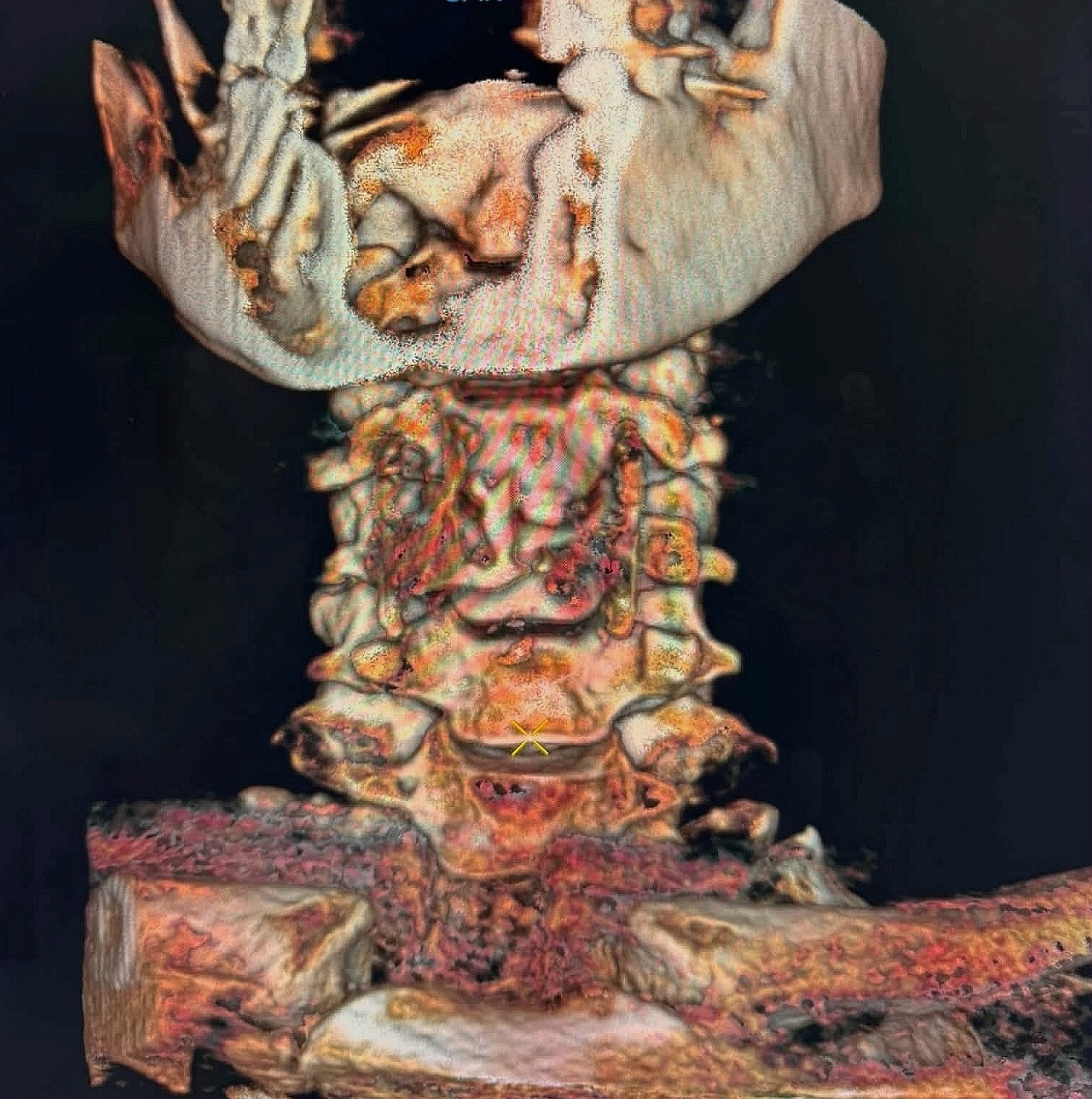
After further examination of this patient, an abnormal bony calcification structure was found at the left lower cervical spine around C6/C7. Ultrasound showed that it was very close to the left vertebral artery.
This makes us highly suspect: when the neck is turned to a specific angle, is the blood vessel being compressed, stretched, or kinked by this structure, causing a temporary drop in blood flow to the brain?
One of the diagnoses that must be ruled out is called Bow Hunter's Syndrome.
What is Bow Hunter's Syndrome?
The formal name is Rotational Vertebral Artery Syndrome (Bow Hunter's syndrome). It is named because symptoms are often triggered when the head is turned to the side—like the posture of drawing a bow to aim.
The mechanism works like this: the vertebral arteries run upward along the bony channels on both sides of the cervical spine, supplying blood to the brainstem, cerebellum, and occipital lobe. When the head rotates, if a segment of the artery is temporarily compressed by bone spurs, abnormal bony structures, fibrous bands, or surrounding tissues, blood flow to the posterior circulation will be insufficient. Possible symptoms include vision going black or visual abnormalities, dizziness or vertigo, unsteady gait, double vision, and in severe cases, pre-syncope or even actual loss of consciousness.
The classic feature can be summarized in one sentence: symptoms are triggered by a specific head posture and quickly relieved after returning to the neutral position.
Why can't it be found through routine examinations?
Because the focus of this disease is not "how it looks normally," but "what changes occur in blood flow at the very moment the head is turned."
Static X-rays, 3D imaging, and ultrasound can provide anatomical clues, such as whether there are bone spurs, calcified structures, and how the blood vessels run. In this patient's case, imaging found a highly suspicious structure, but this still does not directly prove that the vision going black was caused by this bone. An image taken while lying still simply cannot answer a question that only occurs when turning the head. Imaging studies each have their own scope of what they can and cannot see. This concept is fully explained in 〈Why does it still hurt when the MRI is normal?〉.
When a physician suspects this symptom, how will they arrange the examinations?
The next step is not to inject some expensive substance, but to perform a dynamic assessment. The sequence is roughly as follows.
First, confirm the vertebral artery blood flow under dynamic conditions, using ultrasound to compare changes in blood flow in different head positions. At the same time, rule out other causes that can produce similar symptoms: arrhythmia, abnormal blood pressure, ophthalmological, neurological, and vestibular system issues. Next, compare CTA or MRA in the neutral neck position versus the symptom-triggering posture to see the actual state of the blood vessel at that angle. If necessary, an experienced team will perform dynamic angiography to directly observe whether there is stenosis or occlusion when turning the head—there are plenty of cases in the literature where static imaging was normal and occlusion was only found during dynamic examination.
Ruling out one by one and confirming layer by layer follows the same logic as investigating any unexplained pain. For the complete process, please see 〈Still in pain after half a year of rehabilitation, and the doctor says no surgery is needed?〉.
Taking this patient as an example, the ultrasound blood flow assessment, 3D tomography, and X-ray imaging were all completed at Synergi Clinic, first clearly locating the position of the suspicious structure and its relationship with the vertebral artery; for the next stage, if dynamic angiography or subsequent management is needed, we will refer the patient to a medical center along with the compiled images and clues, so the medical center's team does not have to start from scratch.
If confirmed, how is it treated?
It depends on the cause and severity of the compression. In some cases, it is managed with activity modification and follow-up. If it is confirmed that a bony structure is compressing the vertebral artery at a specific angle, surgery may be required to remove the compressing structure. There are also some cases in the literature treated with endovascular stenting. Which path is suitable will be evaluated by the neurosurgery and neurointerventional teams at the medical center.
Such procedures need to be performed in a medical center; the role of Synergi Clinic is to complete the diagnosis and then make the referral.
The reason this symptom cannot be left ignored is that repeated compression of the vertebral artery carries a risk of causing a posterior circulation stroke in the literature, including cerebellar stroke. This is also why this differential diagnosis is worth running through seriously: it usually just looks like "dizziness when turning the head," but it belongs to the few neck problems that can truly evolve into a stroke.
Before it is confirmed, what should I pay attention to as a patient?
You need to keep three things in mind.
Do not repeatedly turn your head at home to test it. Triggering symptoms means triggering brain ischemia; this is not something you should experiment with.
Temporarily avoid high-risk situations: chiropractic neck adjustments, sports or movements with rapid neck twisting, driving, and working at heights. If symptoms occur in these situations, the consequences are not just dizziness; some situations can be highly dangerous.
Recognize emergency warning signs. If the vision going black persists, or is combined with double vision, slurred speech, difficulty swallowing, limb weakness, obvious unsteady gait, or severe new-onset head and neck pain, please seek medical attention immediately. These are manifestations of worsening blood flow insufficiency to the brain; do not wait for it to get better on its own.
What this case teaches us
The first step of treatment is always making the right diagnosis and finding the right cause.
This patient's rehabilitation and injections were not useless or wrong decisions. For example, doing rehabilitation after a shoulder and neck contusion and receiving repair injections for tendons are all reasonable treatment pathways. The problem was that a clue not belonging to the musculoskeletal system was hidden within his symptoms, and this clue could only be caught by the pattern of "symptoms synchronizing with posture."
The value of imaging is not just about placing the needle accurately; more importantly, it is to first confirm whether this problem is indeed one that should be treated with injections. Some symptoms that look like a shoulder and neck injury might actually require addressing the brain blood flow that disappears at the very moment the head is turned.
Want to get an evaluation?
If you experience vision going black or dizziness that is "triggered by a specific posture and relieved when leaving that posture," you can first describe the pattern of your symptoms (what posture triggers it, how long it lasts, how it is relieved) via LINE. The initial evaluations that Synergi Clinic can perform include a detailed medical history, dynamic ultrasound assessment of vertebral artery blood flow, and structural positioning using 3D tomography and X-rays. If further dynamic angiography or treatment is needed, we will assist with the referral. If the emergency warning signs listed above have already appeared, please seek medical attention directly; do not wait for an outpatient appointment.
Synergi Clinic is located at 2F-1, No. 40, Sec. 2, Heping E. Rd., Da'an Dist., Taipei City. We operate entirely by appointment. Phone: (02) 2366-0186.
Author: Dr. Ping-Sheng Lu
Last Updated: August 11, 2026
The case in this article has been de-identified. This article is for general health education information and cannot replace a doctor's diagnosis and treatment advice. Individual diagnosis must still be confirmed by a complete medical history and dynamic vascular examinations.
Medical Literature References
Choi JW, Qiao Y, Mehta TI, et al. Safety and efficacy of dynamic catheter-directed cerebral digital subtraction angiography for diagnosis of bowhunter syndrome spectrum disorders: a systematic review of the literature. Interventional Neuroradiology. 2024. doi:10.1177/15910199241236820
Duan G, Xu J, Shi J, Cao Y. Advances in the Pathogenesis, Diagnosis and Treatment of Bow Hunter's Syndrome: A Comprehensive Review of the Literature. Interventional Neurology. 2016;5(1-2):29-38. doi:10.1159/000444306
Vertebral Artery Stenting in a Patient With Bow Hunter's Syndrome. JACC: Case Reports. 2019. doi:10.1016/j.jaccas.2019.05.010
