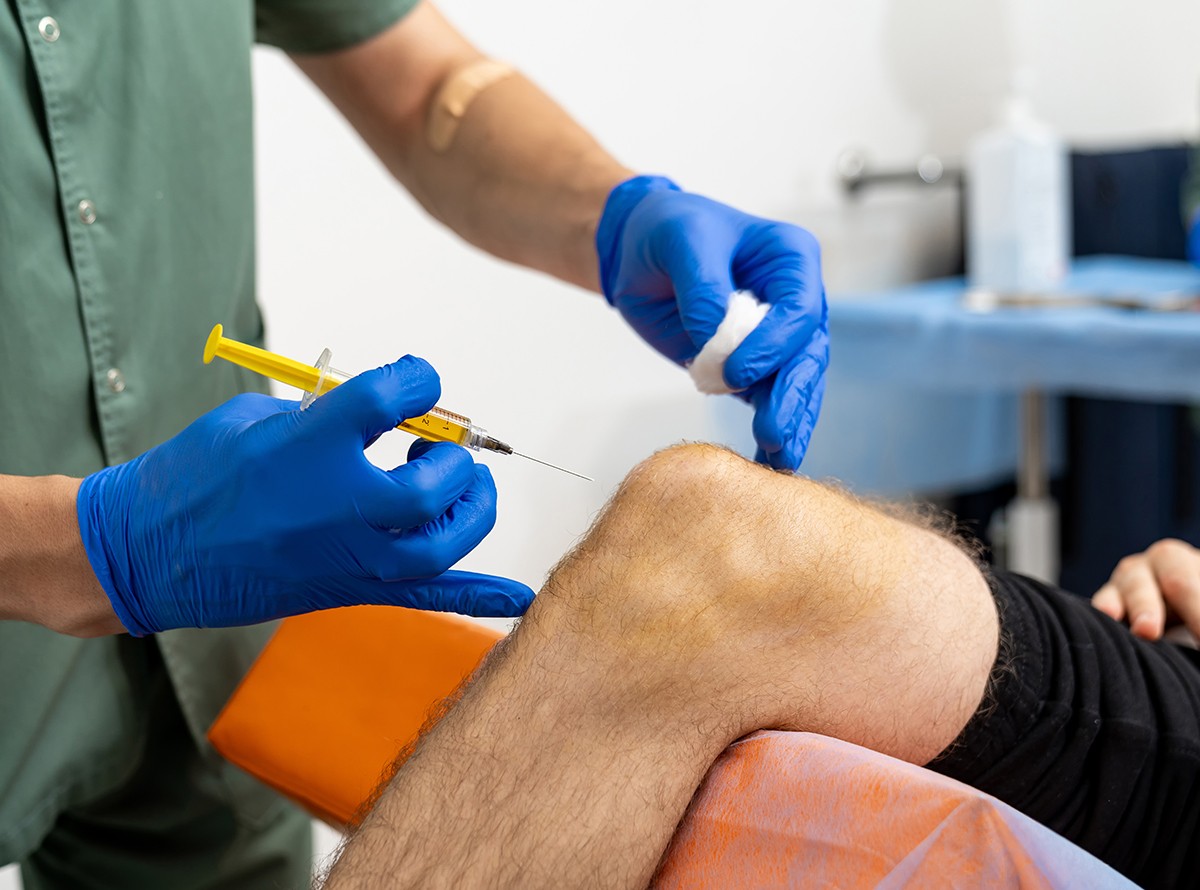
Why do PRP results vary? Four key factors affecting the effectiveness of PRP injections
Why do PRP results vary? Four key factors affecting the effectiveness of PRP injections
Article Summary
Despite receiving the same PRP injection, some people feel a significant improvement, while others feel almost nothing after the injection.
This discrepancy is not a matter of luck; it is mostly related to several checkable factors. This article explains the four key factors that influence the efficacy of PRP, and which direction to look into when the results are limited.
What is PRP? Why Do the Components Differ?
PRP (Platelet-Rich Plasma) is prepared by taking the patient's own blood and centrifuging it to separate the platelet-rich plasma, which is then injected into damaged or degenerated tissues. Platelets contain a variety of growth factors (such as PDGF, TGF-β, VEGF, IGF) that recruit cells near the damaged tissue to participate in the repair process.
The composition of PRP is not fixed. Depending on the concentration of platelets and the ratio of other cellular components, clinical practice distinguishes different types: Pure Platelet-Rich Plasma (P-PRP) has a high platelet concentration and almost no white blood cells, aiming toward tissue repair and reducing inflammatory responses; Leukocyte-Rich PRP (L-PRP) retains white blood cells and is more commonly used in chronic injuries or areas where infection risk is a consideration. Which type to use and how to prepare it is determined by the physician based on the lesion's conditions.
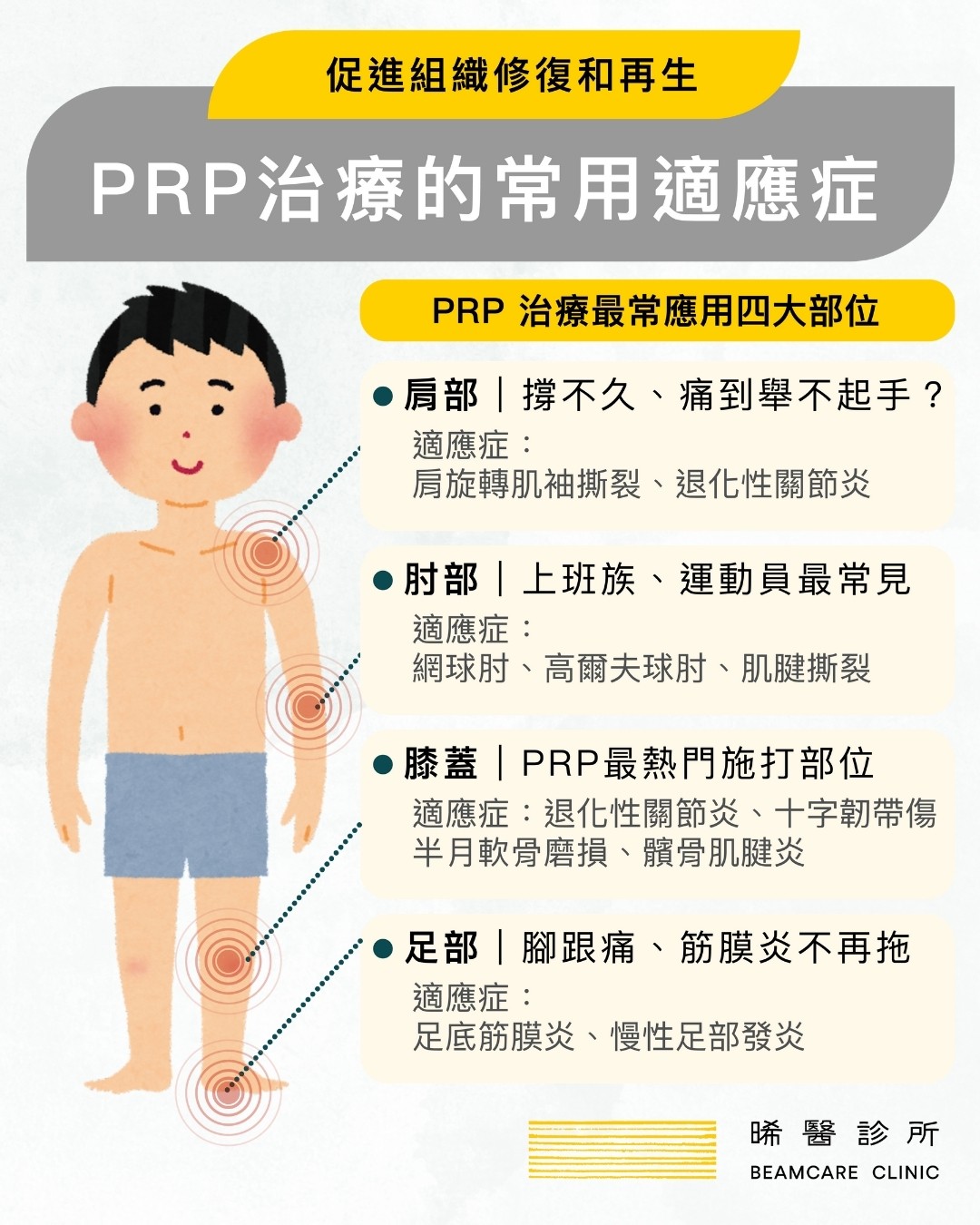
Commonly evaluated areas include the shoulder (frozen shoulder, rotator cuff tears, shoulder joint degeneration), elbow (tennis elbow, golfer's elbow, tendon tears), knee (osteoarthritis, cruciate ligament and meniscus injuries, patellar tendinitis), foot (plantar fasciitis), and lower back or waist pain. Suitability still must be assessed by a physician based on imaging and physical examinations.
Why Do Some People Find PRP Effective While Others Feel It's Useless?
The difference usually stems from four aspects: blood quality and individual constitution, platelet concentration, accuracy of injection placement, and dosage and site conditions. Each is explained in detail below.
Do Blood Quality and Constitution Affect Efficacy?
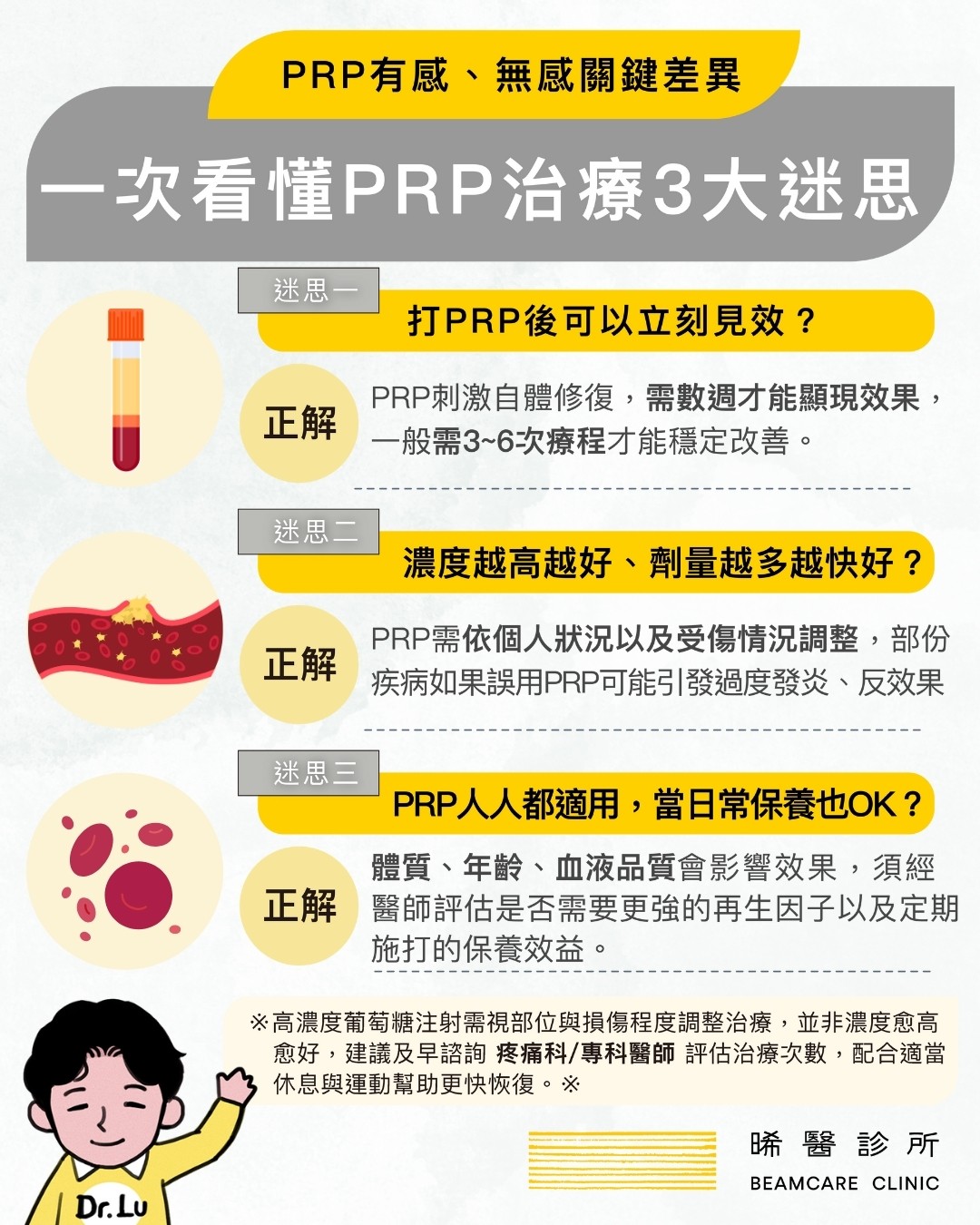
Yes. The raw material of PRP is the patient's own blood, and the activity and quality of platelets vary from person to person. Older individuals, or those with conditions such as diabetes or anemia, may have lower platelet activity and blood quality, which affects the growth factor profile that PRP can provide. This is why different people react differently to the same treatment.
Is a Higher PRP Concentration Always Better?
No. The platelet concentration in PRP is typically three to five times that of normal blood. However, a concentration that is too low may result in insufficient efficacy, while a concentration that is too high might trigger a significant inflammatory response. The concentration needs to be adjusted according to the patient's condition and the treated area; this step involves judgment during the preparation process and is one of the reasons for variations in outcomes between different clinics.
Why Does the Injection Location Require Image Guidance?
Because the accuracy of the injection directly determines whether the PRP acts on the target tissue. The physician's familiarity with anatomy and whether the procedure is performed under image guidance, such as ultrasound, will affect the precision of the injection. If the position deviates from the damaged tissue, the effect will be limited even with high preparation quality.
Is Dosage Related to the Injection Site?
Yes. Using the same dose in different areas involves different conditions. In larger compartments like the hip or shoulder joints, excessive dosage may cause post-injection discomfort; whereas in areas with relatively poorer blood circulation, like the sole of the foot or the patellar ligament, the physician may choose a different formulation depending on the situation. These adjustments are decided by the physician based on the site and lesion type.
How Many Injections Are Needed? How Long Does the Effect Last?
There is no fixed answer.
The number of PRP injections and the duration of efficacy vary depending on the site, lesion type, individual constitution, and treatment response; they need to be evaluated and explained by the physician based on follow-up progress. It is important to note that PRP is not a treatment that remains effective long-term after a single procedure, nor is it recommended as a routine injection on a fixed schedule. Please discuss with your physician whether to receive another injection and at what interval.
Is It Normal to Feel More Pain After a PRP Injection? How Long Does It Take to Know If It Is Truly Ineffective?
First, regarding increased pain: soreness, swelling, and greater pain at the injection site than before within a few days to one or two weeks after treatment are mostly expected reactions. The purpose of PRP is to stimulate tissues to initiate repair, and the repair process itself involves an inflammatory response, so short-term discomfort does not equate to injection failure. If the pain continues to worsen, or if there is local heat, swelling, or fever, a follow-up visit is recommended.
How long before it is considered ineffective: PRP is not a painkiller; it addresses repair, which takes time to manifest. Most physicians observe for several weeks to about three months post-treatment. The basis for judgment is not how you feel on any single day, but the overall trend—for example, whether the intensity and frequency of pain or the extent to which it limits activity continue to decrease.
Two signals are worth noting. One is when there is absolutely no change after receiving one or two injections and the observation period has passed. The other is when each injection is effective, but the duration of efficacy becomes shorter each time. Both indicate that the current approach may not be addressing the source of pain. In these cases, the next step is not to schedule another injection, but to return to the clinic for your physician to verify.
What Four Things Should Be Reconfirmed Before Getting Another Injection?
The sequence is as follows, and each is more important than simply "switching to a different formulation."
First, is the diagnosis correct? Is the location of pain actually the location of the problem? Shoulder pain can originate from the cervical spine, knee pain from the hip joint, and next to a painful tendon, a nerve might be compressed at a specific angle. Without finding the source, any injection is just being delivered next to the pain point.
Second, what is the treatment goal? The goal of PRP is tissue repair. If your issue is the pain signal itself—for example, when chronically inflamed tissues have already grown abnormally proliferating microvessels and nerve endings—that is a different mechanism, and repair-focused injections are not designed for this symptom.
Third, the formulation and method. As mentioned in the previous paragraphs, blood quality, concentration, injection location, image guidance, dosage, and site—if any of these is not optimal, the outcome will be affected. This step confirms whether "the same treatment method is on the right track."
Fourth, the mechanism of pain. This is the most frequently skipped consideration. When pain persists for more than half a year, and both conservative treatment and injections yield limited response, clinical practice begins to consider whether the pain has entered another stage. It may not be a lack of tissue repair, but rather abnormal blood vessels continuously sending out signals. If this is the case, upgrading PRP to amniotic matrix, BMAC, or other regenerative formulations still addresses the repair phase, and changing formulations may not be the answer.
Once these four things are confirmed, the next step can be planned. To learn how to reconfirm the source of pain, please see "Still in Pain After Half a Year of Rehab, but the Doctor Says No Surgery Is Needed?"; to understand what non-surgical options are available after confirmation and how they are sequenced, please see "What Are the Treatment Options for Chronic Pain?".
If PRP Has Limited Effect, What Is the Next Step?
First confirm the source of pain, rather than directly switching to a stronger injection.
In areas of long-term chronic pain, besides soft tissue damage, there may also be abnormally proliferating microvessels, which is not what repair-focused injections are designed to treat. If you have received PRP with limited results, you can refer to "What Are the Treatment Options for Chronic Pain? Explaining the Sequence from Injectable Repair to Catheter Intervention" to understand subsequent evaluation directions; if the pain is in the knee, you can also refer to "Still in Pain After Getting PRP or Hyaluronic Acid in the Knee? Reasons for Inefficacy and a Complete Decision Guide for the Next Steps", and for subsequent options and the overall sequence when treatment effects are limited, refer to "What Are the Treatment Options for Chronic Pain?"
.
Interested in Further Evaluation?
You can conduct a preliminary assessment via LINE first. For your clinical appointment, please bring your past imaging data (X-rays, MRI, ultrasound) and treatment records, including the types of injections, number of sessions, and responses at other clinics. See-Leis Clinic is located at 2F-1, No. 40, Sec. 2, Heping E. Rd., Da'an Dist., Taipei City. Visits are by appointment only; phone: (02) 2366-0186.
Other reference articles:
What Are the Treatment Options for Chronic Pain? Explaining the Sequence from Injectable Repair to Catheter Intervention
Subsequent Options with Limited Effects
Authoring Physician: Dr. Ping-Sheng Lu
Disclaimer: This article is for educational purposes only and cannot replace physician diagnosis and treatment recommendations. The suitability of any treatment should be evaluated and decided by a physician.
References
Chahla J, Cinque ME, Piuzzi NS, et al. A call for standardization in platelet-rich plasma preparation protocols and composition reporting: a systematic review of the clinical orthopaedic literature. The Journal of Bone and Joint Surgery. 2017;99(20):1769-1779. doi:10.2106/JBJS.16.01374
Lim JJ, Belk JW, Wharton BR, et al. Most orthopaedic platelet-rich plasma investigations don't report protocols and composition: an updated systematic review. Arthroscopy. 2025;41(3):821-834. doi:10.1016/j.arthro.2024.03.021
