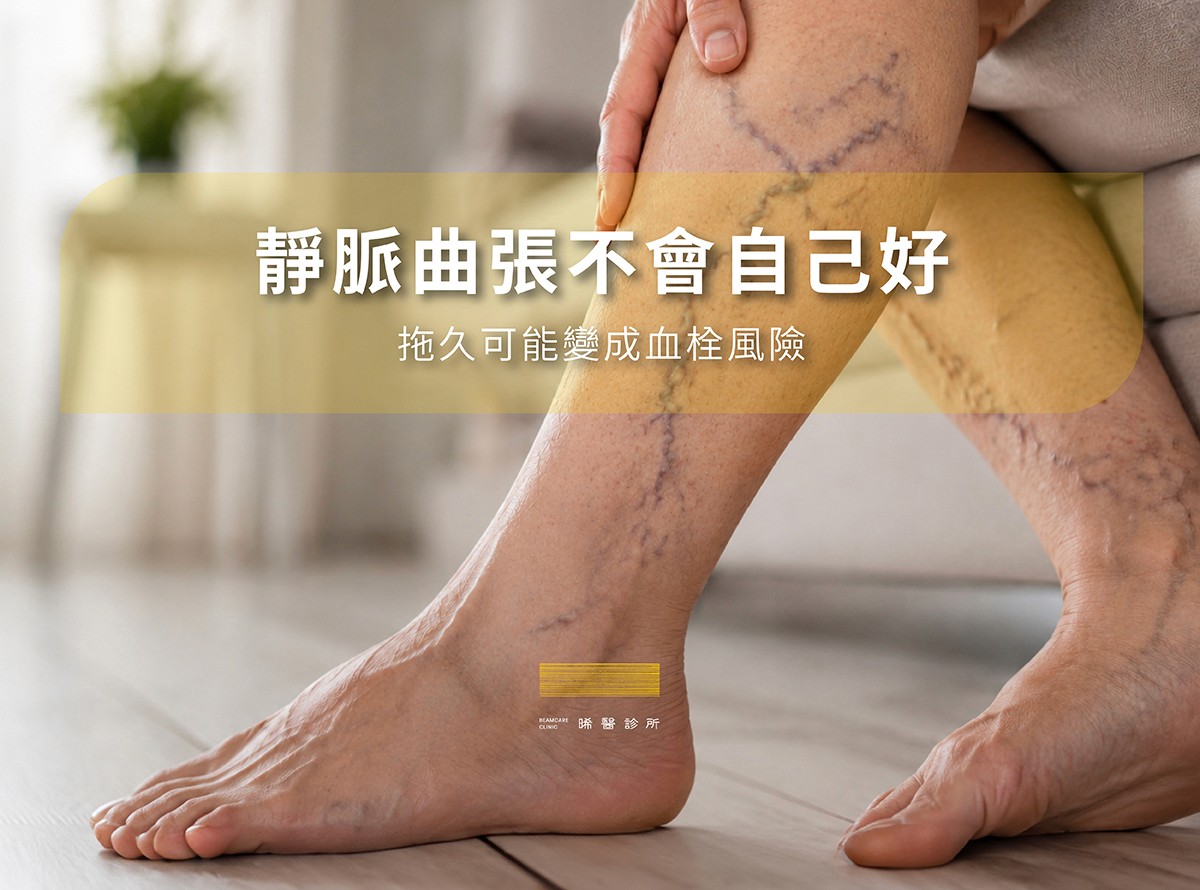

Is surgery necessary for varicose veins? Do compression stockings work? What are the treatment options?
Is surgery necessary for varicose veins? Do compression stockings work? What are the treatment options?
Article Summary
When bulging, twisted veins start appearing on your legs, with shins that easily feel sore, swollen, and heavy in the afternoon, or even frequent cramping at night, the first question many people ask is:
"Do varicose veins always require surgery?"
Some people might first buy compression stockings or apply ointments, hoping to make the protruding veins gradually disappear.
Let us give you the conclusion first:
Compression stockings can help reduce some of the soreness, swelling, bloating, and heaviness caused by varicose veins, but they cannot restore venous valves that have already lost function, nor can they directly eliminate existing venous reflux.
As for whether further treatment is needed, it cannot be judged solely by how visible the veins on the legs are, but must be evaluated comprehensively based on symptoms, blood vessel distribution, and the location and severity of reflux observed on a lower extremity duplex ultrasound.
Currently, treatment options for varicose veins are quite diverse. In addition to traditional surgery, they also include laser, radiofrequency, vein glue, sclerotherapy, and other non-thermal minimally invasive methods. Each treatment has its suitable vascular conditions, and there is no single method that fits all patients.
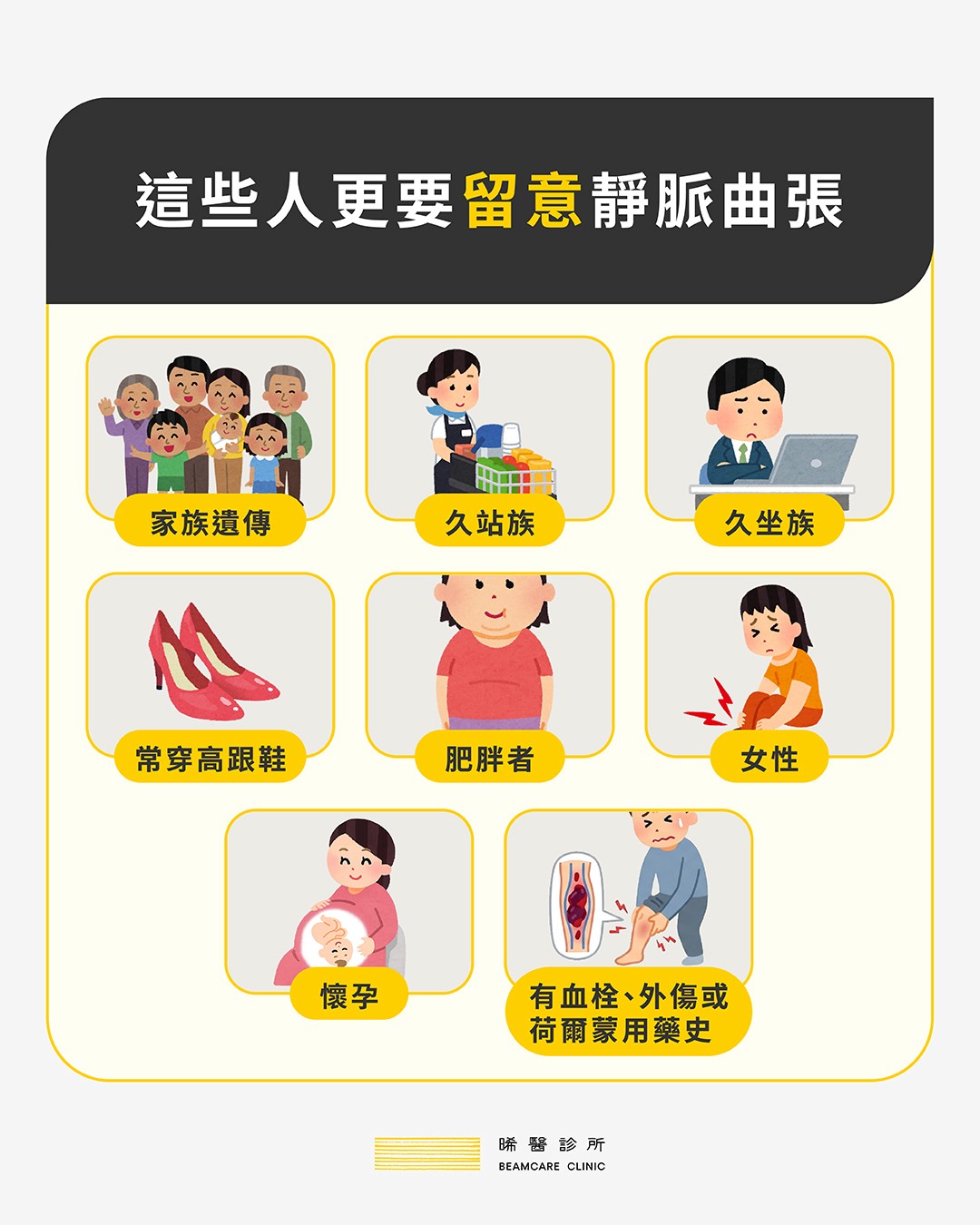
What are varicose veins? Why do blood vessels become increasingly visible?
The job of lower extremity veins is to return blood from the legs back to the heart.
Because blood must flow upward against gravity, veins have a series of "one-way valves" known as venous valves, along with the muscle pump generated by the contraction of calf muscles, to assist blood flow upward.
When venous valves fail to close completely, blood can flow downward (reflux), causing lower extremity veins to bear greater pressure over a long period. Over time, the blood vessels may gradually dilate and twist, forming visible varicose veins.
Therefore, varicose veins are not just an aesthetic issue of "bulging veins"; medically, they are a manifestation of chronic venous disease.
Common symptoms include:
Soreness, swelling, and heaviness in the calves
More pronounced after standing or sitting for a long time
Swelling in the ankles and calves in the afternoon or evening
Night cramps
Itching or discomfort in the legs
Bulging, twisted blood vessels
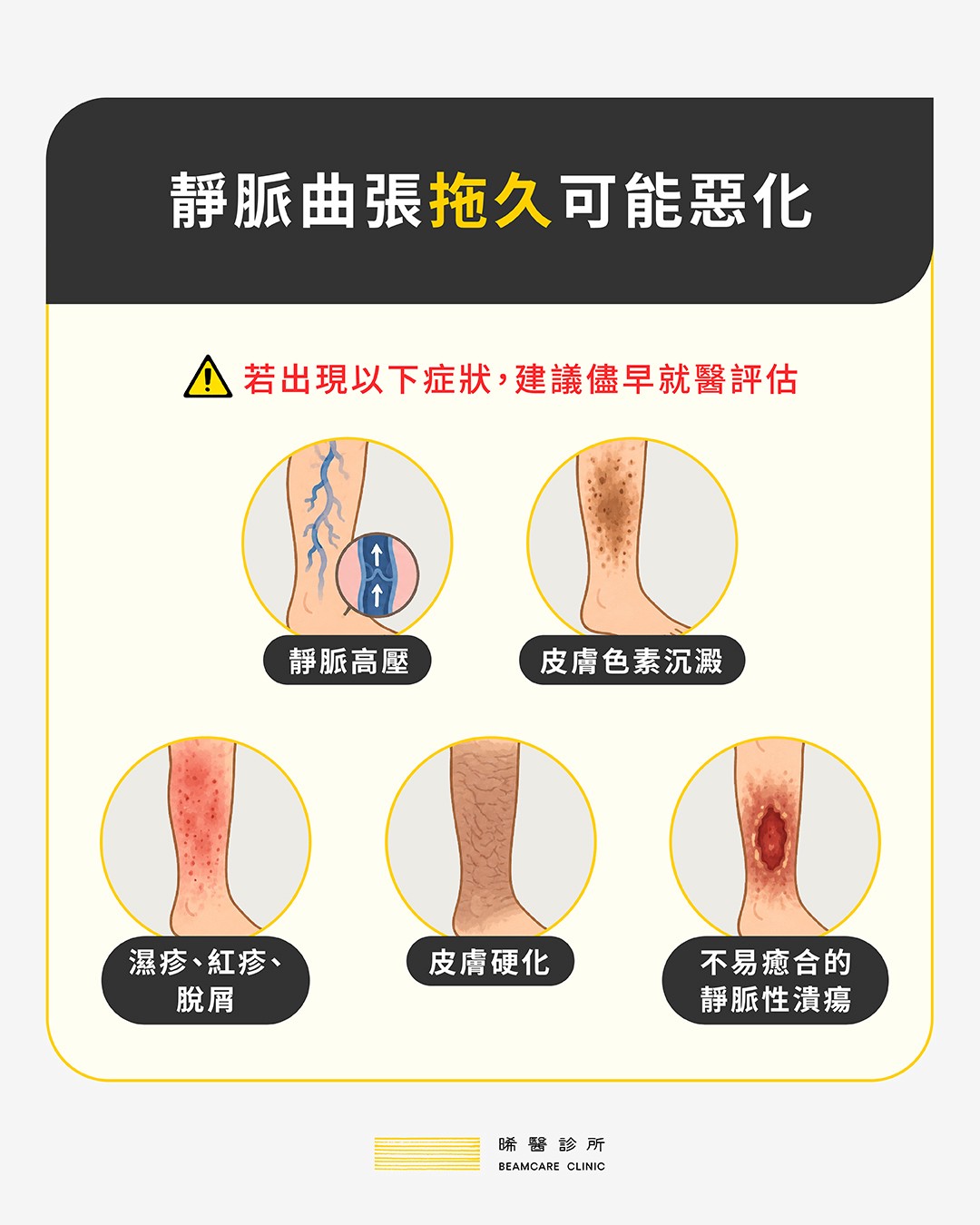
Some patients may experience hyperpigmentation or skin changes around the ankles
The severity of symptoms does not always align perfectly with how visible they appear outwardly, so a clinical evaluation is still required.
Can wearing compression stockings cure varicose veins?
Compression stockings can help manage symptoms, but they will not restore already formed varicose veins back to their original state.
Medical-grade compression stockings utilize pressure that gradually decreases from the ankle upward to assist lower extremity venous blood return and reduce venous congestion.
Some patients may experience the following after wearing them:
Legs are less prone to swelling
Reduced soreness and swelling
Improved heaviness after standing for long periods
Reduction in some nighttime discomfort
It is important to understand that the effect of compression stockings comes primarily from external compression and symptom control, rather than directly repairing the venous valves.
Therefore, for some patients, compression stockings are sufficient to make daily life much more comfortable; for others with more pronounced symptoms, they may wish to learn about other treatment options.
Guidelines published in 2023 by the Society for Vascular Surgery (SVS), the American Venous Forum (AVF), and the American Vein and Lymphatic Society (AVLS) state that for symptomatic patients with ultrasound-confirmed axial reflux in the great saphenous vein or small saphenous vein who are candidates for intervention, interventional therapy is recommended over compression therapy alone for long-term management.
Thus, a better way to understand it is:
Compression stockings are an important therapeutic tool, but they are not the only way to address varicose veins.
Is it absolutely necessary to wear compression stockings for 3 months before receiving treatment for varicose veins?
Not necessarily.
In the past, many patients heard the advice to "wear compression stockings for a few months first, and if it's not effective, then consider surgery."
Current international guidelines suggest that if a patient is already symptomatic, ultrasound has confirmed the presence of venous reflux, and they are suitable candidates for endovenous treatment, there is no medical necessity requiring everyone to wear compression stockings for a full 3 months first.
Whether to adopt conservative treatment first can be discussed based on:
Severity of symptoms
Work style
Daily activity demands
Extent of venous reflux
Overall health condition
Expectations and preferences for treatment methods
Let's discuss this together.
Some people prefer to start with conservative methods, while others, whose work or life is significantly affected, hope to address the refluxing veins sooner. Both choices can be decided after a complete evaluation.
Are varicose vein creams effective?
If the question is:
"Can applying ointments restore venous reflux that has already formed?"
There is currently no evidence showing that topical ointments can repair dysfunctional venous valves, nor can they directly address the trunk venous reflux that causes varicose veins.
Therefore, if you already have obvious varicose veins, recurrent swelling, or heavy legs, the focus should not be on constantly switching to different ointments, but rather on understanding:
Whether the symptoms are related to venous reflux, and in which blood vessel the reflux is occurring.
On the other hand, if a patient has concurrent venous eczema, itching, or other skin issues, physicians may still prescribe suitable topical medications for the skin condition.
In other words:
Treating skin symptoms and addressing venous reflux itself are two different things.
Can medication improve varicose veins?
For some patients with chronic venous disease, physicians may consider using venoactive drugs depending on symptoms.
For example, certain medications containing flavonoids such as diosmin and hesperidin are primarily aimed at helping to improve:
Leg pain
Heaviness
Swelling
Some nighttime cramps
Studies show that micronized purified flavonoid fraction (MPFF) may be helpful for symptoms and quality of life in some patients with chronic venous disease.
Therefore, medication can be understood as:
A way of managing symptoms, rather than a treatment that directly repairs venous valves.
How can varicose veins be improved in daily life?
For those with mild symptoms who wish to observe first, or who are not yet considering interventional treatment, they can start by improving lower extremity venous return.
For example:
Avoid standing or sitting in the same position for long periods
Get up and move around regularly during work
Elevate the lower extremities moderately
Perform ankle pump exercises
Brisk walking
Swimming
Cycling
Maintain a healthy weight
When walking, the calf muscles contract regularly, forming the so-called "calf muscle pump," which helps blood flow upward.
As for weight training, having varicose veins does not mean you absolutely cannot do it.
If you frequently feel leg soreness or increased swelling after exercising, you can discuss suitable adjustment methods with your doctor based on your individual vascular condition, exercise style, and weight-bearing levels.
What examinations are needed for varicose veins? Why is ultrasound so important?
Lower extremity venous ultrasound is an essential examination for evaluating varicose veins.
Simply seeing a bulging blood vessel from the outside does not necessarily reveal the true source of the reflux.
A complete venous ultrasound typically evaluates:
Whether venous reflux is present
Which blood vessel the reflux is occurring in
Whether there are issues with the great saphenous vein or small saphenous vein
The extent of reflux
The condition of the deep venous system
Whether there are other abnormal blood flows that require attention
Current SVS/AVF/AVLS guidelines also recommend duplex ultrasound as the primary diagnostic tool for evaluating chronic venous disease and venous reflux.
Therefore, when evaluating varicose veins, Xi Clinic looks not only at the appearance of the legs, but also incorporates symptoms, lifestyle needs, and the blood flow conditions shown on the ultrasound into the diagnosis.
What are the treatment options for varicose veins?
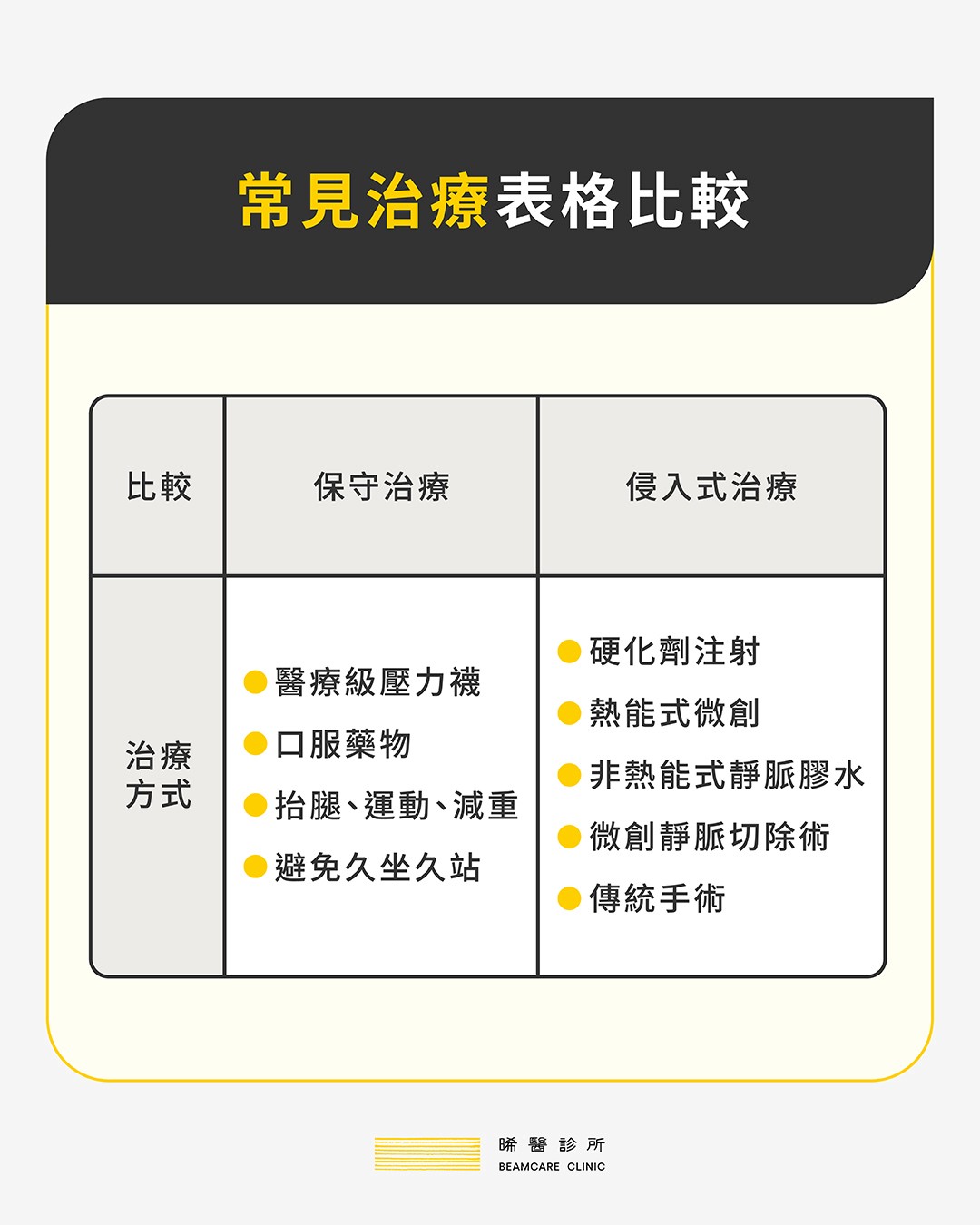
There are now many methods for treating varicose veins, and not everyone needs to undergo traditional vein stripping surgery.
When choosing a treatment method, we typically consider:
The location, diameter, depth, course of the refluxing vein, symptoms, medical history, and the patient's preferences regarding anesthesia and recovery time.
Common methods generally include the following categories.
1. Traditional Vein Stripping Surgery
Traditional treatment involves ligating and stripping the dysfunctional great saphenous vein.
This type of treatment has a long history and long-term follow-up data. However, compared to modern endovenous treatments, it typically involves more wounds, and post-operative symptoms may include:
Bruising
Pain
Swelling
Wound care demands
Temporary paresthesia (sensory changes)
Currently, for patients suitable for endovenous treatment, international guidelines often prioritize endovenous therapy as a preferred option.
Nonetheless, traditional surgery still has its applicable scenarios and is not completely without a role.
2. Sclerotherapy
Sclerotherapy involves injecting a chemical agent into the diseased vein, causing the vessel to gradually close and subsequently be slowly absorbed by the body.
It is commonly used for:
Spider veins
Reticular veins
Some varicose branches
Certain types of recurrent varicose veins
The advantage is that the wounds are extremely small, and some treatments do not require anesthesia.
If the problem originates from larger trunk venous reflux, ultrasound results are needed to judge whether sclerotherapy alone is suitable.
Different studies show that various treatment methods can improve symptoms and quality of life, but long-term vessel closure rates and retreatment rates may vary, so choices still need to be made based on individual vascular conditions.
3. Thermal Minimally Invasive Treatments: Laser, Radiofrequency
Endovenous Laser Ablation (EVLA) and Radiofrequency Ablation (RFA) both utilize a catheter inserted into the diseased vein to deliver heat energy, causing the vein wall to close.
The procedure typically requires delivering tumescent anesthesia along the surrounding tissue of the blood vessel, which provides local anesthesia while isolating the heat and protecting surrounding tissues.
Its characteristics include:
Small wounds
Mature technology
Abundant international research data
Most patients can return to daily activities relatively quickly
Both laser and radiofrequency have excellent clinical track records, and the actual choice still depends on vascular conditions and equipment characteristics.
4. Non-Thermal Minimally Invasive Treatment: Vein Glue
Vein glue treatment delivers a medical-grade cyanoacrylate adhesive through a catheter into the diseased vein, sealing the vessel closed.
Since it does not use heat, it typically does not require a large amount of tumescent anesthesia injected along the entire course of the blood vessel.
Some patients value several of its features:
Small puncture wound
Can reduce multiple anesthetic injection sites
No heat energy used
Patients can typically resume daily activities quickly after treatment
The VeClose randomized trial followed patients for up to 5 years, comparing cyanoacrylate closure to radiofrequency ablation, and both groups demonstrated excellent long-term vessel closure effects.
However, vein glue is not necessarily suitable for everyone.
The evaluation also needs to consider:
Whether there is a history of related allergies
Vessel location and depth
Vessel diameter
Vessel course
Individual constitution
Costs and treatment preferences
Therefore, rather than simply asking "which method is best," it is more appropriate to ask:
"Which method is more suitable for my vascular conditions?"
5. Non-Thermal, Non-Tumescent Anesthesia Treatment: Mechanochemical Ablation (MOCA)
Another category of non-thermal treatment is called mechanochemical ablation (MOCA).
For example, the ClariVein system uses a catheter to perform mechanical stimulation within the blood vessel while simultaneously applying a sclerosing agent to close the diseased vein.
It does not use heat, and typically does not require injecting tumescent anesthesia along the entire course of the blood vessel like laser or radiofrequency does.
Some randomized studies show that MOCA may involve lower pain levels during the treatment process.
On the other hand, longer-term follow-up studies also suggest that closure rates may vary depending on vessel diameter and the treatment method used.
This is an important reason why varicose vein treatment is increasingly moving toward personalization:
There is no absolute ranking of the procedures themselves; what matters most is whether it fits the patient's vascular conditions.
In what situations should you consider further evaluation for varicose veins?
Not everyone who shows reflux on an ultrasound necessarily needs treatment.
If symptoms are not pronounced and do not affect your life, you can discuss observation, lifestyle adjustments, or compression therapy with your doctor.
However, if you experience the following conditions, you can consider undergoing a further, complete venous evaluation:
1. Leg symptoms have affected daily life
For example:
Calves are frequently swollen in the afternoon
Soreness and heaviness occur easily after standing for long periods
Frequent night cramps
Leg discomfort affects work, sleep, or exercise
2. Appearance of skin changes
For example:
Hyperpigmentation around the ankles
Skin hardening (lipodermatosclerosis)
Recurrent itching or eczema
Slow wound healing
These changes may be related to long-term venous pressure, and blood flow conditions can be further understood through ultrasound.
3. Varicose veins have recurrently inflamed or bled
If bulging veins recurrently present local redness, swelling, pain, or have bled before, a vascular evaluation can be scheduled to understand whether further management is required.
If ultrasound reveals venous reflux, is surgery absolutely required?
Not necessarily.
Ultrasound results are only part of the treatment decision-making process.
Current international guidelines do not recommend performing prophylactic interventions in completely asymptomatic patients just because "reflux was seen."
Real treatment decisions typically consider all of the following together:
Symptoms + Physical Examination + Ultrasound Results + Lifestyle Needs + Personal Treatment Preferences
Therefore, having reflux does not mean you must receive treatment; similarly, veins on the legs that do not look severe do not mean the symptoms are necessarily mild.
Which symptoms warrant prompt medical evaluation?
Most varicose veins are chronic issues that can be evaluated gradually through outpatient appointments.
However, if you suddenly experience:
Significant swelling in a single leg
Sudden redness, warmth, or pain in the leg
Sudden shortness of breath
Unexplained chest pain
These symptoms can have other vascular or cardiopulmonary causes besides varicose veins. It is recommended to seek prompt medical evaluation to confirm the cause.
This does not mean that having the above symptoms automatically indicates thrombosis or pulmonary embolism, but rather that further evaluation by medical personnel is necessary.
How to choose a varicose vein treatment? The key is finding the true source of reflux
Today, treatment for varicose veins has evolved from the singular surgical methods of the past into a variety of minimally invasive choices.
Laser, radiofrequency, vein glue, sclerotherapy, MOCA, and traditional surgery each have their own advantages, limitations, and suitable conditions.
Dr. Hsu Hung-lung states that before deciding on a treatment method, the most crucial step is not to pick a surgery first, but to establish a vascular map using lower extremity venous ultrasound to confirm:
Which blood vessel is currently refluxing
How extensive the reflux is
The diameter and depth of the blood vessel
Whether the symptoms correspond to this segment of reflux
Then, based on individual lifestyle needs and treatment expectations, a suitable approach can be discussed and decided upon together.
Varicose Veins Frequently Asked Questions FAQ
Q1: Will varicose veins disappear if I wear compression stockings?
Usually not. Compression stockings primarily assist venous return, improving some soreness, swelling, and heaviness, but they cannot restore damaged venous valves. Therefore, already formed varicose veins typically do not disappear completely just by wearing stockings.
Q2: Do varicose veins always require surgery?
Not necessarily. If symptoms are mild, you can start with lifestyle adjustments, compression therapy, or medication. If symptoms have affected your life and ultrasound confirms venous reflux related to the symptoms, you can explore minimally invasive treatment options further.
Q3: Are varicose vein creams effective?
Topical ointments cannot repair dysfunctional venous valves, nor can they directly eliminate trunk venous reflux. If combined with skin issues such as itching and eczema, physicians may prescribe topical treatments directed at the skin symptoms.
Q4: Which is better, varicose vein laser or vein glue?
There is no single method that fits all patients. Laser is a thermal treatment with a long history of clinical use and abundant research data; vein glue is a non-thermal treatment that can reduce the need for tumescent anesthesia. The choice should be made based on vessel diameter, depth, course, medical history, and individual needs.
Q5: Which specialty should I consult for varicose veins?
You can seek a vascular specialist experienced in lower extremity venous ultrasound and venous disease evaluation to confirm whether there are issues with the great saphenous vein, small saphenous vein, or other venous reflux.
Q6: Are people who stand for long periods more likely to get varicose veins?
Standing for long periods can increase pressure in the lower extremity veins and may make existing soreness, swelling, and bloating more pronounced. People who must stand for work can help venous return by walking regularly, performing ankle exercises, using appropriate compression stockings, or elevating their legs during rest.
If you would like a further evaluation, Xi Clinic offers a specialized Varicose Vein Clinic (Dr. Hsu Hung-lung, Friday/Afternoon Session) and a Varicose Vein Clinic. Appointments can be scheduled via LINE or by calling (02) 2366-0186. Please bring past examination data and treatment records to your appointment.
Written by: Dr. Hsu Hung-lung
Last Updated: August 17, 2026
Disclaimer: This article is for health education purposes and cannot replace professional medical diagnosis and treatment advice. Please have a physician evaluate and decide the suitability of any treatment.
International Medical Literature
Gloviczki P, et al. The 2022 Society for Vascular Surgery, American Venous Forum, and American Vein and Lymphatic Society clinical practice guidelines for the management of varicose veins of the lower extremities. Part I. J Vasc Surg Venous Lymphat Disord. 2023.
Gloviczki P, et al. The 2023 Society for Vascular Surgery, American Venous Forum, and American Vein and Lymphatic Society clinical practice guidelines for the management of varicose veins of the lower extremities. Part II. J Vasc Surg Venous Lymphat Disord. 2024.
De Maeseneer MG, et al. European Society for Vascular Surgery 2022 Clinical Practice Guidelines on the Management of Chronic Venous Disease of the Lower Limbs. Eur J Vasc Endovasc Surg. 2022.
Morrison N, et al. Five-year extension study of the VeClose randomized clinical trial comparing cyanoacrylate closure versus radiofrequency ablation. J Vasc Surg Venous Lymphat Disord. 2020.
Bootun R, et al. Randomized trial comparing mechanochemical ablation with radiofrequency ablation. Phlebology. 2016.
Vähäaho S, et al. Three-year results of a randomized trial comparing mechanochemical and thermal ablation for insufficient great saphenous veins. J Vasc Surg Venous Lymphat Disord. 2021.
