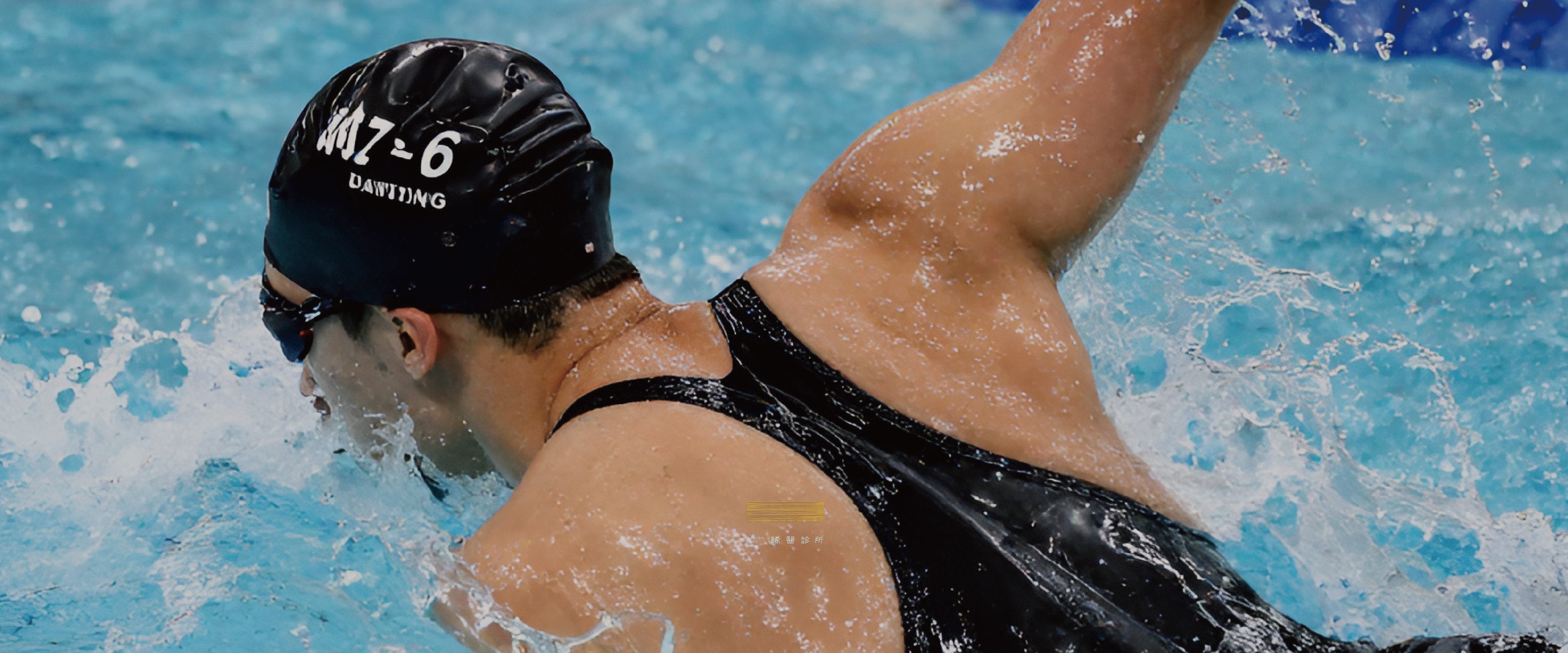
Still Not Healed After PRP? How a 51-Year-Old Triathlete Reclaimed the Pool Thanks to an 'Imaging Expert'
Still Not Healed After PRP? How a 51-Year-Old Triathlete Reclaimed the Pool Thanks to an 'Imaging Expert'
Article Summary
Chief Complaint: Shoulder Impingement Syndrome (left shoulder) | Accompanied by lower back pain and plantar fasciitis | Previously received PRP treatment with no improvement
The Truth of Pain in Athletes: You don't need to see a doctor only when you're old; the more active you are in sports, the earlier you should intervene
Many people think pain is an issue for the elderly. However, in modern clinics, more and more patients are individuals who maintain high-intensity training on a daily basis, such as marathon runners, swimmers, or triathlon enthusiasts. Their bodies endure much higher usage intensity than the average person, and once problems arise, structural wear and tear is often more complex than imagined.
More importantly, this group of people usually cannot "take a proper three-month rest." They have set race schedules and strict training plans; sometimes, even when injured, they still choose to push through and keep training. For them, treatment is not about passive pain relief—"fast, precise, and a quick return to training" is their sole goal.
This is precisely why precise diagnosis is exceptionally important for athletes. Time is an athlete's most precious asset; if treated correctly, they can return to the field in the shortest time. If treated incorrectly, every delay causes deeper damage to the body.
Patient Story: From being unable to swim breaststroke, to the frustration of not finding the root cause
Mr. Lin (pseudonym), who is 51 years old this year and works long hours in an office on weekdays, has a post-work life that is almost synonymous with sports. Full marathons, half marathons, swimming, cycling... triathlons are his daily routine to maintain his life rhythm and abundant vitality. "Exercising every morning and evening" is an uninterrupted self-discipline for him.
Early this year, after competing in a high-intensity triathlon, Mr. Lin's left shoulder began to feel a faint discomfort due to incorrect swimming posture. At first, he didn't pay much attention and sought medical attention at a nearby rehabilitation clinic. He had ultrasounds and X-rays and underwent treatment for a period, but the results were very limited. By August, when he tried combat training, the discomfort in his shoulder intensified again, to the point where he couldn't even swing his arms smoothly in the breaststroke, his most familiar and beloved stroke.
During this period, Mr. Lin also tried self-funded PRP injections, but the improvement was never significant. A person who never easily cried out in pain on the field finally began to realize that this was not a common strain that could be resolved simply by "resting more."
On a friend's recommendation, Mr. Lin came to C-Heal Clinic. This diagnostic process allowed him to see structural problems that had never been mentioned in other clinics in the past.
The Key to Diagnosis: The imaging expert's vision, seeing the "compensatory blind spots" that others miss
C-Heal Pain Department reserves one hour for every first-time patient. The first half is an in-depth consultation, covering sports history, old injury records, and work styles, alongside an on-site evaluation of joint range of motion and muscle compensation. The second half involves imaging evaluation, using C-arm 3D dynamic imaging to grasp the overall skeletal structure, paired with high-end ultrasound to check detailed wear and tear of tendons and ligaments. Mr. Lin's shoulder compensation issues surfaced completely during this process.
During the initial visit, Dr. Lu Bing-sheng, the Director of C-Heal Clinic, performed a comprehensive structural evaluation using high-end C-arm 3D dynamic imaging. This step allowed Mr. Lin to see the actual condition of his shoulder clearly and dynamically for the first time—not only the surface injury site but also the subsequent inflammation caused by the body's long-term "compensation" to maintain movement after the shoulder was injured.
This was precisely the blind spot that had never been resolved during previous visits elsewhere. While traditional ultrasound and general 2D X-rays can indeed show local structures, interpreting "complex compensatory issues" triggered by structural injuries requires rich imaging anatomy experience and a diagnostic logic that connects the entire body's framework.
Director Lu Bing-sheng has a professional background in radiology. Long-term and rigorous training in imaging interpretation allows him to see a deeper and more complete bodily story when looking at the same scan or the same ultrasound image.
"I had check-ups elsewhere before, but back then, there was no way to see the shoulder compensation caused by the injury, which then triggered more widespread pain. Here, the doctor explained it very clearly." — Mr. Lin
Treatment and Recovery: Find the "real problem" to proceed with precise repair
After confirming the structure and compensation points, Director Lu planned a systematic injection treatment course for Mr. Lin, performing precise applications under real-time ultrasound guidance. This included amniotic matrix injections to restore clavicle stability, glucose prolotherapy injections to relax tight muscle groups, and appropriate health supplements to relieve discomfort.
After the fourth treatment, Mr. Lin clearly felt a change in his body.
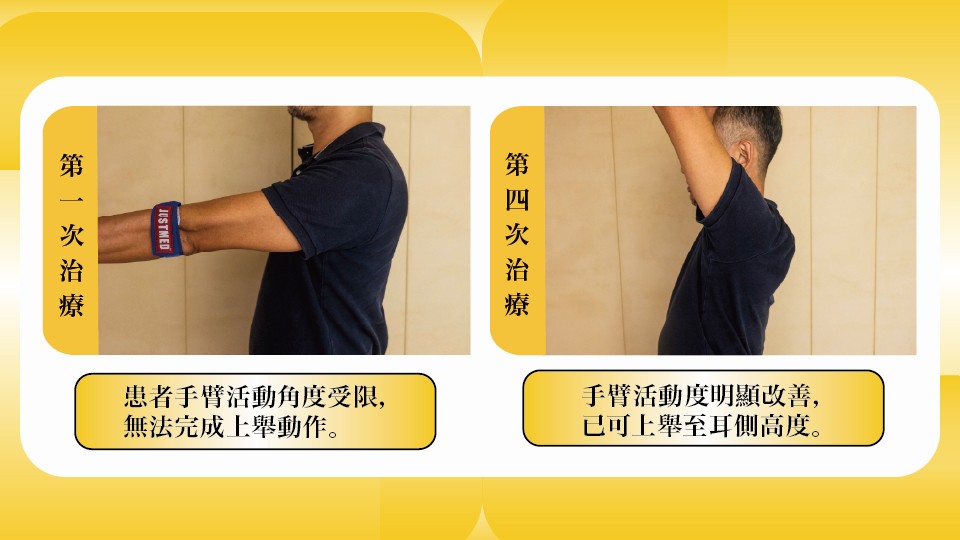
"In my daily life before, in whatever movement I did, I would subconsciously and deliberately remind myself not to use my left hand. But now that it's healed, I don't have to be constantly on guard anymore. Even when I actually use my left hand during workouts or weight training, it doesn't feel uncomfortable at all." — Mr. Lin
Having walked this path of seeking medical care, he sincerely advises friends who love sports as much as he does: "If your body feels uncomfortable, seek professional consultation quickly. Don't delay like I did, letting minor pain accumulate into major pain."
What is missed most is that freedom of not having to worry about your body
After completing the treatment, the thing Mr. Lin wanted to do most was rush back to his familiar swimming pool.
He said that before getting injured, he had always taken health for granted, "as natural as breathing," and never worried about what to do if he became unhealthy one day. But after going through this shoulder injury and experiencing the frustration of not even being able to swim breaststroke, he began to understand how to worry about his body's limits, and truly realized the weight of health.
Leaping back into the water, Mr. Lin shared his most profound realization with a smile: "Now that I've recovered, what I cherish most is that state of being able to exercise freely without having to overthink things like before. Health is everything; without health, there is nothing to talk about."
Struggling with the same trouble, or had treatments with little effect?
Welcome to book a consultation, let us find where the problem lies together.
