
What is Prostate Artery Embolization (PAE)? Procedure, Cost, Recovery, and Candidacy
What is Prostate Artery Embolization (PAE)? Procedure, Cost, Recovery, and Candidacy
Article Summary
Prostate enlargement does not always require surgery.
When symptoms are mild, they can first be controlled with medication. However, for men who find medication offers limited relief and have concerns about instrument-based transurethral surgery, Prostatic Artery Embolization (PAE) is another option that does not involve the urethra or removing tissue. In this procedure, a doctor inserts a catheter through an artery to selectively block the blood flow supplying the prostate, causing the gland to gradually shrink and symptoms to ease. Suitability must be evaluated by a physician based on prostate volume, blood vessels, and overall health.
What are the symptoms of prostate enlargement? When should you seek medical attention?
The prostate is located at the bladder outlet, surrounding the urethra. Gradual enlargement with age is a change that most men will experience. When the gland presses on the urethra, common symptoms include: waking up to urinate two or more times at night, frequent urination during the day, a weak or slow urine stream, hesitation when starting to urinate, a feeling of incomplete emptying after urinating, and sudden, strong urges to urinate.
If symptoms are already affecting sleep and daily life, and medication has shown limited effectiveness after a period of time, it is worth arranging a comprehensive evaluation. If you experience blood in your urine, recurrent urinary tract infections, or find yourself completely unable to urinate (acute urinary retention), please seek medical attention as soon as possible without delay.
Which medical specialty should I consult for prostate enlargement?
The primary specialty is Urology, which handles diagnosis, medication, and surgery. PAE, on the other hand, is a catheter-based interventional therapy performed by interventional radiologists. This is also why many patients have never heard of PAE: it is not performed in a urology operating room, but rather in an angiography suite.
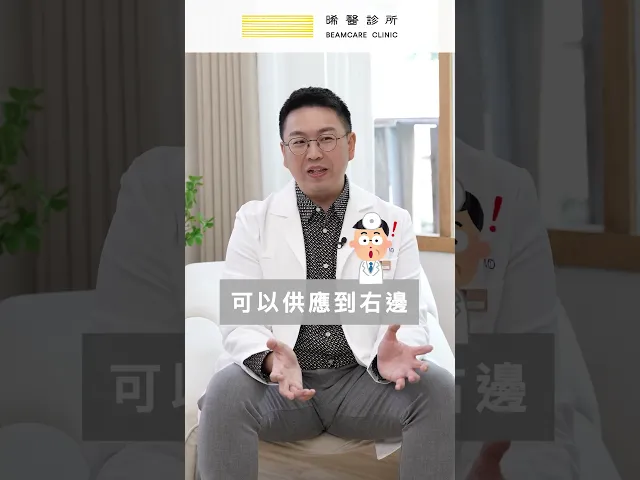
The Men's Special Clinic at Xi Clinic is conducted by Dr. Chun-Yu Lin, Secretary General of the Taiwan Society of Interventional Radiology. If you are already being followed by urology and wish to understand options other than surgery, you can first complete a pre-assessment via LINE and bring your existing test reports (PSA, ultrasound, uroflowmetry, etc.) to the clinic for discussion.
Is surgery absolutely necessary for prostate enlargement? There are actually three stages of treatment
Prostate enlargement is progressive, but the speed of progression varies from person to person. Treatment is stepped rather than one-size-fits-all:
The first stage is lifestyle adjustments and medication: reducing fluid and alcohol intake before bed, combined with medications that relax the smooth muscles of the prostate or inhibit gland growth. Most patients with mild symptoms can remain at this stage.
The second stage is minimally invasive procedures: when medications offer limited effectiveness, cause bothersome side effects (dizziness, affecting sexual function), or when patients do not wish to take medication long-term, options that remove no or minimal tissue, such as PAE or water vapor thermal therapy, can be evaluated.
The third stage is surgery: transurethral resection or laser surgery directly removes the obstructing gland tissue. This provides rapid symptom improvement and is suitable for patients with severe obstruction or those who have developed complications (recurrent infections, bladder stones, affected kidney function).
Which stage to stay at and when to move to the next is determined by symptom severity, prostate volume, and overall health status—this is the value of a comprehensive evaluation.
What is PAE (Prostatic Artery Embolization)?
The principle of PAE is "cutting off supplies": the prostate relies on the prostatic arteries for blood supply. Under imaging guidance, the physician inserts a microcatheter through an artery in the wrist or groin to locate the tiny arterial branches supplying the prostate, then injects embolic microspheres to block the blood flow. Due to the reduced blood supply, the gland gradually shrinks, thereby relieving pressure on the urethra.
Dr. Chun-Yu Lin was invited as early as 2021 to publicly introduce Prostatic Artery Embolization on News98's "Famous Doctors On Call", explaining how PAE treats prostate enlargement through vascular pathways.
Extended Reading: 〈News98 Interview with Dr. Chun-Yu Lin | Understanding Prostatic Artery Embolization〉.
The entire process does not go through the urethra and does not remove any tissue. The wound is only the size of a pinhole, and local anesthesia is used in most cases. Xi Clinic's PAE is completed in our in-house angiography suite using the GE OEC 3D mobile C-arm (with cone-beam CT functionality) for imaging guidance. Prostatic arteries are tiny and have highly variable branches; 3D tomographic localization is the key to precise embolization and avoiding surrounding tissues.
Why does PAE rely so heavily on imaging diagnostics and interventional radiology expertise?
Dr. Chun-Yu Lin previously wrote a special article in the Taipei Medical University Hospital "Health Newsletter" explaining that in addition to interpreting CT, MRI, and ultrasound, radiologists also perform minimally invasive interventional treatments using angiography.
Extended Reading: 〈TMUH "Health Newsletter" | Dr. Chun-Yu Lin on PAE and Image-Guided Minimally Invasive Treatment〉.
Who is suitable for PAE evaluation?
Men in the following situations should consider putting PAE on the table for discussion:
Those for whom medication has limited effectiveness or who cannot tolerate medication side effects; older patients or those with cardiovascular comorbidities who have risk concerns regarding spinal or general anesthesia; those who worry about instruments entering through the urethra or care about the impact of surgery on sexual function; those with extremely large prostates (including those over 100mL) who are evaluated as unsuitable for traditional transurethral surgery; and those whose work or lifestyle cannot accommodate a longer recovery period.
A large prostate does not mean PAE cannot be evaluated. UDN Health once reported on a minimally invasive catheter case by Dr. Chun-Yu Lin treating a 90-year-old patient with a prostate volume exceeding 300 grams and recurrent urinary retention. Actual suitability must still be evaluated based on individual vascular and overall conditions.
Extended Reading: “Clinical Case of PAE in a 90-Year-Old with a Prostate Over 300 Grams”
Whether you are suitable must still be determined by a physician after consultation, imaging, and vascular condition evaluation—PAE is not suitable for everyone; confirm before treating.
Who might not be suitable?
Those with poor vascular conditions that may increase the difficulty of catheter manipulation, which must be judged by a physician based on imaging; those allergic to contrast agents or with poor kidney function. Before treatment, relevant urological examinations such as PSA must be completed to rule out other urological conditions that need prior management. The above require pre-operative evaluation and preparation.
Treatment Process and Recovery Period
Before Procedure: Consultation, ultrasound, blood tests, and relevant imaging (CT/MRI) evaluation to confirm indications and vascular access pathways.
Day of Procedure: Performed under local anesthesia via the wrist or groin, taking about 2 hours. The patient remains awake and can converse with the doctor. Observation in the recovery area for 2 hours follow; outpatient surgery in most cases does not require hospitalization.
Recovery: Daily activities can be resumed within a few days. It is important to have correct expectations regarding time—symptom improvement from PAE comes as the gland gradually shrinks, usually appearing progressively between several weeks to three months, rather than taking effect the next day. This is due to the underlying mechanism, and the doctor will explain the expected timeline before the procedure.
Is there international medical evidence for PAE?
Yes, and it has already reached the stage where "international societies have established standards of practice." The Society of Interventional Radiology (SIR) released the latest practice guidance document for PAE in 2026, outlining patient selection, technical, and care standards. This guidance updates the position statement jointly released in 2019 by SIR, CIRSE in Europe, and several other international societies. CIRSE also established standards of practice for PAE in 2020. The American Urological Association (AUA) has also included PAE as one of the treatment options for prostate enlargement.
Regarding evidence of efficacy, a randomized controlled trial published in "European Urology" in 2020 used a "sham procedure" as a control group, proving that symptom improvement from PAE is not a placebo effect. The 2023 PARTEM multicenter phase 3 trial showed that for patients with limited control from medication, symptom improvement with PAE was superior to continued combination medical therapy. Direct comparisons with transurethral resection of the prostate (TURP), including randomized trials with 5-year follow-up, show that both improve symptoms; TURP usually shows greater improvement in objective measures such as urine flow rate and post-void residual volume, while PAE's advantages lie in not going through the urethra, being minimally invasive, and having a shorter recovery. Long-term follow-up also serves as a reminder that the probability of requiring retreatment after PAE is higher than after TURP, a point we will explain truthfully before treatment.
What are the disadvantages and risks of PAE? What to watch out for after the procedure
Within a few days after treatment, temporary frequent urination, a burning sensation during urination, or a dull ache in the pelvic area may occur. These are common post-embolization reactions and mostly resolve on their own; a few people may experience mild hematuria or hematospermia. Serious complications are uncommon, and the doctor will provide a full explanation before the procedure.
After the procedure, please drink plenty of fluids and take medications as directed, and regularly check the wound on your wrist or groin. If you experience fever, inability to urinate, or significant discomfort, please return to the clinic or contact us as soon as possible.
How is the cost of PAE calculated?
Xi Clinic's Men's Function and Cardiovascular Health Special Clinic: Initial consultation is NT$1,500, follow-up is NT$800, which includes consultation and basic evaluation.
PAE treatment is a self-pay item. The fee includes the procedure fee, embolic medical devices, imaging guidance, and post-operative follow-up. The actual cost depends on the evaluation results and the medical devices used, which will be fully explained before treatment; there will be no unexpected costs after treatment.
Who performs PAE at Xi Clinic?
Dr. Chun-Yu Lin - currently Director of the Department of Medical Imaging at Taiwan Adventist Hospital, Secretary General of the Taiwan Society of Interventional Radiology, and Chairman of the Vascular and Interventional Radiology Subspecialty of the Taiwan Radiological Society. He specializes in catheter-based interventional treatments such as embolization, ablation, and angioplasty, and is the performing physician for PAE and varicocele embolization at Xi Clinic.
Minimally invasive procedures are completed in our clinic's angiography suite equipped with the GE OEC-3D C-arm image guidance system, without the need for referral to large hospitals.
Dr. Chun-Yu Lin has long been dedicated to interventional radiology and prostatic artery embolization treatment, currently continuing his tenure as Secretary General of the Taiwan Society of Interventional Radiology. He has also previously won the TSIR Rising Star First Prize for a prostatic artery embolization case.
Extended Reading: 〈Dr. Ping-Hsing Lu, Director of Xi Clinic, Continues as TSIR Board Member, Dr. Chun-Yu Lin Continues as Secretary General〉, 〈Dr. Chun-Yu Lin Wins TSIR Rising Star First Prize〉.
Frequently Asked Questions
Does prostate enlargement always require surgery? Not necessarily. Mild symptoms can first be controlled with medication. When medication has limited effectiveness, minimally invasive options like PAE and surgery each have suitable candidates, evaluated by a doctor based on symptom severity, prostate volume, and overall health. For the complete criteria of judgment, please see 〈Does prostate enlargement always require surgery? In which situations can you hold off, and when should surgery be considered?〉.
In addition to clinical treatment, Dr. Chun-Yu Lin also continues public health education on PAE, and was invited by the Yonghe District Office of New Taipei City to introduce prostatic artery embolization to the public under the theme "New Minimally Invasive Treatments for Prostate Enlargement".
Does PAE require hospitalization? How long is the recovery period? In most cases, local anesthesia is used and no hospitalization is required, with daily activities resuming within a few days. Symptom improvement appears gradually as the gland shrinks, usually between several weeks to three months. The doctor will explain the expected timeline before the procedure.
Does PAE affect sexual function? PAE does not go through the urethra and does not remove tissue, so concerns about its impact on sexual function are relatively low. Individual situations still need to be evaluated and explained by a physician.
Can I still undergo PAE if my prostate is over 100mL? Yes, you can be evaluated. A prostate of extremely large volume that is unsuitable for traditional transurethral surgery is precisely one of the indications for PAE, which needs to be determined by a physician after confirming vascular conditions.
Where can I undergo PAE in Taipei?
Xi Clinic is located at 2F-1, No. 40, Sec. 2, Heping E. Rd., Da'an Dist., Taipei City,
where Dr. Chun-Yu Lin performs the procedure in our in-house angiography suite. It is fully appointment-based, and pre-assessment can be done via LINE or by calling (02) 2366-0186.
Unsure if you are suitable?
Bring your imaging reports and start with a pre-assessment on LINE first—confirm whether your condition is suitable for PAE before deciding to visit the clinic.
Author: Dr. Chun-Yu Lin
Last Updated: August 27, 2026
Disclaimer: This article is for health education purposes and cannot replace professional medical diagnosis and treatment advice. The suitability of any treatment must be evaluated and decided by a physician.
International Literature References for Prostatic Artery Embolization (PAE):
Mouli S, Dolmatch BL, Gunn AJ, et al. Society of Interventional Radiology (SIR) 2026 practice guidance document for prostatic artery embolization. J Vasc Interv Radiol. 2026;108771. doi:10.1016/j.jvir.2026.108771
McWilliams JP, Bilhim TA, Carnevale FC, et al. Society of Interventional Radiology multisociety consensus position statement on prostatic artery embolization for treatment of lower urinary tract symptoms attributed to benign prostatic hyperplasia. J Vasc Interv Radiol. 2019;30(5):627-637.e1.
Cornelis FH, Bilhim T, Hacking N, et al. CIRSE standards of practice on prostatic artery embolisation. Cardiovasc Intervent Radiol. 2020;43(2):176-185.
Pisco JM, Bilhim T, Costa NV, et al. Randomised clinical trial of prostatic artery embolisation versus a sham procedure for benign prostatic hyperplasia. Eur Urol. 2020;77(3):354-362. doi:10.1016/j.eururo.2019.11.010
Sapoval M, Thiounn N, Descazeaud A, et al. Prostatic artery embolisation versus medical treatment in patients with benign prostatic hyperplasia (PARTEM): a randomised, multicentre, open-label, phase 3 superiority trial. Lancet Reg Health Eur. 2023;31:100672. doi:10.1016/j.lanepe.2023.100672
Müllhaupt G, Hechelhammer L, Diener PA, et al. Prostatic artery embolisation versus transurethral resection of the prostate for benign prostatic obstruction: 5-year outcomes of a randomised trial. Eur Urol Focus. 2024;10(5):788-795.
