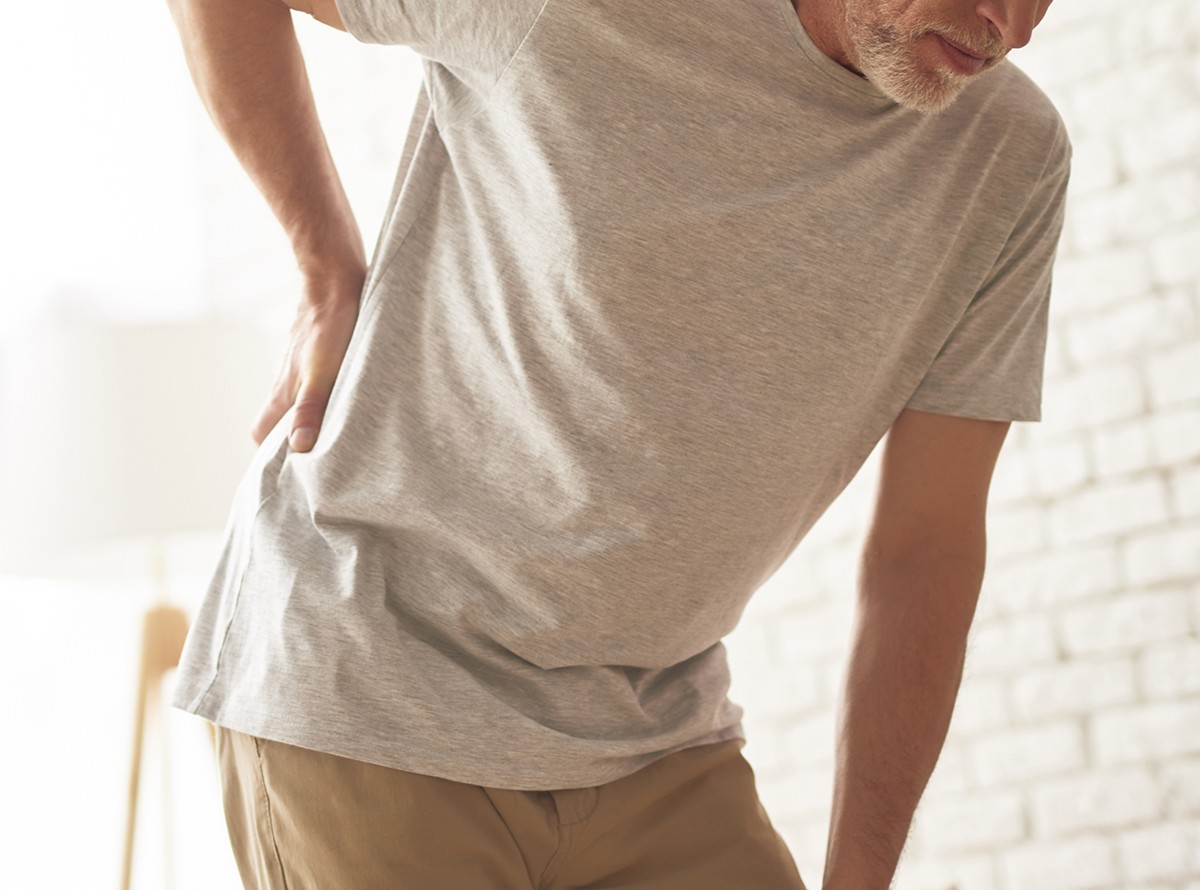
Why Does Sciatica Recur? Two Common Causes and Areas for Adjustment
Why Does Sciatica Recur? Two Common Causes and Areas for Adjustment
Article Summary
It is not uncommon in clinics to see cases of sciatica that had improved after a round of treatment paining again a few months later.
A relapse does not mean the previous treatments were in vain; rather, it is usually because the mechanical stress conditions on the lumbar spine have not changed.
This article explains the causes of relapse, the direction of management after recurrence, and the adjustments you can realistically make in daily life. To understand the causes and overall treatment options for sciatica, you can refer to the Sciatica Topic article on this site.
Why Does Sciatica Relapse?
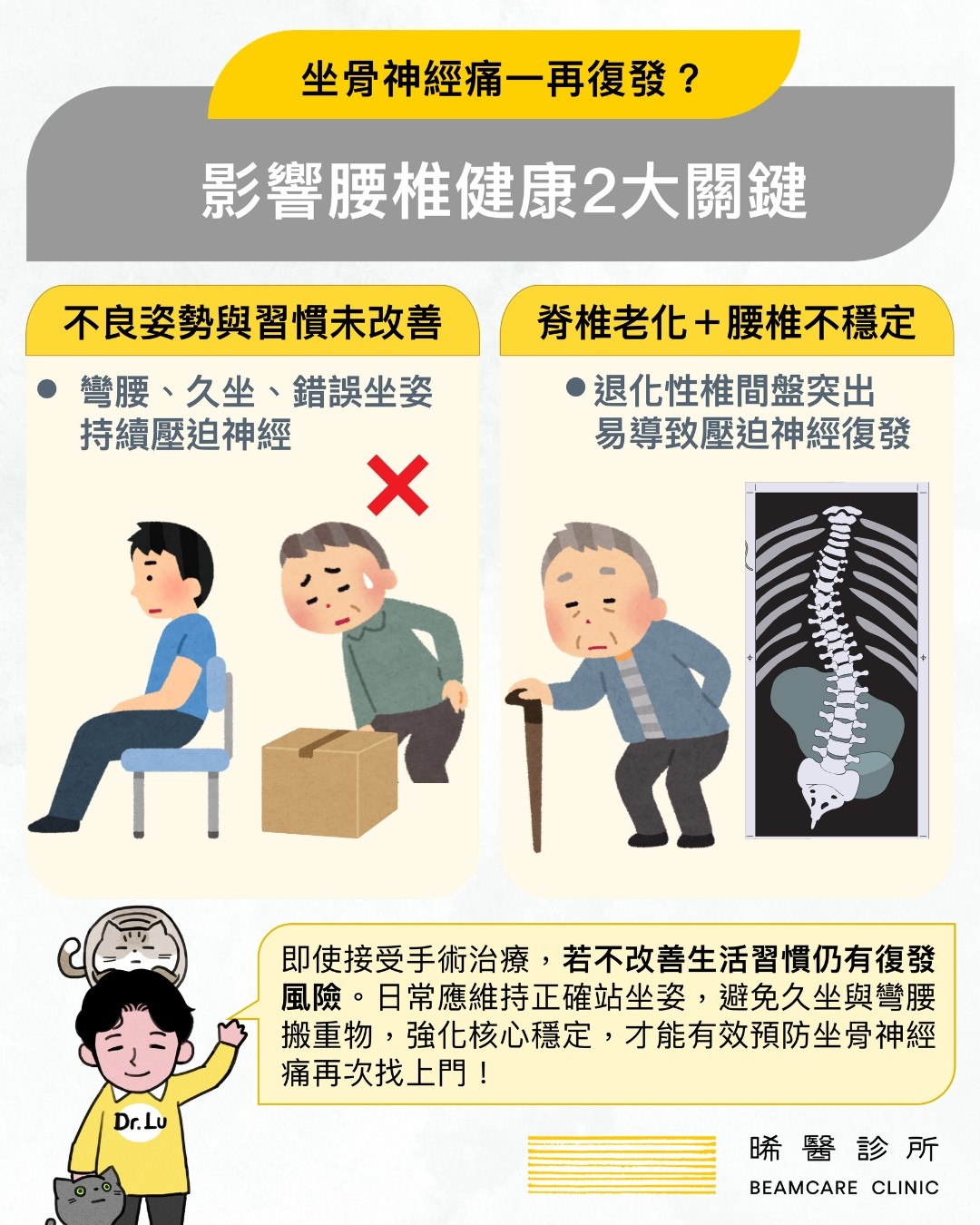
The factors of relapse are related to two things: the stability of the structures around the lumbar spine, and daily posture and heavy lifting habits.
The first is structure. Herniated discs are a common cause of sciatica, but the stability of the lumbar spine does not rely solely on the discs; the surrounding ligaments, tendons, and facet joints also participate in support. When these structures degenerate, the stability of the lumbar spine decreases, and nerves may be compressed again. Disc degeneration and spinal structure aging that come with increasing age also increase the chances of relapse.
The second is habits. Bending over to lift heavy objects, prolonged sitting, or standing all increase the burden on the lumbar spine and discs. If these movement patterns are not adjusted after treatment, the source of stress still remains. The same goes for those who have not undergone surgery; improper posture or long-term excessive pressure on the back can cause symptoms to reappear.
Why is There Still Pain After Surgery?
Because surgery addresses only the segment compressing the nerve at that time, and does not change the status of other structures in the lumbar spine.
Although removing the herniated disc can relieve the compression at that location, if the surrounding ligaments, tendons, and facet joints continue to degenerate, the lumbar spine may still be unstable, which in turn causes nerve compression again.
If improper posture is maintained after surgery, it may also lead to recurrent disc herniation or increased compression.
However, this does not mean the surgery was meaningless, but rather that post-operative posture adjustment and muscle strength training are equally part of the treatment.
How is Treatment Arranged After a Relapse?
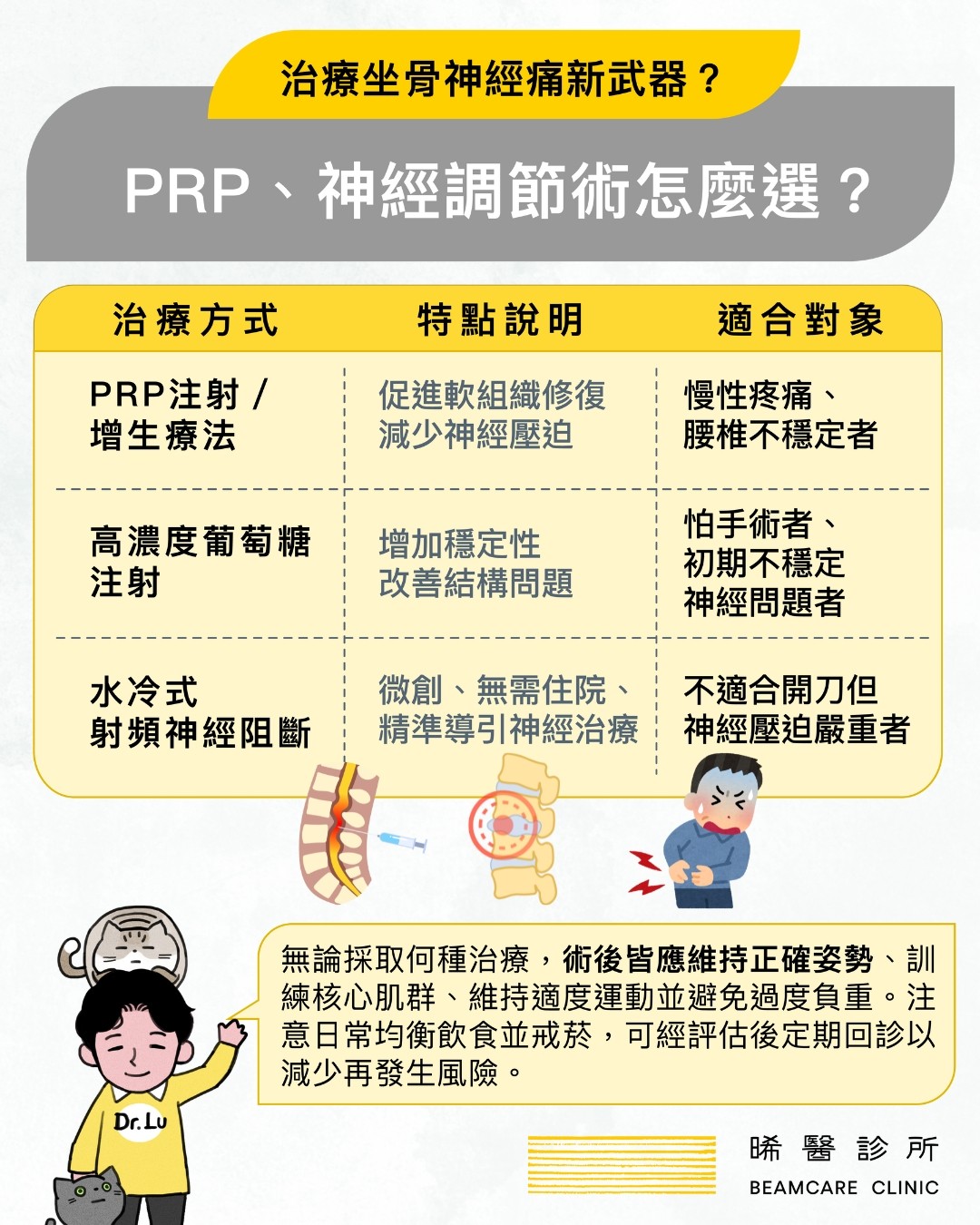
It is managed differently based on whether it is acute or chronic. The acute pain phase focuses on rest, adjusting sleeping and sitting postures, and is supplemented by medication, electrotherapy, magnetic wave therapy, etc., based on the doctor's assessment to relieve symptoms. For chronic pain, long-term reliance on pain relievers is not recommended to avoid cumulative side effects; at this stage, rehabilitation and other procedures will be evaluated.
In terms of injection therapies, prolotherapy (high-concentration dextrose solution, autologous platelet-rich plasma PRP, amniotic fluid, or BMAC) aims to assist in repairing the ligaments around the lumbar spine, with the goal of improving local stability; for pain caused by nerve adhesions or compression, nerve hydrodissection using low-concentration dextrose solution is also available, which is one of the procedures performed by Director Lu. These methods each have their applicable conditions, and whether to use them, the injection sites, and the frequency of sessions will be evaluated by the physician based on imaging and clinical conditions.
What Are the Options When Conservative Treatment Has Limited Effectiveness?
When conservative treatment has limited effectiveness and imaging studies show obvious nerve compression, decompression surgery, such as a discectomy or spinal decompression, may need to be considered to relieve the compression.
For patients with obvious nerve compression who cannot temporarily undergo decompression surgery, clinical evaluation of image-guided nerve blocks is used to help control pain until conditions allow for surgery evaluation. The nerve block procedures at Shine Spine & Pain Clinic are performed by Director Ping-Sheng Lu, using the same GE OEC 3D mobile C-arm as C-TAME, targeting the position under 3D stereoscopic image guidance with cone-beam CT (3D tomography) function.
In addition to nerve blocks, Director Lu also performs cooled radiofrequency neurotomy. This is a minimally invasive procedure that addresses pain signal transmission using radiofrequency, also targeting the destination nerve under image guidance. Its applicable conditions are different from nerve blocks, and suitability must be evaluated by a physician. This type of procedure has high requirements for image localization, which is why image interpretation expertise affects treatment arrangements.
To clarify a treatment boundary: TAME transcatheter arterial microembolization targets abnormal microvascular hyperplasia around chronic soft tissues and joints. Sciatica caused by structural compression of nerve roots does not fall within its indications. If your back and leg pain is combined with chronic pain in tendon or joint areas, that part will be evaluated separately by the physician.
What Can Be Adjusted in Daily Life?
We suggest the following three directions.
Posture: Maintain correct standing, sitting, and sleeping postures, avoid staying in the same posture for prolonged periods, and bend your knees instead of your waist when lifting heavy objects. Muscle Strength: Train core muscles or use methods like yoga and Pilates to assist in stabilizing the area around the lumbar spine; the intensity and choice of movements should be confirmed with a doctor or therapist first to avoid worsening symptoms. Daily Life: Maintain moderate activity (such as walking, swimming), avoid prolonged sitting and excessive lifting, smokers are advised to quit, and maintain a balanced diet.
The purpose of these adjustments is not to replace treatment, but to reduce the continuous pressure on the lumbar spine. Regular follow-ups as advised by the doctor can help detect changes early.
When Should You Seek Immediate Medical Attention?
If you experience fecal or urinary incontinence or difficulty urinating, numbness in the perineum (groin, saddle area), obvious weakness in the lower limbs, or rapid muscle atrophy, please seek immediate medical attention and do not wait to observe. If you do not have these conditions but the radiating pain in your lower back and legs continues to show no improvement, early evaluation is also recommended. For related explanations, you can refer to How to Confirm Sciatica.
Would You Like to Schedule an Evaluation?
You can start with a preliminary assessment via LINE. Please bring your past imaging data (X-ray, MRI) and treatment records, including past surgeries and injections, to your clinic visit. Shine Spine & Pain Clinic is located at 2F-1, No. 40, Sec. 2, Heping E. Rd., Da’an Dist., Taipei City, and operates strictly by appointment only. Telephone: (02) 2366-0186.
Written by: Dr. Ping-Sheng Lu
Last updated: August 16, 2026
Disclaimer: This article is for health education purposes and cannot replace medical diagnosis and treatment advice. The suitability of any treatment must be determined by a physician after assessment. If any of the acute warning signs mentioned in the text appear, please seek medical attention immediately.
