
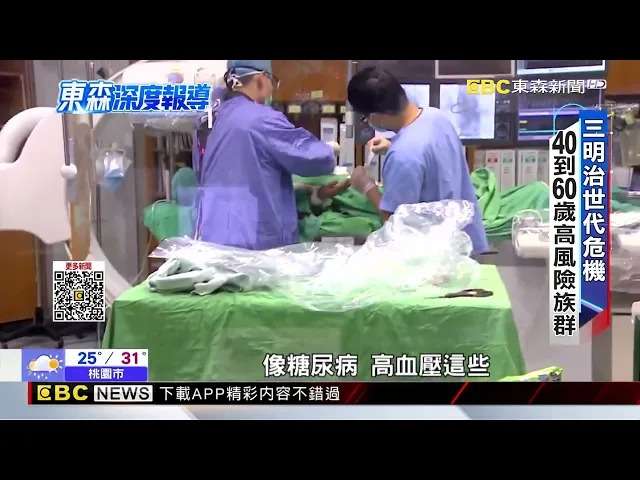
"EBC In-Depth Report" Interview with Dr. Lu Bing-Sheng, Director of Xi Clinic | Why does multiple cerebral hemorrhage strike so suddenly and rapidly?
EBC News "In-Depth Report" interviewed Dr. Ping-Sheng Lu, the superintendent of Sunrise Clinic, under the title "Caught Off Guard? Why Does Multiple Cerebral Hemorrhage Take Lives So Quickly?" From the perspectives of neuroradiology and cerebrovascular medicine, he analyzed why cerebral hemorrhage can occur suddenly and which warning signs require special attention.
Dr. Ping-Sheng Lu has a background in imaging diagnosis, neuroradiology, and pain management. In the past, he has long been dedicated to acute stroke and cerebrovascular intervention, and has participated in endovascular treatments such as mechanical thrombectomy for acute ischemic stroke.
Why is Cerebral Hemorrhage Often "Sudden and Catching People Off Guard"?
Cerebral hemorrhage generally refers to the rupture of blood vessels in the brain, allowing blood to enter the brain tissue or other spaces inside the skull.
Unlike some diseases where symptoms develop slowly, cerebral hemorrhage can cause changes in intracranial pressure and brain tissue damage within a short period of time. Therefore, some patients may be normal one moment and suddenly present obvious neurological symptoms the next.
Common warning signs include:
Sudden severe headache
Sudden weakness or numbness in one side of the arms or legs
Drooping mouth or facial asymmetry
Slurred speech or difficulty understanding language
Sudden loss of balance
Changes in consciousness
Nausea and vomiting
Seizure onset
Sudden abnormal vision or visual field defects
If these acute neurological symptoms occur, it is not suitable to self-observe at home, and emergency medical assistance should be sought as soon as possible.
What Does "Multiple Cerebral Hemorrhage" Represent?
Generally speaking, multiple cerebral hemorrhage refers to the finding of more than one bleeding site on imaging examinations.
At this point, what is truly important is not just confirming "there is bleeding," but further identifying:
Why is bleeding occurring in different locations?
Physicians may need to evaluate the possible causes based on the patient's age, blood pressure, medical history, currently used medications, and imaging data such as CT, MRI, or angiograms.
The underlying causes vary from patient to patient, so the etiology or prognosis cannot be determined solely by "how many locations are bleeding."
Hypertension is a Key Risk, but There is More Than One Cause of Cerebral Hemorrhage
Hypertension is one of the important risk factors for intracerebral hemorrhage.
Long-term poorly controlled blood pressure can put high pressure on small blood vessels in the brain, increasing the risk of vessel damage and rupture.
However, hypertension is not the only cause of cerebral hemorrhage.
For some patients, the following also need to be evaluated:
Cerebral aneurysm
Cerebral arteriovenous malformation
Other vascular abnormalities
Coagulation disorders
Factors related to anticoagulant or antiplatelet medications
Tumor-related hemorrhage
Cerebral small vessel disease that may appear in different age groups
Therefore, when facing cerebral hemorrhage, imaging examinations not only confirm the location and extent of bleeding but also shoulder the important task of "identifying the cause of bleeding."
Why Do Neuroradiologists Value Imaging So Much?
The diagnosis of cerebrovascular disease relies heavily on imaging.
Computed tomography (CT) can quickly determine whether intracranial hemorrhage is present; magnetic resonance imaging (MRI) can further observe brain tissue and some tiny lesions; CT angiography, MR angiography, or catheter angiography can evaluate cerebral and cervical vessels according to clinical needs.
To a neuroradiologist, an image is not just about answering "is there bleeding."
They must continue to think:
Where is the blood coming from?
Is there an aneurysm or vascular malformation?
Are the surrounding blood vessels abnormal?
Does the patient have other cerebrovascular risks?
This is also one of the most critical values of imaging diagnosis in cerebrovascular diseases.
From Acute Stroke Vascular Intervention to Current Image-Guided Treatment
Dr. Ping-Sheng Lu was dedicated to acute stroke and neurovascular interventions for a long time in the past.
Acute ischemic stroke may require catheterization into the cerebral blood vessels for mechanical thrombectomy; some cerebrovascular diseases may also require angiography to confirm lesions, or even further endovascular interventions.
The common core of these treatments is:
First use imaging to understand the problem, then decide whether and how to perform an intervention.
Currently, at Sunrise Clinic, Dr. Ping-Sheng Lu continues to apply his experience in imaging diagnosis, neuroradiology, and interventional therapy to evaluate chronic pain, neurological symptoms, and various image-guided minimally invasive treatments.
If Cerebral Hemorrhage and Stroke Symptoms Appear Suddenly, Please Go Directly to the Emergency Room
A special reminder:
If you suddenly experience one-sided weakness, a drooping face, slurred speech, severe headache, altered consciousness, unsteady gait, or new vision abnormalities right now, the primary task is to rule out acute stroke and cerebral hemorrhage.
At this time, you should not wait for a general outpatient clinic, nor should you go to a regular clinic for an examination by yourself.
Please seek emergency medical assistance as quickly as possible.
If acute cerebrovascular diseases have been ruled out, but there is still recurrent dizziness, symptoms occurring only in specific postures, dizziness related to neck movement, or long-term functional problems remaining after a stroke, then these fall under the scope of further evaluation in subsequent outpatient clinics.
Extended Reading
Media Source: EBC News "EBC In-Depth Report"
Original Program Title: Caught Off Guard? Why Multiple Cerebral Hemorrhage Takes Lives So Fast
Interviewed Physician: Dr. Ping-Sheng Lu, Superintendent of Sunrise Clinic
This article is compiled from public media interviews and supplemented with general cerebrovascular health education information. Acute cerebral hemorrhage and stroke are medical emergencies. If sudden neurological symptoms occur, please seek emergency medical assistance immediately.
