What should you do about finger joint pain? Take a look at the causes, conditions, and ways to relieve finger joint pain and swelling all in one place!
What should you do about finger joint pain? Take a look at the causes, conditions, and ways to relieve finger joint pain and swelling all in one place!
Article Summary
What causes swollen finger joints? What should you do when bending finger joints hurts? This article will help you understand possible conditions, causes, and common affected groups behind pain in the first and second finger joints, and provide daily relief diet and self-care methods for finger joint pain. Finally, it explains treatment options and clinic information to help you eliminate finger swelling, pain, and discomfort!
1. Why do finger joints hurt when bent? Learn the causes of swollen and painful finger joints by the location of the pain!
Fingers are one of the body parts we use most frequently in daily life, from picking up objects to writing, and they are almost always in motion. However, when pain occurs while bending a finger joint, and is even accompanied by swelling, it not only affects quality of life but may also indicate a potential health problem.
So what exactly causes finger joint pain? Below, we’ll take a closer look at common causes of joint pain and the differences in pain location.
(1) Pain location in the finger joints and the corresponding condition
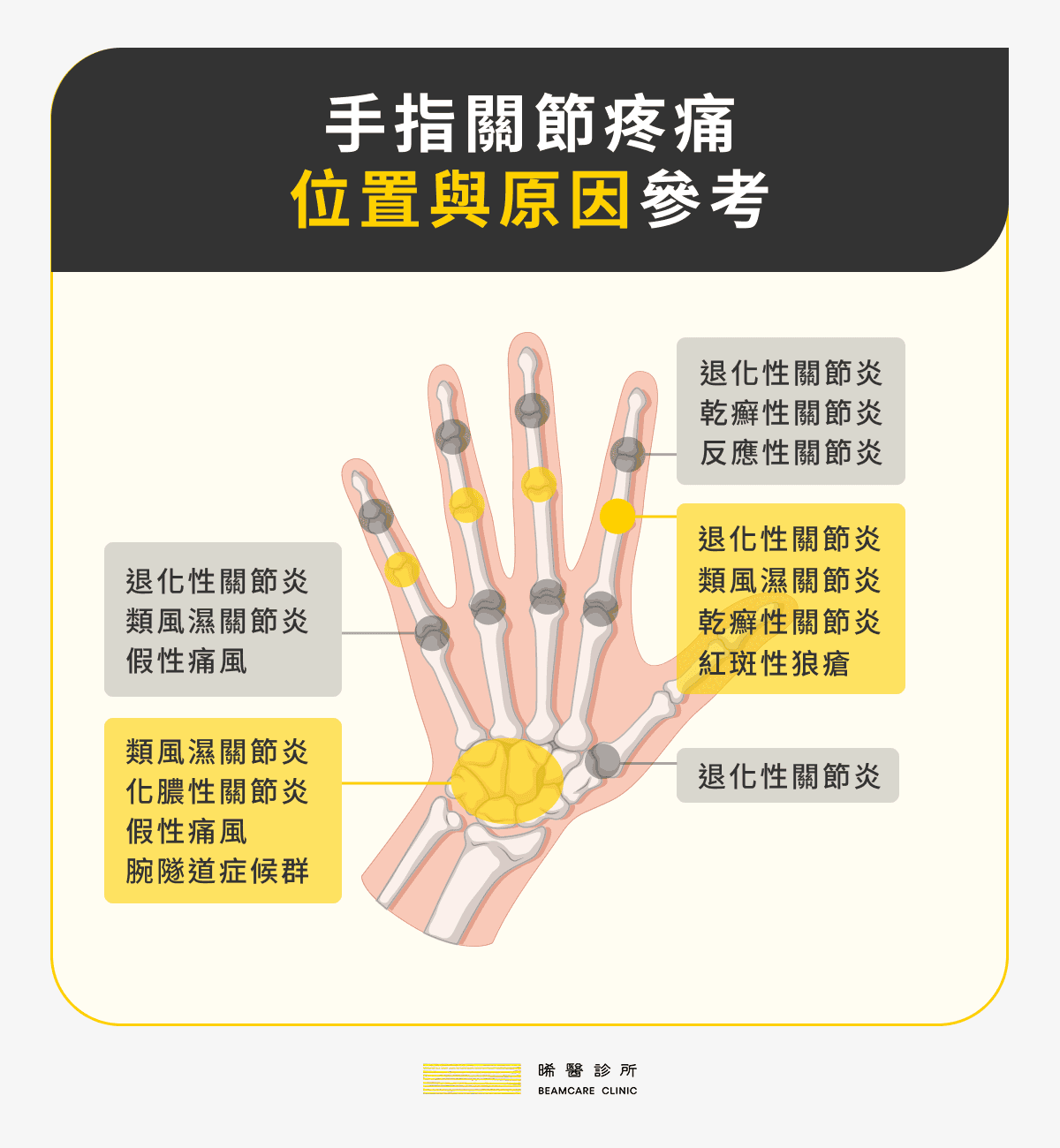
Pain location | Possible cause |
|---|---|
Pain in the first finger joint (distal joint, near the fingertip) |
|
Pain in the second finger joint (proximal joint) |
|
Metacarpophalangeal joint (where the finger connects to the palm) |
|
First carpometacarpal joint (base joint of the thumb) |
|
Wrist joint |
|
The table above lists the different parts of the hand joints and the possible causes of pain. It is provided only for preliminary judgment and reference. The actual cause still needs to be confirmed through a professional medical evaluation.
(2) Introduction to 5 major conditions that cause finger joint pain
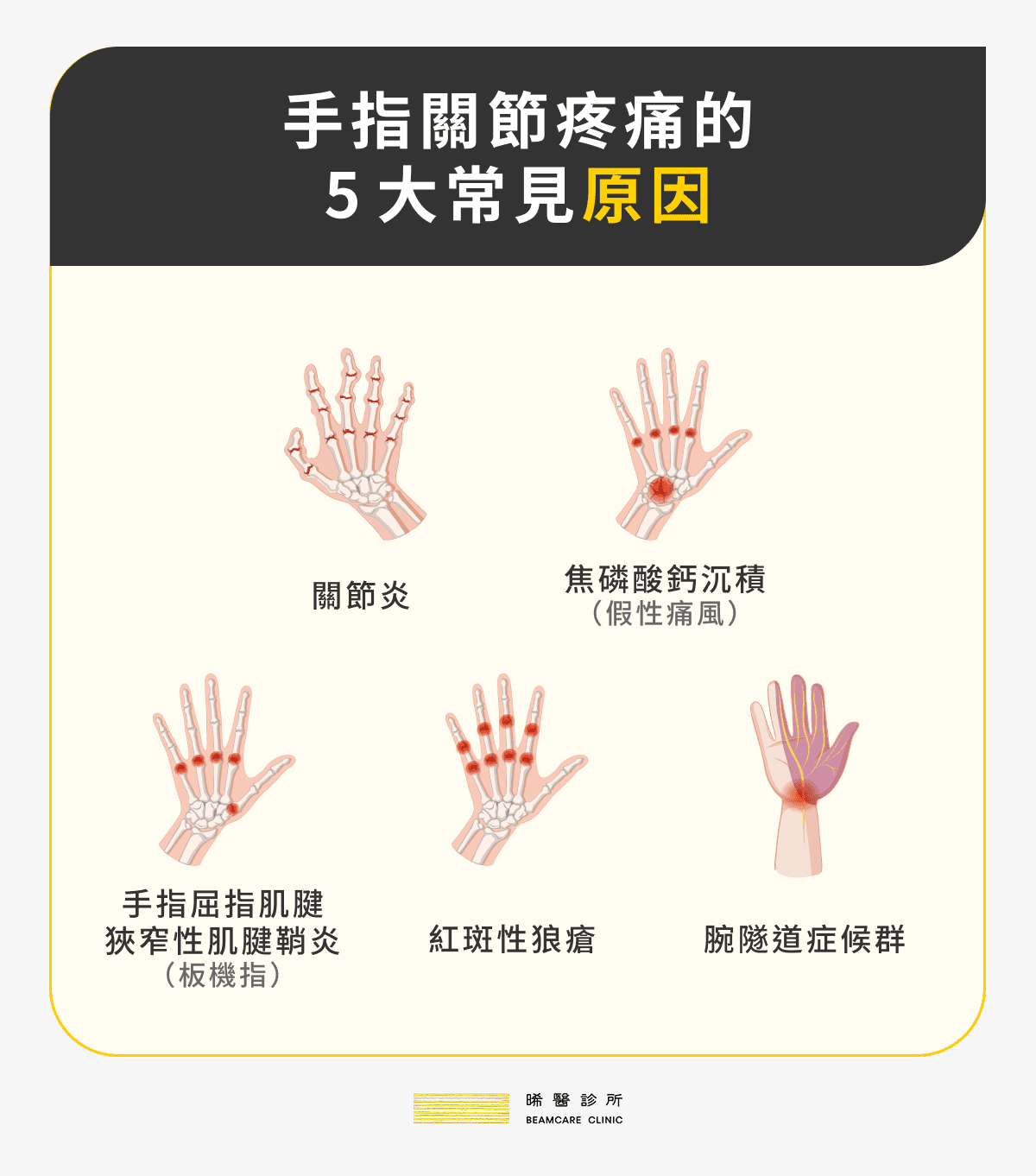
1. Arthritis
There are many causes of swollen finger joints, and the most common are various types of arthritis. These inflammations may be caused by infection, immune system abnormalities, or degenerative changes, leading to symptoms such as swelling, redness, pain, and stiffness. Different types of arthritis also tend to affect different areas.
Osteoarthritis ▶ This is the most common form of finger overuse injury. It mainly occurs when the cartilage protecting the joint wears down over time, causing bone to rub directly against bone. Patients often notice hard lumps at the fingertips, and finger pain is most likely to appear in the morning after waking up or when the weather turns cold.
Cause: Long-term repetitive movements lead to cartilage wear, reduced joint fluid, and bone spur formation
Symptoms: Pain in the first finger joint (near the nail), enlarged joint nodules, joint stiffness, weakened pinch and grip strength, limited range of motion, pain and burning sensation after activity
Common groups: Older adults over 50, people who do hand-intensive work for long periods (such as chefs, farmers, and cleaning staff)
Rheumatoid arthritis ▶ Because the immune system mistakenly attacks the synovial membrane of the joints, persistent inflammation occurs. Unlike osteoarthritis, rheumatoid arthritis usually affects both hands at the same time in a “symmetrical pattern,” and morning stiffness often lasts more than 1 hour. If not properly treated, it can cause joint deformity.
Cause: Genetic factors and environmental triggers lead to immune system dysregulation
Symptoms: Pain in the second finger joint (near the palm), symmetrical swelling and pain in both hands, severe morning stiffness; other symptoms include fever, fatigue, rheumatoid nodules, and dry eyes and mouth
Common groups: Women aged 20 to 50, people with a family history of autoimmune disease
Psoriatic arthritis ▶ Psoriatic arthritis is related to psoriasis skin disease. About 10–30% of people with psoriasis develop this complication, which causes uniform swelling of the fingers or toes and forms “sausage digits.” In addition to finger joint pain, patients often have pitted nails or nail changes similar to fungal nail infection.
Cause: The immune system attacks the skin and joint tissues, causing chronic inflammation
Symptoms: A swollen, red sausage-like finger; nail changes; pain in both the fingertip joint and the base of the finger; other symptoms include red patches and scaling, tendon insertion pain, and eye pain or redness
Common groups: People with psoriasis, those aged 30 to 50
Reactive arthritis ▶ When an infection occurs in another part of the body (such as the urinary tract or intestines), even though the bacteria are not in the joint, the immune system may overreact within 1 to 4 weeks while fighting the germs and then affect the finger joints. Its symptoms are somewhat similar to psoriatic arthritis, but reactive arthritis does not cause skin lesions.
Cause: Bacterial infection elsewhere in the body triggers an immune system attack error
Symptoms: Sudden finger joint pain and swelling, often accompanied by red eyes (conjunctivitis) or painful urination
Common groups: Adults who recently had food poisoning or a sexually transmitted infection
Septic arthritis ▶ This is one of the orthopedic emergencies. It is caused by bacteria (such as Staphylococcus aureus) directly invading the joint cavity and progressing very rapidly. Within hours, the joint becomes red, swollen, hot, and painful. If drainage and medication are not provided promptly, the joint cartilage may be completely destroyed by bacteria within days.
Cause: Infected hand trauma, contaminated injections, or bacteria attaching to the joint through the bloodstream
Symptoms: One finger joint is extremely red, swollen, hot, and painful; fever; chills; inability to move
Common groups: People with weakened immunity, patients with diabetes, and those with a recent infected hand wound
2. Calcium pyrophosphate deposition (pseudogout)
Calcium pyrophosphate deposition (CPPD) occurs when calcium pyrophosphate crystals accumulate in joint cartilage like fine grains of sand and fall into the joint cavity, causing acute episodes of joint pain, swelling, warmth, and redness. Although it differs from gout in that it is caused by uric acid deposition, the symptoms are similar, so it is also called “pseudogout.”
Cause: Calcium pyrophosphate crystal deposition in the joint cavity triggers acute inflammation
Symptoms: Acute finger joint pain, local redness and heat, limited range of motion
Common groups: Older adults over 60, patients with metabolic abnormalities (such as hypercalcemia) or thyroid problems
3. Trigger finger (stenosing tenosynovitis of the finger flexor tendon)
The “tendon” responsible for bending the finger and the “tendon sheath” that surrounds it become inflamed from frequent friction, making this one of the common occupational disorders in modern life. When inflammation causes a small nodule to form on the tendon, it is like a wire getting stuck in a bent tube. In addition to pain when bending the finger joint, there is also a noticeable catching sensation, as if pulling a trigger, which is why it is called “trigger finger.” After bending, the affected finger may “stick” and not straighten back out, requiring the other hand to help release it, often with a distinct clicking sound.
Cause: Overuse of the fingers leads to tendon thickening or tendon sheath narrowing, causing impaired gliding
Symptoms: Finger pain with catching or locking, obvious tender nodules at the base of the finger, morning stiffness and inability to straighten the finger
Common groups: People who frequently use scissors or computers, those who do household chores for long periods, and patients with diabetes
4. Lupus
Systemic lupus erythematosus (SLE) is a systemic autoimmune disease in which the immune system abnormally attacks organs throughout the body, and the hand joints are often among the first areas affected. This type of finger pain is characterized by being “migratory” and “symmetrical,” for example, the left hand hurts today and the right hand hurts tomorrow, along with signs of systemic inflammation. Although it does not necessarily cause severe bone destruction, joint erosion, or deformity, persistent inflammation can make the hands feel heavy and weak, disrupting daily life.
Cause: Immune dysregulation produces大量 autoantibodies that attack joints and organs throughout the body
Symptoms: Symmetrical finger joint pain, Raynaud’s phenomenon (finger blood vessels overreact to cold or pressure, turning blue, white, and red, with numbness and tingling); other symptoms include a butterfly rash, photosensitivity, peripheral neuropathy, and long-term unexplained fatigue or fever
Common groups: Women of childbearing age between 15 and 45, people with a family history of autoimmune disease
5. Carpal tunnel syndrome
Carpal tunnel syndrome is a common peripheral nerve compression disorder, mainly caused by compression of the median nerve within the wrist’s “carpal tunnel.” Even though carpal tunnel syndrome does not directly cause structural pain in the joint itself, nerve dysfunction can manifest as numbness and tingling in the fingers.
Cause: Thickening of the transverse carpal ligament in the wrist compresses the median nerve
Symptoms: Numbness or finger pain in the thumb, index finger, and middle finger; waking up at night in pain and needing to shake the hand for relief; weakness in the palm and even muscle atrophy
Common groups: Office workers who use a mouse for long periods, professional drivers, carpenters, or people who frequently operate vibrating tools
Do you struggle with finger joint pain? Let Xi Medical Clinic help you find the root cause and create a personalized treatment plan! |
2. What should you do about finger pain? A complete guide to daily relief methods for swollen and painful finger joints!
(1) What should you eat for finger joint pain? Dietary suggestions that may help improve pain
Diet plays an important role in joint health. By taking in specific nutrients, you can help reduce inflammation, repair cartilage, and strengthen joint structures. Here are some nutrients that are beneficial for finger joint pain:
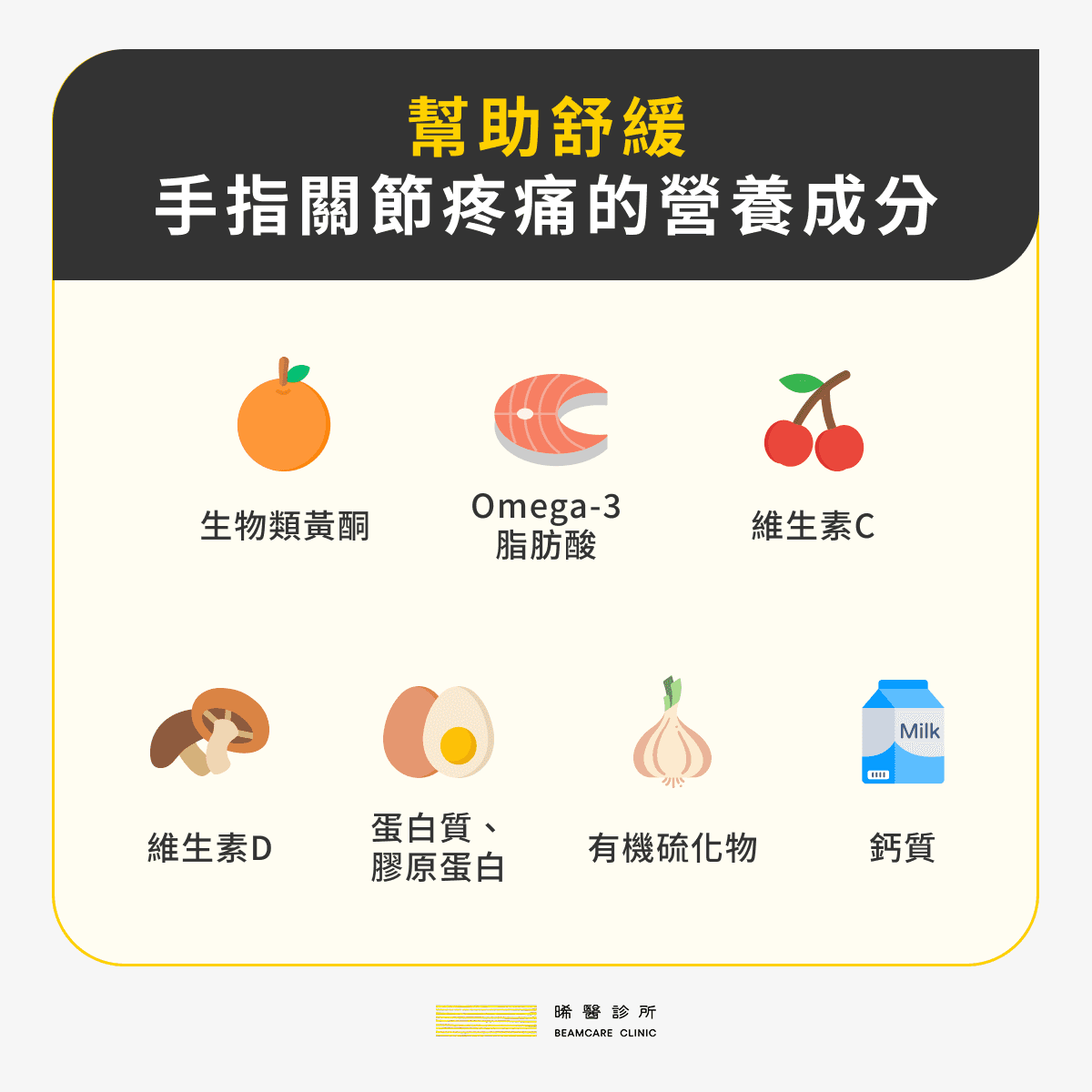
1. Bioflavonoids
Bioflavonoids are powerful antioxidants that can strengthen the collagen inside joints and help repair damaged joint tissues.
Sources: Citrus fruits (such as oranges, lemons, and grapefruits), green tea, whole grains, berries, onions, apples, and more.
2. Omega-3 fatty acids
Supplementing with Omega-3 fatty acids helps reduce the likelihood of inflammation and can help ease arthritis-related pain and swelling while improving joint health.
Sources: Deep-sea fish (such as salmon, tuna, bonito, mackerel, and sardines), flaxseed, chia seeds, walnuts, walnut oil, flaxseed oil, and more.
3. Vitamin C
Vitamin C is not only a powerful antioxidant but also an important cofactor in collagen synthesis. Collagen is a major component of joint cartilage, and adequate vitamin C can promote collagen production, helping cartilage repair and regeneration.
Sources: Citrus fruits (such as oranges and lemons), red peppers, kiwifruit, strawberries, broccoli, tomatoes, and more.
4. Vitamin D
Getting enough vitamin D is very helpful for calcium absorption and bone health. Strong bones provide better support for the joints and reduce the pressure placed on them.
Sources: Oily fish (such as salmon and mackerel), fortified milk, dairy products, eggs, mushrooms, and more. You can also get vitamin D by spending moderate time in the sun.
5. Protein and collagen
Protein is the foundation of tissue repair, and collagen is an important component of joint cartilage. Eating foods rich in gelatin and chondroitin helps repair and maintain joint cartilage.
Sources: Pig ears, tendon, chicken feet, pig tail, oxtail, and more (but be careful to consume in moderation to avoid too much fat), as well as shellfish rich in gelatin and deep-sea fish skin.
6. Organic sulfur compounds
Organic sulfur compounds strengthen ligaments, increase the secretion of lubricating joint fluid, and provide sufficient support for the cartilage matrix, helping maintain joint flexibility and function.
Sources: Cruciferous vegetables (such as cabbage, cauliflower, radish, Chinese kale, garlic, and onions), shellfish, animal cartilage, and soy products.
7. Calcium
Calcium is the main mineral that makes up bones and teeth and is essential for strengthening bone density. When joints are damaged by degeneration, weaker bones place greater stress on the joints and can worsen pain.
Sources: Milk, yogurt, dried small fish, soy products (such as tofu and soy milk), amaranth, Chinese kale, sesame seeds, almonds, and more.
By making balanced and targeted dietary adjustments and supplementing these joint-friendly nutrients, you can use diet as an auxiliary way to relieve finger joint pain.
However, diet cannot completely replace medical treatment. If the pain persists or worsens, you should still consult a doctor promptly for professional diagnosis and treatment advice.
Do you struggle with finger joint pain? Let Xi Medical Clinic help you find the root cause and create a personalized treatment plan! |
(2) Daily self-care to help relieve finger joint pain
In addition to dietary adjustments, you can also maintain joint flexibility, promote blood circulation, and reduce finger stiffness through daily self-care. Below are three practical self-care methods:
1. Slowly bend and straighten the fingers
When appropriate, you can slowly bend and straighten your fingers several times, as long as it does not cause or worsen pain. This can maintain joint mobility, help exercise the small muscles that support the joints, and provide better stability.
2. Soak in warm water for relief
Warm therapy is a common method for relieving joint pain and stiffness. Warm water can promote blood circulation, relax muscles, and ease stiffness and discomfort.
It is recommended to use warm water at about 40°C and soak for 10–20 minutes. Avoid water that is too hot or soaking too long to prevent burns or worsening inflammation. While soaking, you can combine it with massage or joint movement for better circulation.
3. Massage the finger joints
Long periods of repetitive finger movements can easily cause muscle fatigue and joint stress. You can use your thumb and index finger to make circular motions and gently press each finger joint, especially the stiff or painful areas. This helps promote local blood circulation, relax the finger muscles, reduce tension around the joints, and relieve pain.
3. How are swollen and painful finger joints treated? Common treatment options for finger pain
✅ Physical therapy
When stiffness and pain in the finger joints affect daily life, physical therapy offers a series of professional and effective noninvasive treatments, such as:
Heat therapy, electrical therapy: Heat therapy uses warmth to dilate local blood vessels and increase circulation to the fingertips, producing significant relief for “morning stiffness” and muscle tightness; electrical therapy uses microcurrent stimulation at specific frequencies to affect nerves and block pain signals from reaching the brain, making it a preferred option for acute pain flare-ups.
Low-level laser and ultrasound therapy: Low-level laser penetrates the skin surface, triggering biochemical responses in cells, accelerating self-healing of damaged tissue and suppressing inflammation; ultrasound therapy uses high-frequency vibration to create a fine massaging effect, and the energy can reach deep joint capsules and ligaments to help reduce swelling around the finger joints.
Joint range-of-motion training: Once pain eases, regular movement training can prevent joint capsule contracture. Under professional guidance, precise bending, stretching, and gripping exercises can ensure that the first and second finger joints maintain their proper range of motion. This is not only to strengthen finger muscles but also to promote the secretion of more lubricating fluid, improving the problem of pain when bending the finger joints.
Manual therapy such as traction and soft tissue massage: Physical therapists use appropriate force to perform joint traction, creating a small negative pressure within the joint space to reduce direct friction between bones. Combined with deep soft tissue massage, this helps break up fibrotic nodules caused by long-term inflammation (such as the small hard lumps seen in trigger finger), fundamentally relaxing stiff finger muscles and tendon sheaths.
Protective aids: During treatment or when performing specific tasks, using finger splints and elastic compression gloves can limit excessive hand movement and prevent injured joints from being hurt again. The right aids can provide necessary support, shift pressure away from injured tendons or bones, give inflamed areas valuable rest, and help prevent worsening while shortening the recovery period.
Through these physical therapy interventions, you can not only effectively relieve stiffness and pain in the finger joints, but also help restore hand function and improve quality of life.
✅ Medication therapy
In addition to the physical therapy above, medication is also a relatively fast initial intervention for relieving finger pain. Doctors will combine medications based on different causes (such as inflammation, nerve sensitivity, or immune problems), with the goal of reducing inflammation and preventing long-term swelling from causing irreversible structural damage to the joints:
Topical anti-inflammatory ointments or patches: For example, ointments with the same ingredients as extended-release acetaminophen products or Voltaren gel. These are absorbed through the local skin and act directly on the affected finger joint, making them suitable for patients who worry that long-term oral medication may upset the stomach.
Corticosteroids: For example, prednisolone. Corticosteroids are extremely powerful anti-inflammatory drugs, but they must be used very carefully, or serious side effects such as worsening infection or tissue damage may occur.
Nonsteroidal anti-inflammatory drugs (NSAIDs): For example, ibuprofen and celecoxib. By inhibiting prostaglandin synthesis, they can quickly reduce swelling in the finger joints and relieve the stabbing pain of the acute phase.
Muscle relaxants: For example, Solaxin can relax defensive muscle tightness caused by pain and reduce the strain that tendons place on the joints. It is often used as an adjunct for relieving trigger finger or carpal tunnel syndrome.
Neuropathic pain modulators: For example, pregabalin (Lyrica) and gabapentin. These regulate numbness and electric-shock-like sensations caused by nerve compression and are core medications for improving nerve-related finger pain.
Autoimmune modulators (DMARDs): For example, sulfasalazine or methotrexate. These are specifically used in treatment plans for rheumatoid arthritis or psoriatic arthritis to regulate the overactive immune system and stop the body’s own antibodies from damaging the joints at the source.
If oral medications work slowly, or if the pain location is very clear, doctors may also choose to deliver the medication directly to the lesion through an “injection” approach to improve treatment efficiency. In addition to the medications above, options such as “hyaluronic acid,” which increases joint fluid viscosity, and “PRP platelet-rich plasma,” which activates tissue self-healing, are also among the treatment choices.
✅ Surgical treatment
【Microvascular embolization】
Transcatheter arterial embolization (TAME) is mainly used to treat chronic joint pain caused by inflammation or degeneration. It targets the abnormal microvessels that proliferate around the joint and blocks them. After these abnormal new blood vessels are occluded, blood supply to the affected area decreases, which in turn reduces inflammation, lowers stimulation of pain nerves, and ultimately weakens the sensation of pain.
Microvascular embolization offers multiple advantages, including precise treatment, high safety, minimal wounds, long-lasting results, and almost no recovery time. It is especially suitable for people who respond poorly to medication and provides an emerging treatment option for patients with chronic finger joint pain.
【Arthroscopic surgery】
Arthroscopic surgery is like installing a “navigation camera” inside the finger. Through only a very small incision, doctors remove inflamed tissue, synovial fragments, or overgrown bone spurs from the joint cavity. This minimally invasive method causes very little damage to surrounding ligaments, can effectively address the mechanical locking that causes pain when bending finger joints, and greatly shortens postoperative rehabilitation time, allowing finger flexibility to return quickly.
【Joint replacement】
If a finger joint is completely destroyed or deformed due to rheumatoid arthritis or severe degeneration, replacing it with an artificial joint is the ultimate way to regain mobility. The doctor removes the worn joint surfaces and implants an artificial joint made of silicone or metal-ceramic materials, helping a finger that was previously unable to bend or that was severely deviated regain movement and stability.
【Joint fusion surgery】
This type of surgery directly fixes the two damaged joint surfaces together and allows them to fuse. Although the joint loses some mobility, it can completely eliminate the severe pain caused by joint friction. For patients with fingertip or severe knuckle pain, or for those whose joints are extremely damaged but still need to perform heavy labor, this is a once-and-for-all solution that prevents the finger from collapsing under pressure and provides relatively higher stability.
However, every patient’s condition is different. After receiving a professional doctor’s diagnosis, it is recommended to follow the treatment plan step by step in order to achieve the best recovery results.
4. Which department should you visit for swollen and painful finger joints? Recommended pain treatment from the specialist pain clinic “Xi Medical Clinic”!
▶ Which doctor should you see for swollen and painful finger joints?
In general, if a fracture or severe deformity is involved, you should seek help from orthopedics; if an immune system problem is suspected, you should visit rheumatology. However, if you have no idea where the pain is coming from, suffer from chronic pain that keeps recurring without a known cause, or want a more precise minimally invasive option between “taking medication” and “having surgery,” consulting a pain medicine specialist such as Xi Medical Clinic is a better choice.
Pain specialty clinics break free from the limitations of traditional departments. From the perspective of pain science, they use advanced ultrasound imaging to examine every tendon and nerve in depth. They can not only accurately identify the cause of swollen finger joints, but also provide advanced interventions such as nerve release and regenerative therapy, so you do not have to run between different clinics and can easily receive one-stop precise diagnosis and solutions for pain.
▶ Xi Medical Clinic’s features and treatment methods
Are you troubled by finger joint pain? Come to “Xi Medical Clinic” and let us truly find the cause and solve the pain problem.
Located near Daan Forest Park in Taipei, Xi Medical Clinic is led by pain treatment expert Director Lu Bing-Sheng and brings together professionals from orthopedics, Chinese medicine, nutrition, fitness, and more, dedicated to solving a wide range of acute and chronic pain problems.
In particular, it provides comprehensive and personalized care for common conditions such as wrist pain, a stiff neck, upper back pain, frozen shoulder, sciatica, and other occupational injuries or chronic pain issues.
Xi Medical Clinic integrates image-guided techniques, pain medicine, orthopedics, Chinese medicine, and functional medicine to provide a full evaluation of pain problems and offers multiple treatment options such as ultrasound-guided injections (PRP, nerve release), myofascial release, and manual therapy. If you are troubled by finger joint pain, consider coming to Xi Medical Clinic for a treatment evaluation and let professional doctors create a customized treatment plan for you.
▶ Xi Medical Clinic case study | The moment the notes returned
58-year-old Teacher Huang was once a Chinese language teacher and also a music lover who had played the saxophone for more than 20 years. After retiring, she had looked forward to immersing herself in familiar melodies every day and drifting among the notes. Unexpectedly, due to repetitive finger movements, the joints in her right pinky finger began to ache faintly, and then developed into severe pain and stiffness, making it impossible for her to press the keys properly or even hold the instrument steadily.
“Back then, even picking up the saxophone felt like torture,” she recalled. The pain seemed to crawl out bit by bit from deep inside the joint, gradually taking away her enthusiasm for life.
After visiting several medical institutions and trying medication and rehabilitation without significant improvement, Teacher Huang came to our clinic. After a detailed examination, we found that the problem in her little finger joint was not simply degeneration. In fact, it was accompanied by abnormal local microvascular proliferation—these newly formed tiny blood vessels were the real cause of the chronic inflammation and pain.
We arranged microvascular embolization for her, an emerging minimally invasive interventional treatment. During the procedure, we injected medication into the abnormal blood vessels in her hand and blocked the excess blood flow, thereby reducing the transmission of inflammation and pain.
On the day of surgery, Teacher Huang was able to go home comfortably. Surprisingly, in less than a week, her pain score dropped quickly from 8 to just 2. Less than one month after surgery, she had already resumed her daily practice routine and even performed at a small concert.
“When I played the first note again, I almost cried. This was not just pain relief; it felt like getting part of my life back,” she said emotionally.
This was not just a medical treatment, but a reunion with life and passion. Music should never fall silent because of pain; the purpose of medicine is to help people continue living with passion and freedom.
Do you struggle with finger joint pain? Let Xi Medical Clinic help you find the root cause and create a personalized treatment plan! |
