What Causes a Herniated Disc? A Look at the 3 Main Factors and Treatment Options!
What Causes a Herniated Disc? A Look at the 3 Main Factors and Treatment Options!
Article Summary
Pain radiating from the neck and back to the waist can first be evaluated by a pain specialist clinic: the physician confirms the source using advanced imaging ultrasound and X-ray, and then schedules rehabilitation, injections, prolotherapy, or minimally invasive relief procedures such as nerve blocks and radiofrequency thermocoagulation according to the condition. Xi Clinic is located in Da'an District, Taipei, and both the evaluation and treatment are completed at our clinic.
1. Where is the intervertebral disc? Why does herniation occur?
(1) Understanding the Intervertebral Disc
An intervertebral disc is a soft tissue structure located between adjacent vertebrae of the human spine, distributed among the cervical, thoracic, and lumbar spine. It consists mainly of a tough outer layer called the annulus fibrosus and a soft, elastic central core called the nucleus pulposus. The nucleus pulposus is semi-fluid, rich in water and gelatinous substances, which effectively absorbs and distributes pressure from the spine, granting the discs flexibility and elasticity. This allows the spine to move in multiple directions (such as bending and twisting) while preventing direct friction or impact-induced damage between vertebrae.
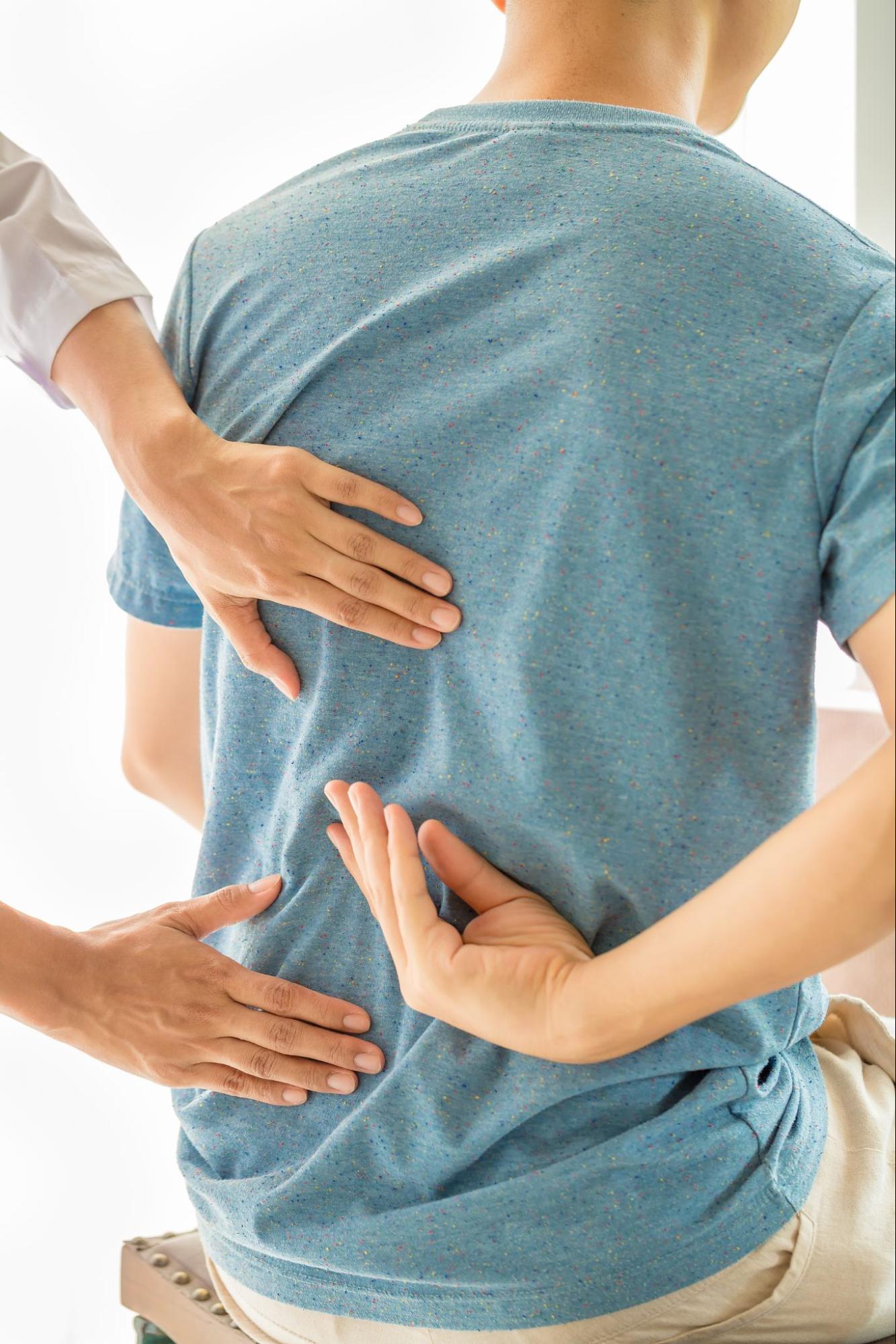
(Source: freepik)
(2) What is a herniated disc? Where does it commonly occur?
When an intervertebral disc experiences a change in shape, displacement, or structural rupture, it may compress the surrounding spinal cord and nerves, resulting in a condition that causes pain and neurological symptoms; this condition is known as a herniated disc. To put it simply, it is like a broken mattress spring, where the protruding part presses against your body, causing discomfort and disturbed sleep.
The most common sites for disc herniation are concentrated in the lumbar and cervical spine. Specifically, approximately 90% of herniations occur in the lower back between the fourth (L4) and fifth (L5) lumbar vertebrae, and between the fifth lumbar vertebra and the first sacral segment (S1).
In addition, herniation is also common in the cervical spine but is less frequent in the thoracic spine. This is because the lumbar spine is the most mobile section and bears greater pressure, making it highly susceptible to disc degeneration and herniation.
Probability of disc herniation by site: Lumbar > Cervical > Thoracic
2. What are the symptoms of a herniated disc?
(1) Cervical Disc Herniation
Stiff and painful neck
Headache
Pain, numbness, or soreness in the shoulders, upper back, or upper arms
Numbness, tingling, or weakness in the upper limbs
(2) Thoracic Disc Herniation
Back pain
Numbness or weakness in the upper limbs
Band-like pain around the chest and abdomen, similar to shingles pain
(3) Lumbar Disc Herniation (Most Common)
Back pain, dull ache, or severe pain in the waist
Sciatica, causing radiating pain in the buttocks, back of the thigh, calf, and even the sole of the foot
Numbness or tingling sensation in the legs and feet
Muscle weakness, and in severe cases, difficulty lifting the foot
Furthermore, severe symptoms can include decreased muscle strength, abnormal reflexes, and postural changes. In particular, extreme cases of lumbar disc herniation can affect bladder or bowel function, leading to incontinence.
Since herniation in different areas compresses different nerve roots, symptoms vary, but the main manifestations remain pain, numbness, and functional impairment.
3. Why do people get a herniated disc? The 3 main causes!
(1) Physiological Factors
Aging and Disc Degeneration: As age increases, the collagen and water content within the disc decreases, reducing elasticity and making the annulus fibrosus prone to rupture, which leads to the structural breakdown and extrusion of the nucleus pulposus; this is particularly common in adults aged 35 to 50.
Genetics: Individuals with a family history of herniated discs have a higher risk of developing the condition.
Excess Weight: Obesity increases the load on the lumbar spine, raising the risk of disc damage and herniation.
(2) Lifestyle Factors
Poor Posture: Maintaining incorrect posture for long periods, such as hunching or looking down at devices (3C products), subjects the spine to excessive pressure and increases the risk of disc injury.
Overuse or Improper Lifting Technique: Incorrect posture when lifting heavy objects, repetitive bending, or prolonged standing or sitting can cause damage to the spine.
Smoking: Exposure to carbon monoxide and nicotine from smoking reduces the transport of oxygen and nutrients in the blood, leading to malnutrition of disc cells, accelerating degeneration, and impairing the disc's health and repair mechanisms.
(3) External Trauma Factors
External Injury: Sudden trauma like falls or heavy impacts can directly cause a disc to rupture and herniate.
4. How to perform a self-assessment for disc herniation?
Cervical Spine |
➤ Feeling restricted movement, obvious pain, or hand numbness.
➤ Pain or numbness in the neck, shoulder, and hand or worsening of existing pain. |
Thoracic Spine |
➤ Feeling pain in the upper back and a sense of restriction.
➤ Pain or stiffness in the upper back.
➤ Feeling pain, discomfort, or heightened pain when coughing or sneezing. |
Lumbar Spine |
➤ Feeling lower back pain or numbness in the lower limbs.
➤ Lower back pain and radiating pain in the lower limbs. |
Self-assessment can be done at home using these simple methods, but these are for reference only and cannot provide an accurate diagnosis. If you suspect symptoms of disc herniation, seek medical consultation as soon as possible.
5. How is a herniated disc treated? What are the options before surgery?
(1) Conservative Treatment
Medication: Use pain relievers, nonsteroidal anti-inflammatory drugs (NSAIDs), neuromodulators, and muscle relaxants to alleviate pain and inflammation.
Physical Therapy: Treatments such as electrotherapy, hot packs, and massage, combined with exercises and strength training to strengthen the muscles around the spine and improve blood circulation.
Injection Therapy: Includes epidural steroid injections to reduce inflammation around the nerves to relieve pain, and prolotherapy (injection of autologous platelets or growth factors) to promote tissue repair.
Rest and Lifestyle Adjustment: Avoid sitting or standing for prolonged periods, heavy physical labor, or poor posture, and take proper rest to help recover.
(2) Minimally Invasive Treatment
Intradiscal Injection Repair Therapy: Injecting high-concentration growth factors or gelatinous substances into the degenerated disc under precise image guidance to restore disc elasticity.
Radiofrequency Thermocoagulation: Using electrode needles at around 40°C to reduce nerve transmission in compressed nerves, lowering pain signals to a level that does not affect daily life.
Endoscopic Surgery: Utilizing a smaller incision and an endoscope to precisely treat the herniated disc and bone spurs, offering less pain and shorter hospital stays.
Disc Replacement and Spinal Fusion: When pain cannot be resolved by minimally invasive surgery, replacing the damaged disc with an artificial disc can be considered to maintain spinal mobility; the latter fuses two vertebrae with a bone graft to stabilize the spine.
6. The Next Step for Disc Herniation: Xi Clinic's Stepped Evaluation and Treatment
Xi Clinic adopts a stepped approach to treating herniated discs: after the physician completes an evaluation using advanced ultrasound and X-ray, they select suitable methods step-by-step according to the medical condition, ranging from rehabilitation and medication, ultrasound-guided injections, prolotherapy (PRP, amniotic fluid extract, bone marrow aspirate concentrate BMAC), to nerve blocks and radiofrequency thermocoagulation targeting spinal neuropathic pain. If the evaluation indicates musculoskeletal pain (such as that caused by lumbar myofascia), Director Lu Ping-Sheng can also evaluate whether catheter-directed C-TAME (Catheter-directed Transcatheter Arterial Microembolization) is suitable. All stages are completed in-house by the same medical team, eliminating the need for a re-referral. This is also the biggest difference between Xi Clinic and clinics with a single treatment modality: treatment is continuous without interruption.
No need to fear disc herniation! Consult Xi Clinic now to find the root cause and customize your treatment plan! |
👉 Recommended Reading:
References: Taichung Veterans General Hospital, Cathay General Hospital
