
Where Does Sciatica Hurt? Learn About Sciatica Location, Causes, and Treatment Methods!
Where Does Sciatica Hurt? Learn About Sciatica Location, Causes, and Treatment Methods!
Article Summary
Pain extending from the hip and buttocks to the lower limbs can first be evaluated by a pain specialist clinic: physicians check the source using advanced ultrasound imaging and X-rays, and then arrange physical therapy, injections, prolotherapy, or minimally invasive pain relief procedures such as nerve blocks and radiofrequency ablation based on the patient's condition. Sunrise Clinic is located in Da'an District, Taipei, and both assessment and treatment are completed at our clinic.
1. What is sciatica? Where is the sciatic nerve located?
Have you ever felt an electric shock-like pain, numbness, or even weakness extending all the way from your lower back to your legs? This is very likely a symptom of sciatica.
(1) What is sciatica?
Many people think "sciatica" is a specific disease, but in fact, it is a **general term for a group of clinical symptoms**. The pain originates in the lumbar spine and stretches all the way to the feet, just like damaged wire insulation causing electrical leakage, triggering a chain reaction where "pulling one hair moves the whole body." Depending on the severity of the symptoms, medication, physical therapy, or surgery may be required for improvement.
(2) Sciatic Nerve Location
So, what is the "sciatic nerve" and where is it? The sciatic nerve is the longest and thickest nerve in the human body. Extending from our spinal cord, it passes through the buttocks and down the postero-lateral sides of the thighs and calves. It is responsible for transmitting neural information between the brain and the lower limbs, helping us control various motor functions of the legs and feet (such as walking, running, standing, etc.), and is also responsible for transmitting sensory information (such as touch, temperature, pain, etc.).

When this crucial sciatic nerve is compressed, irritated, or even damaged at any point along its path, symptoms of "sciatica" will occur. The pain typically starts in the lower back or buttocks and runs down the back of the thighs, outer calves, or calves, all the way to the heels and toes, covering almost the entire nerve path.
2. What causes sciatica? Learn about common causes of sciatica and high-risk groups!
(1) 7 Major Causes of Sciatica
The root cause of sciatica is compression, irritation, or damage to the sciatic nerve at some point. Here are some of the most common contributing factors:

Herniated Disc: A herniated disc is one of the most common causes of sciatica. When the cushioning intervertebral disc between the vertebrae bulges outward or ruptures due to degeneration, injury, or poor posture, it can directly compress the nearby sciatic nerve roots, triggering severe pain.
Spinal Degeneration and Stenosis (Bone Spurs): As we age, our spine undergoes degenerative changes. At this time, abnormal growth may occur along the edges of the spine, narrowing the spinal canal and compressing the spinal cord or nerves. This is the phenomenon commonly known as "bone spurs."
Spondylolisthesis: Spondylolisthesis refers to a condition where one vertebra slips forward or backward, leading to instability in the spinal structure. This spinal misalignment can compress nerves, in turn triggering sciatica.
Piriformis Syndrome: The piriformis muscle is located in the buttocks, and the sciatic nerve passes directly through or beneath this muscle. Therefore, when the piriformis muscle spasms or becomes inflamed due to injury, overuse, or poor sitting posture over a long period, it can directly compress the sciatic nerve.
Back Myofascial Pain Syndrome: Inflammation of the myofascial tissue of the muscles in the back or buttocks can also indirectly affect the sciatic nerve, leading to symptoms of nerve pain or numbness.
Spinal Facet Joint Arthritis: When arthritis occurs in the bones of the spine, such as osteoarthritis, ankylosing spondylitis, etc., it can lead to spinal inflammation, stiffness, or deformity, affecting surrounding nerves and resulting in sciatica.
Other Causes: Although rare, tumors, fractures, spinal infections, or muscles compressing nerves can also trigger sciatica.
Do your lower limbs often feel numb, weak, or suffer from a dull ache? Let Sunrise Clinic, which offers a one-stop service, help you perform a comprehensive examination and customize a tailored treatment plan! |
(2) 7 High-Risk Groups for Sciatica
Some groups are indeed more likely to become "targets" of sciatica due to their living habits, occupation, or physical conditions:

Seniors
People who stand or sit for long periods
People engaged in heavy labor or repetitive bending
Overweight individuals
People with poor posture for long periods
People with a history of spine-related diseases
Diabetics
These 7 groups may seem unrelated indeed, but if you look closely, you will find that the common factors triggering sciatica are nothing more than "**limitation of lumbar space**" and "**imbalance in nerve compression tolerance**."
Interpreting this from a biomechanical perspective, whether it is **structural degeneration** in older adults or those with medical history, **overload** in obese individuals and laborers, or **intensity concentration due to fixed posture** in back-to-back sitting and standing groups, all of these ultimately lead to similar results: abnormal squeezing and rubbing of nerve roots by lumbar discs, bone spurs, or thickened ligaments.
Once further combined with diabetes, which weakens nerve repair and hinders circulation, the sciatic nerve is forced to send out pain warning signals shooting all the way from the waist down the lower limbs due to hypoxia and chemical inflammation.
3. What are the signs of sciatica? Recognize early vs. severe sciatica symptoms!
Symptoms of sciatica can vary due to individual differences and underlying causes, but will lead to different levels of symptoms according to the severity of the condition. Below are common early and severe symptoms of sciatica:

(1) Early Signs of Sciatica
1. Dull Nerve Pain, Shooting Pain, or Burning Sensation
The most obvious feature of sciatica is continuous or intermittent nerve pain. The pain area can cover the buttocks, back of the thigh, outer calf, and sometimes radiate to the heel or toes. The pain may worsen with movement or change of posture.
On the other hand, a "foreign body sensation" may also emerge from deep within the buttocks or back of the thigh, close to a vague stabbing sensation, a fire-like burning feeling, or a tingling sensation like ants crawling, which should be paid special attention to.
2. Foot Numbness
Because the sciatic nerve is compressed, in addition to pain, abnormal sensations such as numbness, tingling, pinpricks, or formication may be felt in areas like the calf, ankle, or toes.
3. Muscle Weakness
When the sciatic nerve is compressed, it affects the normal function of lower limb muscles, resulting in nerve message failure to be sent smoothly to the foot, which in turn leads to weakness. Specifically, it includes suddenly feeling a certain foot become "especially heavy," or finding it hard to lift the foot smoothly when walking (this is a precursor to "foot drop"), or even having legs turn inexplicably weak when standing up, being unable to walk in a straight line, and having trouble walking normally at all.
4. Lower Back Pain
Many patients with sciatica will experience lower back pain simultaneously because the origin of sciatica is usually related to spinal or spinal disc diseases, which lead to back discomfort and can affect normal activities.
(2) Late-Stage Sciatica Symptoms
1. Loss of Sensation in the Lower Body
When the sciatic nerve is compressed for a long time or severely, it may cause severe nerve damage or even necrosis. This situation can lead to loss of sensation in the lower body, which is an emergency situation.
2. Incontinence
If the sciatic nerve pain becomes severe enough to affect the spinal cord or spinal nerve roots, urinary or fecal incontinence may occur. This is an extremely critical symptom, usually indicating that nerve compression has reached a highly severe level.
The mild or early sciatica symptoms mentioned above can mostly be noticeably relieved within **4 to 8 weeks** under the premise of improving posture and cooperating with physical therapy; if the location of compression is deeper or belongs to chronic adhesion, the recovery period may take **3 to 5 months**; for cases involving severe nerve damage or muscle atrophy, the treatment course will stretch from **half a year to several years** or more, so please grasp the golden treatment window at the early stage of symptoms.
4. Which specialist should I see for sciatica? Warning signs, clinical departments, and diagnostic methods explained!
When early symptoms of sciatic nerve compression such as foot numbness, pain, or weakness occur, how should you seek professional help? Next, we will explain the consultation guidelines when sciatica symptoms occur and introduce what treatment options can help you get rid of the pain.
(1) Outpatient Warning Signs for Sciatica
Some cases of sciatica can heal on their own through rest, but when the degree of nerve compression exceeds the body's compensatory limit, it can easily cause irreversible damage. If any of the following warning signs occur, please seek consultation and treatment immediately:
Unrelieved Severe Pain: If the pain feels like continuous strong electric shocks for more than 1 week, and cannot be relieved no matter what painkiller is taken or what posture (lying flat, sleeping on the side, stretching) is changed, even severely disrupting sleep and mood, it represents that the nerve is in a highly inflamed state.
Obvious Lower Limb Weakness and "Foot Drop": Finding that your toes easily trip on the floor when walking, or that your feet cannot lift up smoothly, or that you feel weak when pressing the gas pedal; this "motor dysfunction" means that nerve transmission responsible for controlling muscles has been blocked, which is an extremely critical signal.
Numbness in the Saddle Area: If you experience dull touch or numbness on the inner buttocks, inner thighs, or perineum (= the area in contact with the saddle when riding a bicycle), as if separated by a thick layer of skin, it mostly indicates that the nerve roots are being severely squeezed.
Bladder and Bowel Function Affected: This is the most serious warning sign! If accompanied by difficulty in urination, inability to hold urine, constipation, or incontinence, it may involve "Cauda Equina Syndrome" and you must immediately head to the emergency room for evaluation, otherwise it will lead to permanent functional damage.
Accompanied by Fever or Weight Loss: In addition to nerve pain, if accompanied by a persistent low-grade fever, night sweats, or a major drop in weight within a short period, the risk of spinal infection or tumor compression needs to be ruled out, relying on precise imaging studies to confirm.
Sudden Severe Pain Triggered by Trauma: If pain symptoms occur after "spraining the waist" during falls, car accidents, or lifting heavy objects, and the pain rapidly extends to the legs, this may be an acute displacement of the spinal structure, fracture, or spinal disc rupture. This kind of traumatic nerve compression progresses quickly, so you must grasp the extent of damage through professional imaging as soon as possible.
(2) Consultation Guidelines for Sciatica
📌 Orthopedics
If your sciatica is primarily caused by structural problems of the spine, such as the most common herniated discs, spinal stenosis, bone spurs, or spondylolisthesis, you should consider seeking help from orthopedics.
Orthopedic physicians will usually arrange imaging studies, such as X-rays, Magnetic Resonance Imaging (MRI), or Computed Tomography (CT), to help diagnose the cause. Depending on the severity of the symptoms, physicians may recommend drug treatment or physical therapy.
If conservative treatment is ineffective, or severe nerve compression symptoms occur, physicians may further evaluate whether spinal surgery is needed to address the problem.
📌 Neurology / Neurosurgery
When sciatica is accompanied by obvious numbness, burning, or electric shock sensations, and symptoms such as muscle weakness or sensory abnormalities may be present, you can consider seeking help from neurology or neurosurgery.
Neurology diagnostics focus more on nerve function assessment; nerve conduction studies (NCS) or electromyography (EMG) will be arranged to determine the severity and location of nerve damage, and formulate corresponding treatment plans based on results. When necessary, physicians may also recommend surgical intervention to resolve severe nerve compression problems.
📌 Pain Medicine
If sciatica pain persists for some time and has seriously affected the quality of life, or if treatments from other departments cannot fully relieve discomfort symptoms, you may consider seeking help from a pain medicine physician.
Pain medicine physicians specialize in pain management and can provide more advanced treatment options, such as nerve block injections, epidural injections, pain medication adjustments, etc., and can collaborate with other departments to conduct comprehensive treatment targeting the root cause of pain.
For example, "Sunrise Clinic", specializing in pain relief, emphasizes "minimally invasive non-surgical treatment" methods, utilizing image-guided techniques combined with regenerative medicine, functional medicine, and personalized physical therapy plans, gathering professional teams in orthopedics, Chinese medicine, nutrition, fitness, and other fields to help each patient find the cause of disease and solve various acute and chronic pain issues.
Are you troubled by sciatica? Let Sunrise Clinic customize a tailored treatment plan for you to get back your quality of life! |
5. How is sciatica treated? Summary of physical, medical, and surgical treatment methods!
There is no single "one-size-fits-all" prescription for sciatica. Professional physicians will conduct a comprehensive evaluation based on each patient's cause of compression (such as a herniated disc or bone spur), severity of pain, and whether there are symptoms of nerve dysfunction. The goal of treatment usually follows the rule of "from simple to complex": first using conservative treatments like non-invasive medication and physical therapy to relieve inflammation; if the effect is poor or nerve damage is severe, further considering precise injection or surgical intervention, which generally fall into the following 4 major approaches.
🔹 Sciatica Treatment Option 1: Medication
Physicians may prescribe painkillers, non-steroidal anti-inflammatory drugs (NSAIDs), or neuropathic pain medications to relieve pain and inflammatory symptoms; or use muscle relaxants to relax protective muscle spasms caused by pain, breaking the vicious cycle of "pain leads to spasm, spasm leads to more pain."
However, medication can only relieve symptoms and cannot alter the compression of bone structures. If symptoms still recur after taking medication, advanced imaging examinations at clinics should be sought to find the true point of compression and avoid side effects of long-term reliance on drugs.
🔹 Sciatica Treatment Option 2: Physical Therapy
Physical therapy is an essential part of sciatica treatment. Through traction, electrotherapy, manual therapy, exercise therapy, etc., physical therapy can reduce pressure on nerves, relax muscles, correct posture, stabilize the spine, increase flexibility, and effectively prevent symptoms from recurring.
🔹 Sciatica Treatment Option 3: PRP Injection
PRP injection involves drawing the patient's own blood, extracting and concentrating the platelets in the blood, and injecting them into the injured site. Such treatment helps reduce pain and promotes self-repair of damaged tissues.
🔹 Sciatica Treatment Option 4: Surgery
【Radiofrequency Ablation Pain Therapy】
When the human body undergoes chronic pain due to diseases or injuries, nerves continuously transmit pain signals to the brain. The principle of radiofrequency ablation pain therapy is to use high-frequency current on specific nerves to generate high temperature and destroy nerve conduction pathways, achieving long-term pain relief. The effect of nerve block is not permanent because nerves slow-grow back over time. Generally, the pain relief effect can be maintained for several months to more than a year. If pain recurs, treatment can be received again after clinical evaluation.
【Spinal Surgery】
When conservative treatment fails, or sciatica symptoms are severe enough to affect daily life, physicians may suggest spinal surgery based on the cause, including discectomy (removing the portion of the disc compressing the nerve) and spinal fusion (stabilizing the spinal structure). If classified by technical evolution, it can be categorized into three types: traditional, minimally invasive, and endoscopic:
Traditional Spinal Surgery | Minimally Invasive Spinal Surgery | Endoscopic Spinal Surgery | |
Surgical Principle | Peeling open a large area of muscles and tissues, direct naked-eye viewing to remove bone spurs or discs. | Using a tubular dilator to push muscles aside and precisely removing lesions under a microscope. | Using an extremely thin endoscope and precision instruments to target the compression point like a "keyhole." |
Wound Size | Large incision of about 5–10cm | Small incision of about 2–3cm | Micro-hole of about 1cm or less |
Surgical Time | About 3–5 hours, depending on the number of segments | About 1.5–3 hours | About 1–2 hours |
Blood Loss | More, blood transfusion may be required | Small amount, minimal tissue damage | Extremely little, only about 5–10cc |
Hospital Stay | About 8–10 days | About 4–6 days | About 1–2 days |
Rehabilitation Time | Longer, about 3–6 months | Moderate, about 1–2 months | Fastest, about 2–4 weeks |
Cost | 💰 | 💰💰 | 💰💰💰 |
6. How to relieve sciatica symptoms? Share daily relief methods for sciatica!
1. Alternating Cold and Hot Compresses
When a sudden episode of sciatica occurs, you can start with ice compresses, applying an ice pack to the area where pain is most intense (such as the lower back or buttocks). Ice compressing for about 15–20 minutes each time helps constrict blood vessels, reduce inflammatory response, and lower pain intensity. Once the acute pain is relieved, or if local muscles feel stiff, you can switch to hot compresses, which also last 15–20 minutes each time. Hot compressing can promote metabolism and circulation, relax tight muscles, and further relieve stiffness.
2. Perform Moderate Stretching Exercises Daily
Appropriate stretching exercises help relax stiff muscles, promote blood circulation, and reduce pressure on the sciatic nerve. There are many stretching exercises available online that help soothe sciatica, such as the bridge exercise, knee-to-chest stretch, and yoga cat-cow pose. It is recommended to consult a professional physician before starting these exercises, because the cause of sciatica varies for each patient, and doctors can assess based on the condition and guide you on suitable exercises to perform at home.
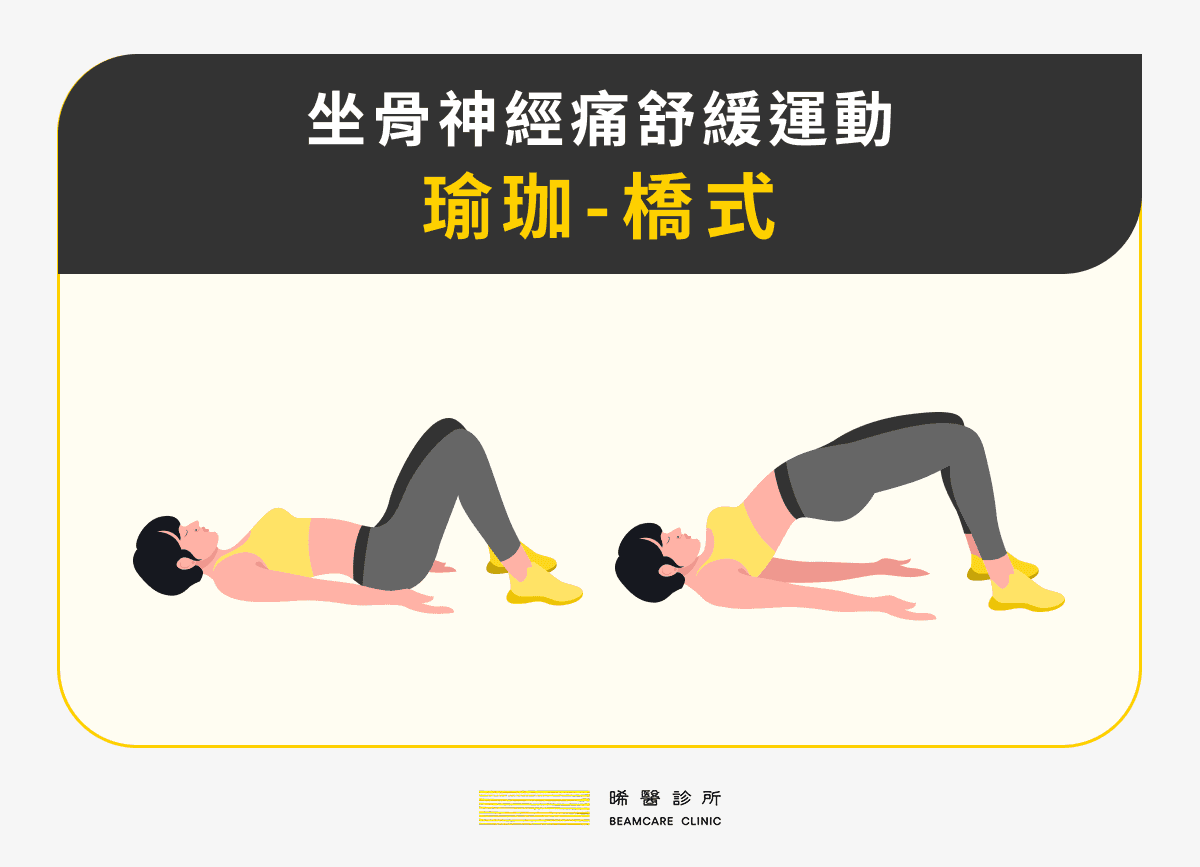
Bridge Exercise: Activates the gluteus maximus and core muscles, shares the weight load on the lumbar spine, and stabilizes spinal structures to reduce friction on the sciatic nerve.
Lie flat on your back, knees bent with feet flat on the floor, feet hip-width apart, arms flat on both sides of the body.
Exhale, squeeze the buttocks to generate power, and lift the pelvis smoothly upward until shoulders, hips, and knees form a straight line.
Hold at the top for 5–10 seconds, taking care not to over-arch the back, which can cause back compression instead.
Inhale, lower the spine segment by segment back to the floor slowly, repeating 10 times.
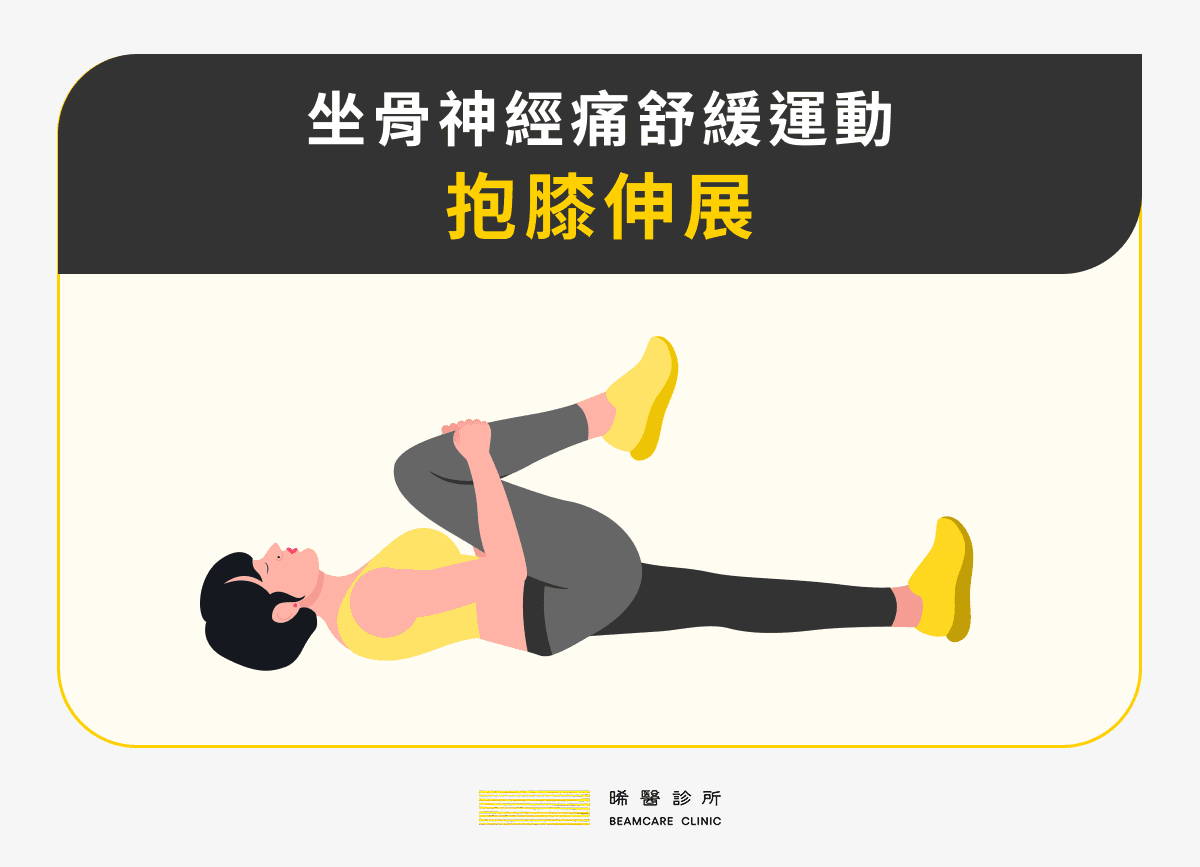
Knee-to-Chest Stretch: Gently stretches the lower back muscles and deep gluteal tissues, damping the throbbing pain caused by nerve compression.
First lie flat on your back with the whole body relaxed.
Slowly raise one knee toward the chest, holding the shin with both hands (if knee discomfort occurs, you can hold the back of the thigh instead).
Gently pull the knee toward the chest, feeling a slight extension in the back of the lumbar spine, and hold for 20 seconds.
Switch sides, and if the condition allows, both knees can also be raised together, gently rocking left and right like a small ball to massage the lower back.
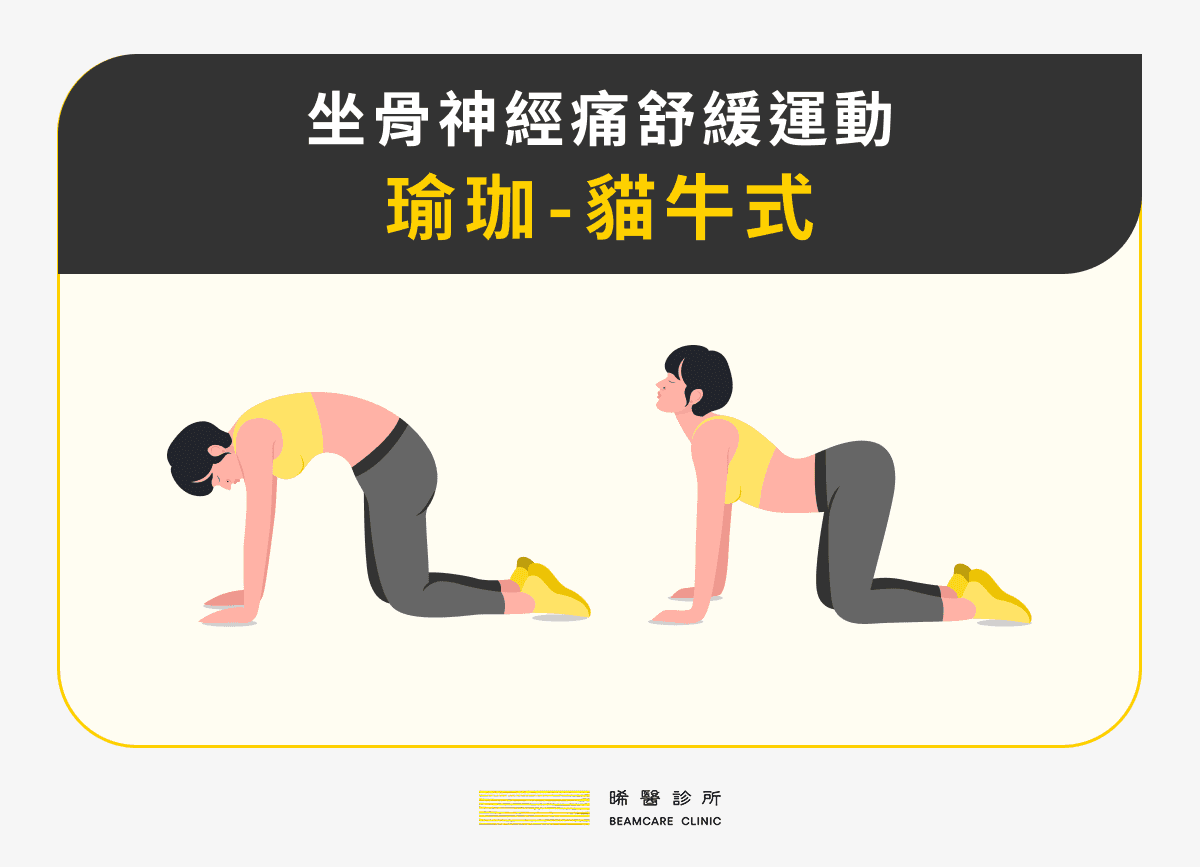
Yoga Cat-Cow Pose: Increases mobility between vertebrae through rhythmic movement of the spine, promoting blood circulation and decompression around the nerves.
Begin on hands and knees (four-point kneeling position), with hands directly under shoulders and knees directly under hips.
Inhale, slowly lift your head and chest, letting your waist sink slightly segment by segment, feeling the expansion on the front side of the spine, which is called the "cow pose."
Exhale, firmly contract the abdomen, arch the back like a cat, and bring your chin toward your chest, feeling each segment of the spine being pushed upward, which is called the "cat pose."
Transition smoothly with your breath, repeating 5–8 cycles; the slower the movement, the better the effect.
3. Adjust and Maintain Good Sitting and Standing Postures
Maintaining good sitting and standing postures can effectively reduce pressure on the spine and nerves, thereby relieving sciatica symptoms:
Sitting Posture: When sitting down, feet should be flat on the floor, with knees and hips kept at the same level, avoiding crossing legs or slouching for long periods. You can also choose a chair with good lumbar support, or place a small cushion at the waist to keep your back naturally straight.
Standing Posture: When standing, distribute your weight evenly on both feet, keep your shoulders relaxed, abdomen slightly engaged, and avoid leaning forward or backward to reduce pressure on the spine.
4. Avoid Lifting Heavy Objects or Apply Correct Forces
Incorrect carrying methods will place excessive pressure on the spine, leading to nerve compression and worsening pain. If you need to carry heavy objects, you can use the following methods to reduce the spine's load:
Use Leg Power: Bend knees and hips, keep your back straight, and lift items utilizing the power of leg muscles to avoid utilizing the lower back.
Distribute Weight: Avoid carrying heavy objects with one hand. Try to distribute weight to both hands, or use assisting tools such as handcarts.
5. Maintain a Healthy Weight
Excess weight puts additional pressure on the spine, especially the lumbar spine, accelerating the degeneration of discs and increasing the risk of sciatic nerve compression.
Maintaining a healthy weight through a balanced diet and regular exercise can effectively lighten the spine's load, which is of great help in relieving and preventing sciatica.
6. Quit Smoking
Nicotine in cigarettes can easily cause microvessels throughout the body to constrict, greatly reducing the nutrient supply to the spinal discs and surrounding nerves. Over time, this will accelerate spinal degeneration and block nerve repair. Quitting smoking can effectively improve spinal blood perfusion, lowering inflammation response from the root, helping the compressed sciatic nerve obtain a better self-healing environment, which is a key factor that cannot be ignored to get rid of chronic pain.
FAQs
Which department should I visit for sciatica?
Orthopedics and neurology handle structural compression and nerve function evaluation; if pain persists and other treatments cannot fully relieve it, pain medicine can be sought. Sunrise Clinic's pain specialist clinic uses advanced ultrasound imaging and X-rays to assess the source, and then arranges treatment according to the condition.
Is surgery absolutely necessary for sciatica?
Not necessarily. Treatment follows the principle of simple to complex: first relieving it with medication and physical therapy. If effects are poor, then evaluate injections, prolotherapy, or minimally invasive pain relief options such as nerve blocks and radiofrequency ablation pain therapy; spinal surgery is an option after conservative and minimally invasive treatments are ineffective.
What symptoms of sciatica require immediate medical attention?
Obvious lower limb weakness or inability to lift the foot, numbness in the saddle area, affected bladder and bowel functions, accompanied by fever or weight loss, sudden severe pain after trauma—please seek medical attention immediately if any of these occur, among which loss of bladder or bowel control requires heading to the emergency room immediately.
How long does the effect of radiofrequency ablation pain therapy last?
Generally, it can be maintained for several months to more than a year. Nerves slowly grow back over time. If pain recurs, treatment can be received again after a physician's evaluation.
Can C-TAME be performed for sciatica?
It depends on the source of pain: spinal pain is treated using methods like nerve blocks and radiofrequency ablation pain therapy; if evaluated to be musculoskeletal pain (such as caused by the piriformis muscle or gluteal myofascia), Director Lu Bing-Sheng can evaluate whether catheter-directed C-TAME microvascular embolization is suitable.
7. Next Step for Sciatica: Sunrise Clinic's Stepwise Evaluation and Treatment
Sunrise Clinic adopts stepwise treatment for sciatica: after a physician completes the assessment using advanced ultrasound and X-ray, suitable methods are chosen step-by-step according to the condition, ranging from physical therapy and medication, ultrasound-guided injections, prolotherapy (PRP, amniotic fluid extract, bone marrow aspirate concentrate BMAC), to nerve blocks and radiofrequency ablation targeting spinal nerve pain; if the assessment points to musculoskeletal pain (such as caused by the piriformis or gluteal myofascia), Director Lu Bing-Sheng can also evaluate whether catheter-directed C-TAME microvascular embolization is suitable.
All stages are completed inside the clinic by the same medical team, requiring no re-referrals. This is also the biggest difference between Sunrise Clinic and clinics with a single treatment modality: treatment has no missing links.
Especially for common conditions such as knee pain, wrist pain, finger joint pain, stiff neck, levator scapulae pain, frozen shoulder, or other occupational injuries and chronic pain, we provide comprehensive and personalized care.
We will also tailor physical therapy programs and nutritional advice based on your body condition and lifestyle, combining integrated traditional Chinese medicine conditioning to boost self-healing power from inside out, reducing the recurrence rate of sciatic nerve pain.
Sunrise Clinic upholds the philosophy of "not just treatment, but companionship," letting each patient feel cared for and professionally looked after from diagnosis to follow-up.
Click the button below to reserve a consultation with Sunrise Clinic's professional physicians immediately! |
